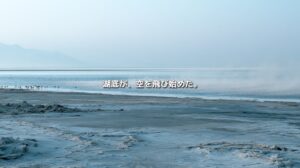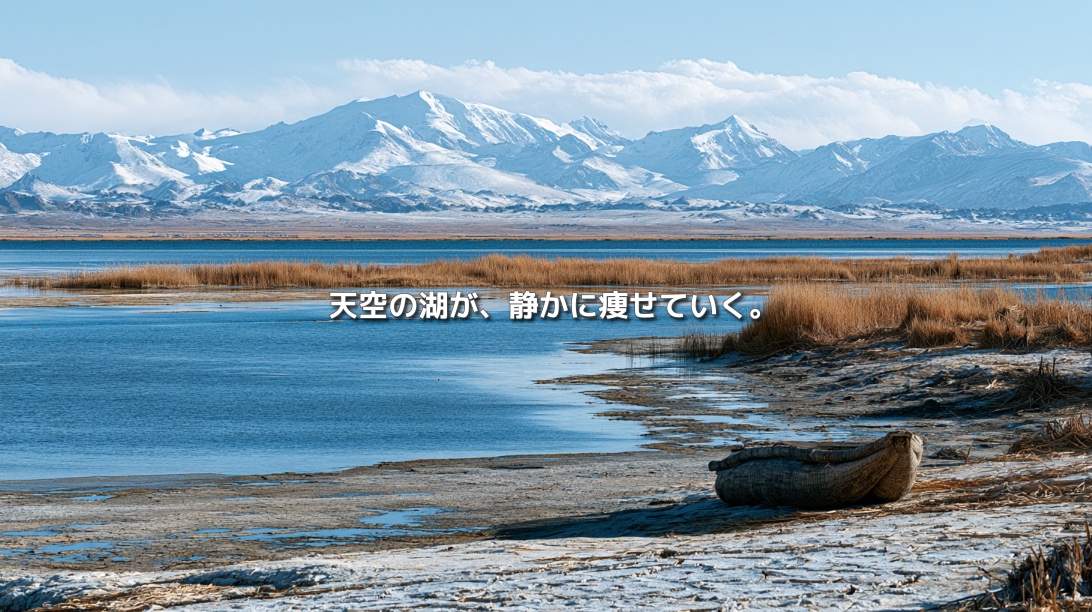
At an elevation of roughly 3,810 metres in the Andes, Lake Titicaca stretches across the border between Peru and Bolivia.
Its deep blue water, floating islands made from totora reeds, and the cultures of people who have lived alongside it for generations make it more than a large freshwater lake. It is a place where daily life, ecosystems, traditions, and a national border meet.
Yet the lake is quietly shrinking.
Reduced rainfall and river inflows, together with evaporation under intense sunlight and wind, affect its water level. At the same time, wastewater, discarded waste, and pollutants associated with mining enter its waters.
Falling water levels and pollution are connected. When there is less water, pollutants may become more concentrated. When shallow areas disappear, wildlife loses places to breed and feed. Lake Titicaca faces pressures that reach across its climate, ecosystems, cities, and cultures. neoterrainjournal.com
A Lake Shaped by Rainfall and Evaporation
Lake Titicaca is an inland lake with no direct connection to the sea. Its main outlet is the Desaguadero River, but outflow through the river accounts for a relatively small share of the lake’s water balance. Much of its water is lost to evaporation.
The lake’s level depends on a delicate balance. If the rainy season brings less precipitation, rivers deliver less water. If temperatures rise and evaporation increases, more water leaves the lake’s surface.
In 2024, Peru’s National Meteorology and Hydrology Service reported that Lake Titicaca’s minimum water level had reached an elevation of 3,807.82 metres, 1.46 metres below its normal value. River conditions improved in 2025 compared with the previous year, but that improvement did not remove the lake’s longer-term vulnerability.
A change of around a metre may sound small for such an immense lake. Along shallow shores, however, it can expose wide areas of lakebed. Water recedes from landing places, small boats become harder to use, and fishing grounds and wetlands change.
Behind a single water-level measurement lies a change in how people can reach and live with the lake.
What Is Lost When Glaciers Retreat
Rivers feeding Lake Titicaca draw on rain and snow in the high Andes. Glaciers also contribute water to parts of the surrounding watershed.
Glaciers have served as natural stores of water. By releasing water during drier periods, they can help moderate changes in river flow.
As glaciers melt, runoff may initially increase. But as the ice itself diminishes, less stored water remains available for future dry seasons. Glacier retreat therefore does not simply mean “more meltwater for the lake.”
Over the longer term, it can weaken the watershed’s capacity to hold water and make dry-season flows less dependable. Changes in rainfall and evaporation add to that uncertainty.
Less Water Can Make Pollution More Severe
The lake’s difficulties concern water quality as well as water quantity.
In some surrounding areas, wastewater and waste-treatment systems have struggled to keep pace with urban growth. Untreated wastewater can reach the lake through tributaries, alongside pollutants linked to agriculture, industry, and mining.
Substances entering a lake do not necessarily leave it quickly. Nitrogen and phosphorus can contribute to excessive algal growth and oxygen depletion. Heavy metals may persist in lakebed sediments as well as in the water.
When the water level falls, existing pollutants can become more concentrated in a smaller volume of water. Shrinkage may thus make contamination that was already present more damaging or more visible.
The World Bank has identified untreated wastewater, water scarcity, and drought as threats to agriculture, fishing, and livelihoods around Lake Titicaca. Work on the Peruvian side, including in Puno, has included improvements to wastewater treatment and water infrastructure.
The Shallows Where Totora Grows
Wetlands of totora reeds are among Lake Titicaca’s most recognisable landscapes.
They provide nesting habitat for birds and spawning areas for fish. They also help trap sediment and take up nutrients from the water.
Totora matters just as much to people. The Uros have long used the reeds to make boats, shelters, and floating islands. Here, a plant is a building material, a means of transport, a foundation for daily life, and part of a living culture.
Falling water levels alter the relationship between reed beds and the lake. As shallows dry, fish and birds can lose habitat. Where water becomes stagnant, organic matter and pollutants may accumulate.
Lake Titicaca is home to species found nowhere else, including native fish and the Titicaca water frog. A decline in water level can change far more than the size of their habitat: it can affect water temperature, water quality, vegetation, and the balance between native and introduced species.
Water Does Not Follow a Border
A national border runs through Lake Titicaca. The water does not stop at that line.
Pollutants entering from a river on the Peruvian side do not necessarily remain there. Development and water use on the Bolivian side can also affect the wider lake.
Peru and Bolivia have established a joint body to manage the broader system that includes Lake Titicaca, the Desaguadero River, and Lake Poopó. Its work includes water-quality monitoring and the management of biological resources.
Yet agreements between national governments alone cannot protect the lake. Municipal wastewater treatment, mining discharges, agricultural water use, fishing, tourism, and residents’ daily needs are all parts of the same watershed.
Cleaning one section of the lake will have limited effect if pollution continues to arrive from upstream. The lake and the life around it form one connected system, supported by two countries.
The Lives Behind the Tourist Landscape
Lake Titicaca is known around the world as a destination. Seen from a boat, its blue water and floating islands can seem timeless.
But the lake visitors see is the same lake residents depend on. Water supply, fishing, livestock, farming, transport, crafts, and tourism income are all tied to its condition.
As the shore retreats, reaching a boat can take longer. Declining catches affect food and income. Deteriorating water quality can complicate the provision of safe water and the care of livestock.
An environmental crisis is also a question of whether people can continue to make a life in a place.
A Lake Reflects the Life of Its Watershed
Climate change is an important part of Lake Titicaca’s story, but it is not the whole story. Drought and rising temperatures interact with wastewater, water use, urban growth, mining, and ecosystem management.
Climate pressures can expose weaknesses that have been building for years.
What is happening at Lake Titicaca reaches beyond the Andes. A lake reflects the choices made throughout its watershed: how people use water, where they build, and how they deal with waste.
As the water surface falls, the loss is measured in more than metres. The connections between the lake, its wildlife, and the people who live beside it are changing too.