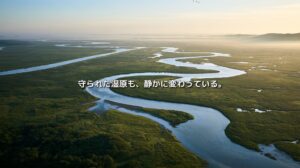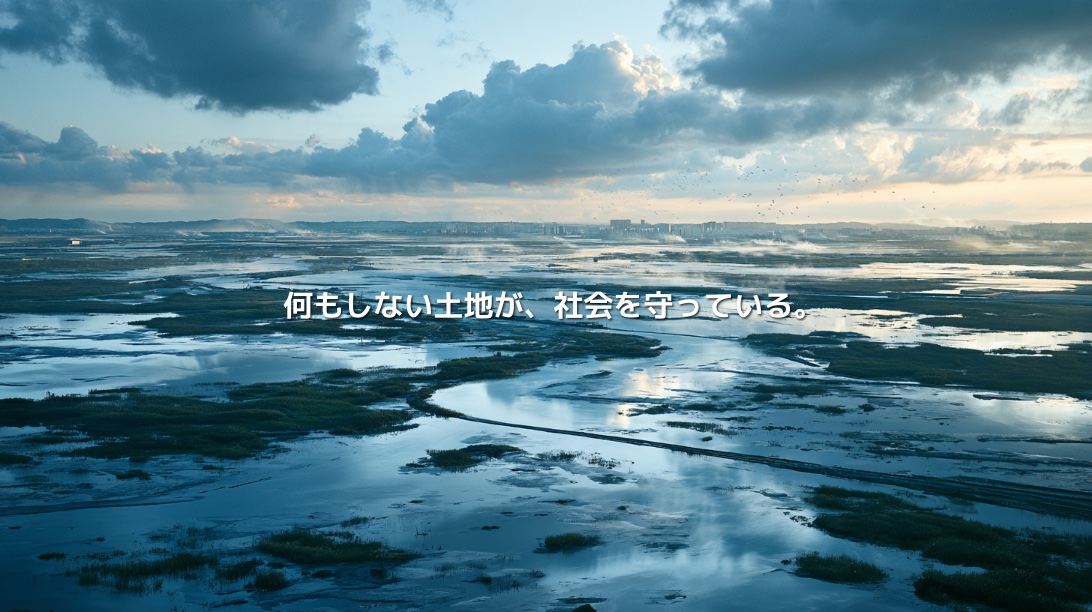
We reinforce rivers with concrete to control floods.
We build treatment plants to protect water quality.
We construct sea walls to defend cities against storm surges.
For a long time, our response to natural hazards has centered on building structures.
As climate change increases risks from heavy rainfall and coastal flooding, and population decline makes infrastructure maintenance more difficult in some regions, another approach is receiving renewed attention.
Restore wetlands to hold water temporarily.
Reconnect rivers with floodplains to slow floodwaters.
Recover tidal flats and salt marshes to help reduce wave energy.
Rewet peatlands to limit the release of stored carbon.
Wetland restoration protects wildlife. It also addresses flooding, water quality, climate change and local livelihoods.
It is an investment in the natural systems that help society function.
Recognizing the Economic Value of Wetlands
Wetlands were long regarded as unused land.
Water accumulates there. Construction is difficult. Farming often requires drainage, while roads and factories may need extensive ground preparation.
Wetlands have consequently been filled, reclaimed or drained for other uses.
Only after their loss have some of their functions become more visible.
They can temporarily store floodwater and slow its movement downstream. Plants, soils and microbes process nutrients and contribute to water-quality improvement. Peatlands and other wetland soils store carbon. Coastal wetlands can help reduce wave energy and flooding impacts.
They also provide habitat for fish, shellfish and birds, supporting fisheries, tourism, cultural practices and other livelihoods.
The Global Wetland Outlook 2025 reports that at least 400 million hectares of wetlands have been lost since 1970, while nearly a quarter of those remaining are degraded. It estimates that the world’s remaining wetlands provide benefits worth up to US$39 trillion annually. Global Wetland Outlook
These estimates bring an often overlooked economic foundation into view.
Wetlands support activities and services whose value extends far beyond the land they occupy.
Wetlands Work Through Movement and Exchange
Dams, detention basins and sea walls are designed around defined conditions.
Store a specified volume of water.
Withstand waves of a specified height.
Convey a specified flow safely.
Wetland functions are more varied and depend on local conditions.
Water can spread, slow down, accumulate and, where soils and geology allow, infiltrate the ground. Plants, soils, microbes and animals interact as water and nutrients move through the system.
Depending on its type, location and condition, a wetland can:
- Delay or reduce a flood peak.
- Temporarily store rainfall and river water.
- Retain or remove some nutrients.
- Support groundwater recharge.
- Store carbon in its soils.
- Provide habitat for fish and birds.
- Support recreation, tourism and local identity.
These overlapping functions are central to the case for wetlands as green infrastructure.
Cities Need Space for Water
Modern urban and agricultural development has often prioritized moving water away quickly.
Rivers are straightened. Wetlands are filled. Land is paved. Rainwater is directed into drains and sewers.
These systems can operate efficiently under ordinary conditions. During extreme rainfall, however, rapid runoff can concentrate water in channels and drainage networks.
Water once held by wetlands or spread across floodplains reaches those systems much more quickly.
In dry weather, a wetland may appear to be doing little.
During heavy rain, it can provide space for water to accumulate.
Planning for floods therefore requires identifying where water can safely spread and remain temporarily.
Wetlands cannot eliminate flooding, and their contribution depends on factors such as available storage, existing saturation and their position within the catchment.
But combined with levees, dams, drainage systems and flood-storage areas, they can help reduce risk.
Resilience grows when engineered infrastructure and ecological functions are planned together.
Water-Quality Improvement Takes Space and Time
Water quality in rivers, lakes and coastal waters depends on more than the amount of material entering them.
Flow speed, retention time and contact with plants, soils and microbes also matter.
In suitable wetland conditions, slower water allows sediment to settle.
Plants absorb nutrients.
Microbes break down organic matter.
Microbial processes can also convert some nitrogen into forms released back to the atmosphere.
These processes require space and time.
Yet a natural wetland has a limited capacity to accommodate incoming loads.
Excessive nutrients or pollutants can damage the ecosystem itself.
Restoration must therefore be accompanied by measures to reduce harmful inputs from upstream, including inadequately treated wastewater, agricultural runoff, industrial discharges and excessive sediment.
Improving a wetland requires attention to the material flows of its whole catchment.
Peatland Restoration Begins with Water
The word “restoration” may bring to mind people planting vegetation.
For wetlands, water levels and water movement are fundamental.
This is especially important in peatlands.
When drainage lowers the water table, accumulated organic material is exposed to oxygen and decomposes more rapidly. Carbon dioxide is released. As the peat dries, fire risk can increase.
Peatland restoration therefore often centers on rewetting: blocking or modifying drainage channels to restore wetter conditions.
Recovery nevertheless takes time.
Subsidence may complicate water management. Vegetation may have changed, and invasive species may have become established. Methane emissions can increase after rewetting under some conditions, affecting the overall greenhouse gas balance.
Restoration requires creating conditions in which water and ecological processes can function again on land that has already changed.
Restored Area and Restored Function Are Different Measures
A newly created wetland may take years to develop some of the functions of an established natural wetland. Some characteristics may be difficult to recover fully.
Soil layers, groundwater connections, microbial communities, seed banks and links with surrounding habitats develop over long periods.
Equal areas can therefore perform differently.
Several small, isolated wetlands may provide limited habitat connectivity.
Introducing water may achieve little if its depth, timing or movement does not suit the intended ecological functions.
Evaluation needs to extend beyond hectares restored.
Long-term monitoring should examine:
- Water-storage capacity.
- Effects on flood timing and downstream flows.
- Changes in water quality.
- Carbon storage and greenhouse gas emissions.
- The return and reproduction of wildlife.
- Local participation in management.
The end of construction marks the beginning of another stage.
Restoration becomes durable when ecological functions recover and the community can continue supporting them.
Land That Looks Unused Has Owners and Users
The challenges of restoration extend beyond technical design.
Land belongs to people and supports existing activities.
Allowing water back onto farmland may affect production and land value. Providing flood-storage space beside a river requires agreement with residents, businesses and landowners.
The people who bear these costs may differ from those receiving the benefits.
A downstream city may experience reduced flood risk while upstream farmers face restrictions on land use.
Such arrangements need a fair distribution of costs and benefits.
That can involve land purchases, management payments, support for compatible farming practices, payments for ecosystem services, carefully designed carbon finance or revenue from tourism.
The appropriate combination depends on the place and the functions being restored.
Wetland restoration also requires institutions that recognize and reward the people who sustain its public benefits.
A Wetland Can Be a Community Asset
Restricting access alone cannot ensure a wetland’s long-term survival.
If residents cannot see its value, or nobody has the resources to maintain it, degradation may return.
Restoration should connect with local life.
Fisheries.
Agriculture.
Tourism.
Environmental education.
Disaster preparedness.
Cultural practices.
The benefits of recovering water and habitat need to become visible to the people living nearby.
Compatible uses can help sustain conservation when they maintain the wetland’s ecological character.
This reflects the Ramsar Convention’s principle of “wise use”: maintaining wetland ecological character through approaches that accommodate sustainable development.
A wetland can be an asset that communities care for, use and pass on.
Giving Water Room to Move Again
Lakes hold water.
Glaciers supply it.
Wetlands receive water, transform what it carries and pass it onward.
These functions depend on space for changing water levels, river overflow and tidal movement.
In pursuit of safety and efficiency, people have fixed river channels, hardened shorelines and confined water to designated routes.
But water continues to vary.
Wetland restoration makes room for that variability within contemporary society.
It complements essential protective structures while helping accommodate conditions they cannot manage alone.
It also brings together objectives often handled separately: flood protection, water quality, carbon storage and biodiversity.
The same landscape can contribute to all of them, provided its functions and limits are understood.
A wetland’s apparent openness is part of its value.
It gives water somewhere to go.
It gives ecological processes time to work.
It gives society additional capacity to absorb disturbance.
Preserving and restoring that space is an investment in infrastructure—and in the relationships between water, land and everyday life.