Agriculture, Climate Change, and a Salt Lake in Crisis
In the dry landscape of northwestern Iran, near the border with Türkiye, lies Lake Urmia.
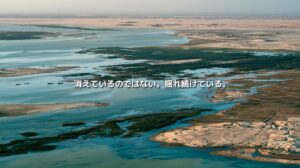
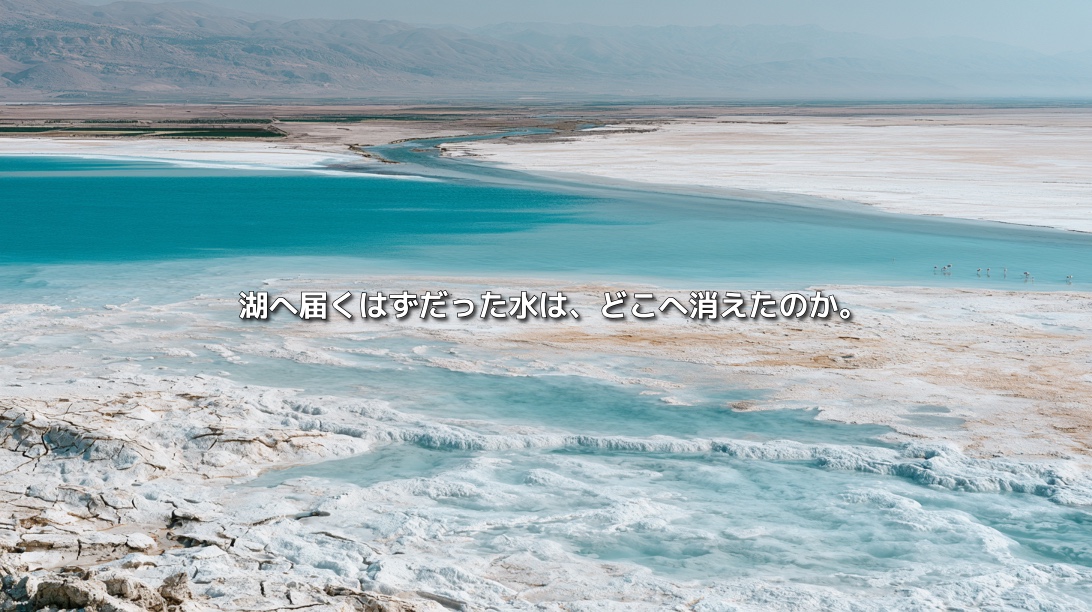
Once one of the largest lakes in the Middle East, it supported tiny crustaceans called Artemia, which in turn attracted flamingos and other migratory birds. Today, large areas that were once underwater have become white expanses of exposed salt.
Where did the water go?
Drought and rising temperatures are part of the answer. But water that would have reached the lake has also been used along the way by farms and cities. Lake Urmia’s retreat reveals how a society distributes a limited supply of water across an entire watershed. neoterrainjournal.com
A Salt Lake With No Outlet to the Sea
Lake Urmia is an inland lake with no river flowing from it to the ocean.
Rain and snow falling on the surrounding mountains enter the lake through rivers. Water leaves mainly through evaporation, while salts and minerals carried by those rivers remain. Over time, this has made Urmia saltier than seawater.
The lake sits at the lowest point in its watershed. Changes visible at its surface therefore begin far beyond its shore: in mountain snow, river flows, dam operations, groundwater pumping, and the expansion of farmland.
The lake reflects the way the entire watershed uses water.
A Dramatic Loss of Water
Lake Urmia’s decline accelerated from the 1990s onward. Analyses of NASA and USGS satellite imagery show that its surface area fell by about 88% between the 1970s and 2014. Vanishing Lake
Heavy rain brought a temporary recovery in 2018 and 2019, but it did not establish a lasting return. By autumn 2023, satellite images again showed much of the lakebed exposed as salt flats. NASA Science
The lake does not shrink by the same amount every year. It expands in wetter periods and contracts in drier ones. Beneath those fluctuations lies a longer-term problem: too little water reaches it.
Water Used Before It Reaches the Lake
The Lake Urmia basin is also an important agricultural region. Farmers grow wheat, sugar beet, apples, grapes, and other crops. Agriculture supports employment and livelihoods, while irrigated land has expanded alongside population and food demand.
The problem is not farming itself. It is the growing dependence on irrigation in a dry region where water is limited.
Dams on rivers feeding the lake have stored or diverted water for use upstream. Groundwater pumping has also altered the basin’s water cycle. Research has identified reduced inflow associated with surface-water use as a major contributor to the lake’s decline, alongside reservoirs and changes in precipitation. Scientific Reports
For an individual farm, taking water from a river may be essential. Across a whole watershed, however, many such decisions add up. The lake at the end of the system receives what remains.
Climate Change Is Not the Only Cause
Lake Urmia is often presented as an emblem of climate change. Higher temperatures can increase evaporation. Drought, shifting rainfall, less snow, and changes in snowmelt can all affect river flows.
Earlier snowmelt may also change the timing of water availability. Rivers may carry less water during the spring and summer months when farms need it most, increasing pressure to divert or pump water. Scientific Reports
Yet attributing the crisis only to climate hides decisions people can change. Communities cannot make it rain on demand. They can consider which crops to grow, how much land to irrigate, how to use water more efficiently, and how much water must be allowed to reach the lake.
Climate pressure and water use reinforce one another. As conditions become harsher, weaknesses in the existing system become more visible.
When Water Leaves, Salt Remains
A retreating salt lake leaves more than dry ground. It leaves salt across the exposed lakebed.
Strong winds can lift fine, salt-bearing particles and carry them into surrounding areas. Such dust raises concerns for farmland, vegetation, and the conditions in which nearby residents live.
The effects of a shrinking lake also extend through its food web. As conditions change for Artemia, habitat and food for migratory birds change with them. Tourism and cultural ties to the lake may suffer as well.
There is a difficult irony here: water used to sustain agriculture upstream may, over the long term, contribute to the exposure of salt that threatens agricultural land.
The consequences reach beyond the shoreline into food production, employment, biodiversity, health, and the regional economy.
Restoration Must Include Rural Livelihoods
Iran began major efforts to restore Lake Urmia in the 2010s. Measures have included directing more river water toward the lake, improving irrigation, reducing agricultural water use, and involving local communities in conservation.
Since 2014, Japan has also supported restoration through the United Nations Development Programme. That work has included sustainable agriculture, community participation, and alternative livelihoods for women. United Nations Development Programme
It is easy to say that farms should use less water. Carrying out that change is harder. If farmers lose income and communities lose jobs, support for environmental measures may not last.
Water saved upstream must actually reach the lake. Farmers need help adopting crops and methods suited to a drier watershed, while other sources of income need room to grow.
Restoring the lake means more than returning water to its shore. It means helping the people who live in its watershed build livelihoods within the limits of the water available.
The Lake Records How Water Is Used
In a wet year, water can return to Lake Urmia. That recovery shows the lake has not been lost entirely. It does not guarantee that the next drought will leave it intact.
Protecting Urmia requires a view that stretches from mountain snow through rivers, dams, fields, groundwater, and cities to the lake itself.
The white salt flats where water once lay did not appear without a history. They reflect decisions made to grow food, expand farmland, and improve lives.
Lake Urmia does not ask us to choose simply between saving a lake and supporting agriculture. It poses a harder question: how can a lake, farming, and the communities around them continue to exist with a limited supply of water?