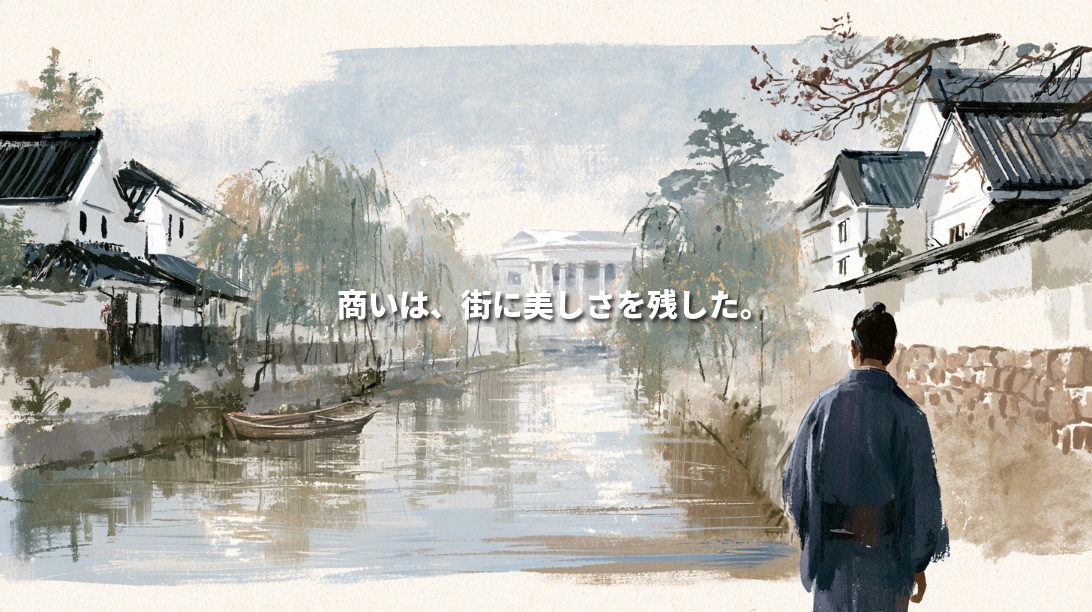
Wealth Created Through Trade Became Culture—and Helped Shape a Town’s Future
NEOTERRAIN Journal | Intellectual Travel #07 | Kurashiki, Okayama
Afternoon light falls across white walls.
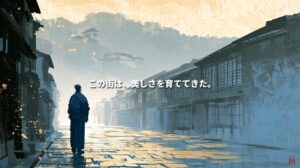
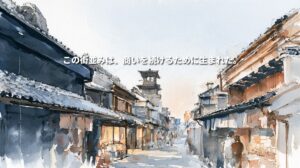
Willow branches sway above the Kurashiki River. Black tiled roofs trace gentle curves against the sky.
Through a narrow lane, the latticed doorway of an old merchant house comes into view.
A little farther on stands an art museum, its columns recalling an ancient Greek temple.
Edo-period Japan and modern Europe.
A town of merchants and a town of art.
Different periods and cultures stand beside one another with remarkable ease.
This is the Kurashiki Bikan Historical Quarter, one of Japan’s best-known historic townscapes.
Its beauty invites a question.
Why has so much of this streetscape survived?
Did old buildings simply happen to remain? Was the area deliberately arranged for visitors?
The town’s history reveals a longer, connected story.
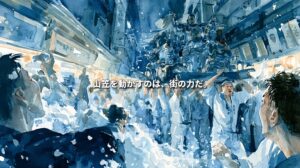
People reclaimed land, transported goods, and built wealth through commerce.
Entrepreneurs directed that wealth into industry, then turned their attention toward workers’ lives, education, and culture.
Others chose to carry the historic townscape into the future.
Kurashiki’s white walls hold the memory of those choices: what people decided to do with the prosperity this place created.
01 | Before the Town, There Was the Sea
Kurashiki’s history begins long before the streetscape we see today.
A shallow inlet known as Achi no Kata once extended around Tsurugatayama Hill.
Sediment carried by the Takahashi River gradually accumulated, turning stretches of water into land.
In 1584, large-scale embankment works undertaken by Ukita Hideie helped advance the development of reclaimed farmland.
New land emerged.
Fields expanded.
People established homes.
Routes were needed to transport what they produced.
Waterways served that purpose.
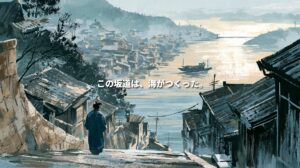
The Kurashiki River became an important route for moving goods from the surrounding region.
Today, visitors ride small boats along the river and admire the white-walled buildings.
This same waterfront once supported the movement of goods on which local livelihoods depended.
Rice and merchandise traveled along the water, connecting people with other places.
The town grew around that movement.
Kurashiki’s beautiful waterfront began as a working waterfront.
02 | How Kurashiki Became a Merchant Town
In 1642, Kurashiki came under the direct administration of the Tokugawa shogunate, becoming what is commonly called tenryō territory.
Reclaimed farmland expanded in the surrounding area, increasing agricultural production.
Rice and other goods gathered here, and Kurashiki developed as a distribution center for the Bitchū region.
Commerce grew where goods converged.
Warehouses were needed for storage. Merchants organized transactions. Transport workers moved cargo.
Wealth gradually accumulated in the town.
The white-walled storehouses and substantial merchant houses beside the river now evoke a beautiful, familiar image of historic Japan.
Their original purposes were practical.
They provided places to conduct business, store goods, protect property, and sustain family enterprises.
Plastered walls, thick earthen construction, and tiled roofs helped protect buildings and their contents from hazards such as fire.
Within the architecture we admire today, the necessities of earlier lives remain visible.
Buildings made for commerce became, over time, a cherished landscape.
Practical decisions and an appreciation of beauty developed across generations now meet within these white walls.
03 | Trading Wealth Took the Form of Factories
The Edo period ended, and the Meiji era began.
As Japan developed into a modern state, the organization of industry changed.
In Kurashiki, capital accumulated through commerce began flowing into new forms of production.
One important example was Kurashiki Spinning, now known as Kurabo.
Established in 1888, the company connected the resources of local merchants and landowners with the development of modern manufacturing.
White-walled storehouses were joined by red-brick factories.
Alongside the movement of traded goods came the mechanical production of textiles.
Kurashiki adapted the ways it generated wealth.
Today, Kurashiki Ivy Square occupies buildings associated with the former spinning mill.
Green ivy spreads across red-brick walls.
Architecture created for industrial production now welcomes people to stay, gather, and experience the town’s history.
A building whose original role has ended can acquire a new place in daily life.
Giving an old structure a useful purpose is one way to connect its past with the future.
In Kurashiki, the memory of industry has become part of the cultural landscape.
04 | Why Did Magosaburō Ōhara Establish an Art Museum?
One figure is central to this story: the businessman Magosaburō Ōhara.
Born in Kurashiki in 1880, Ōhara helped lead Kurashiki Spinning while supporting a wide range of social initiatives.
His interests extended into education, social welfare, working conditions, and art.
How could the resources generated through business enrich society?
That question seems to run through his activities.
His relationship with the painter Torajirō Kojima offers a particularly revealing example.
Recognizing Kojima’s talent, Ōhara supported opportunities for him to study and paint in Europe.
During his travels, Kojima also collected Western art with Ōhara’s financial support.
El Greco.
Monet.
Gauguin.
Works that people in Japan had limited opportunities to encounter firsthand crossed the sea and arrived in Kurashiki.
In 1930, Ōhara established the Ohara Museum of Art in memory of Kojima, who had died the previous year.
It became Japan’s first private museum devoted primarily to Western art.
Consider the significance of that location.
A regional city in Okayama acquired a museum bringing together art from across the world.
Ōhara and Kojima sought to give people living outside Japan’s major cultural centers opportunities to encounter original works.
The museum opened access to artistic experience.
Wealth generated through enterprise helped cultivate the sensibilities of people its founders would never meet.
That decision became part of Kurashiki’s future.
05 | A Western Art Museum Among White-Walled Storehouses
Walking through the Bikan Historical Quarter, one arrangement catches the eye.
Near merchant houses and earthen storehouses recalling the Edo period stands the Ohara Museum of Art, with columns inspired by classical Greek architecture.
The difference between them is unmistakable.
In Kurashiki, that difference contributes to the character of the town.
Perhaps this works because the place developed through successive layers of history.
Edo-period merchants left storehouses.
Meiji-era entrepreneurs developed industry.
The early Shōwa period brought an art museum.
Each generation added something.
Earlier structures continued to exist as new ideas found a place beside them.
Different values accumulated within the same streets.
Tradition may involve this continuing process of deciding what to retain while making room for change.
Kurashiki’s beauty includes the coexistence of several periods, each still visible within the town.
06 | A Town People Chose to Preserve
Historical chance alone cannot explain the survival of Kurashiki’s white walls.
Buildings deteriorate.
Changing lifestyles can make older houses difficult to use.
Wider roads and new construction may promise greater convenience.
Preservation requires choices.
In 1968, Kurashiki City enacted an ordinance to protect its traditional townscape.
Further conservation measures and repair programs followed. In 1979, the riverside area was designated a nationally Important Preservation District for Groups of Traditional Buildings.
The streetscape before us reflects continuing effort.
Owners maintain buildings.
Craftspeople repair them.
Public authorities establish systems of protection.
Residents and businesses keep the district in use.
Such work takes money, time, and negotiation with the needs of contemporary life.
People have repeatedly decided that this place deserves that commitment.
Cultural heritage survives through the care of those living in the present.
07 | Whose Town Is a Historic Tourist District?
The Bikan Historical Quarter draws visitors from Japan and abroad.
People photograph the white walls, ride boats along the river, and browse shops inside renovated townhouses.
Tourism creates economic activity.
Shops and accommodation in historic buildings can help sustain their use and maintenance.
Success also raises questions.
Who is the town for?
Visitors enjoying a journey?
People running businesses?
Residents carrying on their daily lives?
Its future depends on accommodating these different relationships.
A historic district can retain its buildings while losing some of the life that gave them meaning.
A familiar storefront may survive even as the people who once gathered there find fewer reasons to return.
Kurashiki shares this question with Kyoto, Kanazawa, Onomichi, and many other destinations.
Preserving a beautiful town requires attention to the conditions that sustain local life and commerce.
The future of the landscape is bound to the future of the people within it.
08 | What Can a Business Leave to a Town?
Kurashiki’s history invites a wider question.
What can businesses leave to society?
Products, employment, and profits all matter.
Here, the legacy also includes factory buildings, an art museum, opportunities to encounter art, and a local commitment to cultural life.
Describing Magosaburō Ōhara’s activities simply as “corporate social responsibility” may leave some of their meaning unexplored.
His work suggests an ambition to enrich society itself.
More people encountering art.
More opportunities to learn.
Greater attention to the lives of workers.
Such efforts may produce little immediate financial return.
Over decades, however, they can help shape the character and possibilities of a town.
Kurashiki offers a way to think about the long relationship between business and place.
Investment in culture does not automatically benefit every company or community.
Who pays? Who benefits? How can the work continue?
These questions also require answers.
Culture deserves consideration beyond its usefulness as a means of profit.
Perhaps one of the most enduring things a business can leave is an environment in which another generation can create something valuable.
09 | What Becomes Visible When You Walk Through Kurashiki?
On your next visit, try making a small shift in attention.
Beside the Kurashiki River, imagine the cargo that once traveled beneath the willows.
At a white-walled storehouse, think of the people who stored goods inside and worked to keep their businesses going.
At Ivy Square, look beyond the red brick toward the working lives that supported modern industry.
Outside the Ohara Museum of Art, consider a businessman and a painter trying to bring European art to their hometown.
The view begins to change.
Within it lie decisions made across generations.
To reclaim land.
To develop commerce.
To establish industry.
To support culture.
To preserve the streets.
Without any one of those decisions, Kurashiki might look very different today.
Evening settles over the river.
The white walls slowly take on an amber glow.
Reflections tremble in the breeze.
What remains here includes the story of people who allowed prosperity to reach beyond their own lifetimes.
Commerce left beauty in this town.
That beauty is now being entrusted to those who will live here next.
Understanding changes what we see.
Editor’s Note — NEOTERRAIN
While exploring Kurashiki’s history, I found myself thinking about the uses of wealth.
Businesses generate profits.
Merchants prosper through trade.
These are ordinary parts of economic life.
What happens to the resources they create can influence a town decades, even centuries, later.
When Magosaburō Ōhara established his museum in 1930, did he imagine the Bikan Historical Quarter as the destination it has become today?
We cannot know.
What we can see is that the museum continues to give people opportunities to encounter art.
Its value extends beyond the financial calculations of the period in which it was founded.
There is something meaningful here about the work of individuals and businesses.
Making things.
Generating income.
Keeping an enterprise alive.
The consequences of those activities can reach people far beyond the immediate transaction.
What possibilities might our work leave for someone we have yet to meet?
Holding that question may change the way we understand our relationship with society.
Kurashiki’s survival, meanwhile, depended on many people.
Merchants, craftspeople, residents, and public authorities each responded to the town in their own time.
Culture continues through people who receive it, use it, care for it, adapt it, and pass it on.
The white walls bring those relationships into view.
A beautiful town endures because people keep deciding what deserves a future.
Perhaps prosperity can also be measured by what we make possible for those who come after us.
NEOTERRAIN — Intellectual Travel
Engaging with complexity, without simplifying it away.