Between Mountains and Sea, Cultures Met—and History Changed
NEOTERRAIN Journal | Intellectual Travel | Nagasaki, Japan
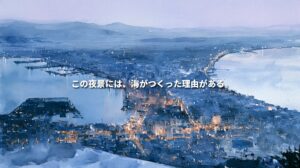
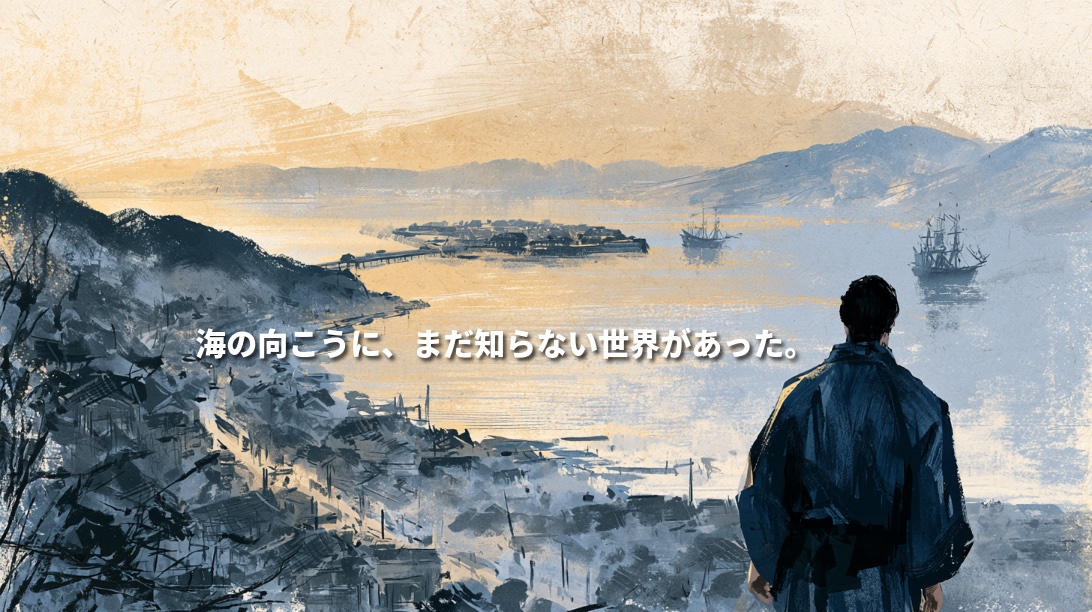
Climb one of Nagasaki’s hills.
Beyond the stone steps, the rooftops overlap. Turn around, slightly out of breath, and the sea appears behind them.
A city nestled against mountain slopes.
Ships rest in the harbor. Industrial cranes line the distant shore.
There are church spires, temple roofs, and Western-style houses that seem to belong to another time.
These things did not always share a single landscape.
People arrived from different countries, speaking different languages, worshipping different gods, and bringing different ways of life.
Sometimes they were welcomed. Sometimes they were rejected.
Trade brought wealth. Faith offered hope. Political authority restricted people’s freedoms.
Still, things continued to arrive across the sea.
Nagasaki holds an unusual layering of histories. It is a Japanese city whose story reaches far beyond Japan.
But why Nagasaki?
Why did a window between Japan and the wider world open here, between these mountains and this sea? neoterrainjournal.com
01 | Where Mountains Meet the Sea: The Geography of a Port
Walking through Nagasaki, you soon notice how little flat ground there is.
You climb a hill, descend another, and follow a winding street until the sea appears again.
Nagasaki’s harbor lies within a long, narrow bay surrounded by mountains. The sea reaches deep into the land, creating a naturally sheltered setting for ships.
Yet favorable geography alone did not make Nagasaki an international port.
A harbor’s history also depends on the people who choose to use it.
Portuguese ships began arriving in the latter half of the sixteenth century. In 1571, Nagasaki opened as a port for trade with the Portuguese and their commercial networks.
Japan was then in the Sengoku period, an age of competing regional warlords.
Overseas trade carried considerable economic and political importance. Ōmura Sumitada, the lord who controlled Nagasaki, also sought the benefits it could bring.
Silk and other goods arrived across the sea.
So did technologies, religious beliefs, knowledge of distant places, and unfamiliar ways of living.
The harbor became an entrance for new ideas as well as merchandise.
The sea separated lands, but it also offered routes through which people’s worlds could expand.
02 | Dejima: A Small Window Under Strict Control
No account of Nagasaki is complete without Dejima.
Today, reconstructed buildings on the former fan-shaped artificial island offer glimpses of life in an earlier trading settlement.
Its history, however, reaches beyond picturesque architecture.
Dejima was completed in 1636 to accommodate Portuguese residents. After Portuguese ships were prohibited from entering Japan, the Dutch trading post at Hirado was transferred to Dejima in 1641.
The Tokugawa shogunate continued trade with Dutch and Chinese merchants through Nagasaki while imposing strict controls on overseas relations.
This period is often described as sakoku, commonly translated as “national seclusion.”
Japan was not completely disconnected from the outside world.
Relations with Korea continued through Tsushima. Satsuma mediated relations with the Ryukyu Kingdom. Trade with the Ainu took place through Matsumae.
Nagasaki formed one important part of this wider system, handling trade with China and the Dutch.
An open window did not mean unrestricted passage.
Movement was limited. Commerce was regulated. Religious practice was subject to severe controls.
Dejima connected Japan with the world while helping the authorities regulate that connection.
On this small artificial island, the desire to learn about the world met the political desire to control access to it.
03 | How Overseas Cultures Became Everyday Life
Nagasaki is often described as a city with an “international atmosphere.”
Its distinctive landscape makes the phrase understandable.
The temples of Teramachi. The remains of the Chinese settlement known as Tōjin Yashiki. Dejima’s European-influenced buildings. Festivals and foods shaped by Chinese traditions.
These are attractions for visitors. They are also traces of lives built over many generations.
During the Edo period, Chinese merchants came to Nagasaki in significant numbers. Through their interactions with local people, cultural practices took on forms particular to this city.
Consider shippoku cuisine.
Diners gather around a round table to share dishes in a tradition that brings Chinese and other culinary influences together with Japanese dining customs.
Or consider champon, now one of Nagasaki’s best-known dishes.
Its origins are generally associated with Chen Ping Shun, a Chinese-born restaurateur working in Nagasaki during the Meiji period.
Behind a familiar local flavor lies the experience of someone who came from elsewhere.
Culture rarely arrives as a finished object.
It changes as people meet, cook, eat, talk, and live alongside one another.
Nagasaki’s culture grew through those encounters.
That may explain its particular sense of familiarity: traces of distant places have become part of the everyday life of a Japanese city.
04 | What Church Bells Carry: Faith, Persecution, and Silence
Nagasaki has beautiful churches.
Ōura Cathedral rises on a hillside. Other places of prayer stand in coastal communities overlooking the sea.
They have become defining features of the region’s landscape.
Yet the history of Christianity here cannot be understood through architecture alone.
Introduced to Japan in the sixteenth century, Christianity spread through parts of Kyushu, including Nagasaki.
Later, prohibitions imposed under Toyotomi rule and the Tokugawa shogunate brought severe persecution.
In 1597, twenty-six Christians were executed at Nishizaka in Nagasaki.
Some believers continued to pass down their faith in secret, unable to practice openly.
Generations later, in 1865, members of these hidden Christian communities approached a priest at Ōura Cathedral and revealed their faith.
The encounter became known as the “Discovery of the Hidden Christians.”
It did not immediately bring freedom of religion. The prohibition remained in place for several more years.
When we visit Nagasaki’s churches, what do we see?
Stained glass? Stone walls?
Or the generations of people who tried to preserve something essential to their lives?
Buildings can carry memories that their communities were once unable to express aloud.
Nagasaki’s churches hold that quiet weight.
05 | From Trading Harbor to Industrial Port
As Japan moved from the late Edo period into the Meiji era, Nagasaki’s harbor acquired new roles.
Its history of overseas contact helped support the development of shipbuilding, mechanical knowledge, and modern industry.
In 1857, the shogunate began construction of the Nagasaki Yōtetsusho, an ironworks and ship-repair facility.
It became an important starting point in the development of Nagasaki’s shipbuilding industry.
During the Meiji period and afterward, facilities for constructing large vessels expanded around the harbor.
Offshore lies Hashima, commonly known as Gunkanjima, or “Battleship Island.”
Known for its undersea coal mine, the island also represents part of Japan’s industrial transformation.
Coal powered factories and ships. It supplied energy to an emerging industrial society.
Yet industrial history also belongs to the people who worked within it.
Workers had families. Communities formed. Daily life continued on a small island surrounded by sea.
Understanding this history also requires attention to harsh working conditions and wartime forced mobilization.
Nagasaki’s contribution to Japan’s modernization and the suffering embedded in that process belong to the same history.
Look across the harbor at the cranes.
Their steel outlines carry the memory of a city that grew from a trading port into an industrial center.
A place that received goods and knowledge from overseas also became a place that built ships and developed technologies for a wider world.
06 | August 9, 1945: What Nagasaki Lost
There is a date that no account of Nagasaki can pass over.
August 9, 1945.
At 11:02 a.m., an atomic bomb exploded over the city.
The Urakami district and surrounding areas suffered catastrophic damage. Many lives were lost.
Blast. Intense heat. Radiation.
The harm did not end with the explosion.
Survivors carried profound physical and psychological injuries through the years that followed.
The Nagasaki Atomic Bomb Museum preserves evidence of the devastation and records of those who experienced it.
Urakami Cathedral was also devastated.
A place of worship, woven into the daily lives of its community, was destroyed by war.
Here, Nagasaki’s history confronts us with a difficult question.
A port that had developed through international exchange was devastated by a global war.
Technologies that could connect people could also be used to destroy them.
The city’s history asks us to consider how human knowledge and institutions are used—and the consequences of those choices.
Stand in Peace Park today, and the sounds of ordinary life surround you.
Cars pass. People walk. Children call to one another.
That everyday life should never be taken for granted.
To understand Nagasaki is also to acknowledge the lives lost and the years lived by those who survived.
Perhaps peace depends, in part, on continuing to carry those memories into the future.
07 | The Beauty—and Daily Reality—of a Hillside City
Look again at Nagasaki through its geography.
Mountains press toward the sea. Houses spread across their slopes.
With limited flat land available, people made homes on the hillsides.
Some houses can be reached only by climbing steps. At the end of a narrow lane, the harbor may suddenly open into view.
For a traveler, these scenes are compelling.
For residents, the hills are also part of the practical demands of everyday life.
Shopping. Going to school. Visiting a doctor. Carrying groceries home.
As the population ages, steep terrain can make those tasks increasingly difficult.
The landscape visitors admire and the challenges residents face occupy the same ground.
Intellectual travel invites us to understand both.
We can appreciate the view while asking how it came into being—and what living within it requires.
A city is someone’s home.
08 | Walking Through Nagasaki Again
On your next visit to Nagasaki, try changing the way you look.
At Dejima, imagine the rules that once governed contact with the outside world.
Around the former Chinese settlement and Teramachi, consider how different cultures became interwoven with everyday life.
At Ōura Cathedral, think about the history of faith behind the architecture.
Looking across the harbor at the cranes, consider the technologies and labor that supported Japan’s industrial transformation.
At the Atomic Bomb Museum and Peace Park, make time for the lives lost and the voices of those who have worked to preserve their memory.
Finally, climb to a higher place.
Look across the harbor.
The city spreads over the mountain slopes. Beyond the water lie other shores.
From here, generations of people looked toward the world.
To here, generations arrived from it.
Across the sea came goods, faith, technologies, languages, and hopes.
Sometimes conflict and sorrow arrived as well.
Nagasaki has carried all of these experiences into the present.
It became a port connecting Japan with the world. Over centuries, it also became a city that lived with the possibilities and difficulties of encountering difference.
At the top of a hill, the sea comes into view.
It may be the same view as yesterday.
Yet knowing something of the history beyond that water changes what we see.
Understanding changes the landscape.
Editor’s Note — NEOTERRAIN
Nagasaki seems to hold many of our human contradictions.
We want to know distant worlds.
We seek unfamiliar cultures, acquire new technologies, and try to enrich our lives.
We also fear what we do not understand.
We exclude different beliefs, establish boundaries, and sometimes try to impose our will through force.
Both impulses run through Nagasaki’s history.
Exchange and restriction.
Prosperity and sacrifice.
Prayer and persecution.
Technological development and wartime destruction.
Describing Nagasaki only as a city of international charm leaves too much unspoken.
Its Western-style houses, churches, and harbor views are the results of countless human decisions.
When we travel, we encounter beautiful places.
The feeling they inspire matters.
Learning how that beauty developed—and what was lost along the way—gives the encounter greater depth.
Climb a hill in Nagasaki and look toward the sea.
The water reaches into the distance, as it has through every era.
People draw boundaries across it.
People also try to cross them.
Nagasaki continues to ask what it means to connect with the world.
NEOTERRAIN — Intellectual Travel
Let complexity remain complex.