In the Castle Town of Kaga, Generations Learned to Cultivate Beauty
NEOTERRAIN Journal | Intellectual Travel #05 | Kanazawa, Ishikawa
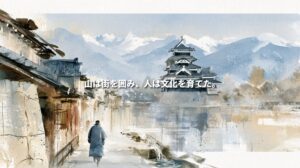
Rain suits a Kanazawa morning.
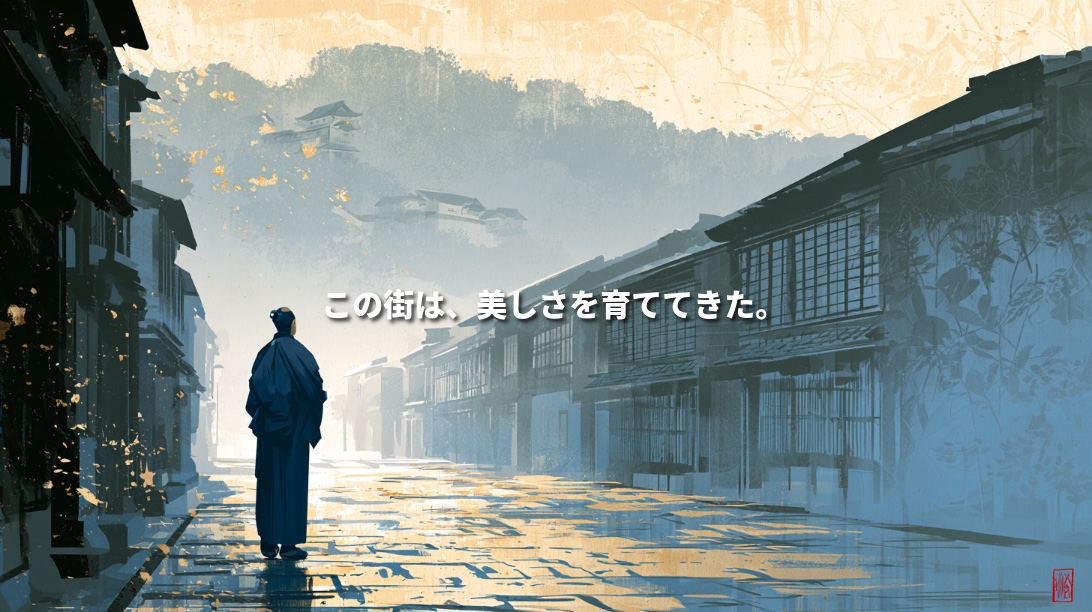
Stone paving glistens. The wood of latticed doorways takes on a deeper color.
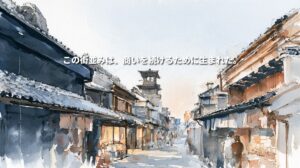
In the narrow streets of the Higashi Chaya district, few visitors have arrived. Drops falling from the eaves sound through the quiet.
A short walk brings you to traditional townhouses, tea rooms, and gardens.
The glow of gold leaf.
The colors of Kaga Yūzen silk.
The sheen of lacquer.
The texture of pottery beneath your fingers.
Beautiful things are everywhere in this city.
But did they gather here by chance?
Why did so many cultural traditions take root in a castle town on the Sea of Japan side of the country?
Why have artisans continued to pass on their skills through changing times?
Following these questions reveals another side of Kanazawa.
This city has cultivated the time, relationships, and conditions that allow beauty to be made. neoterrainjournal.com
01 | Between Two Rivers: The Geography of a Castle Town
Kanazawa’s name carries associations of gold and refinement.
To understand how the city developed, however, begin with its water and land.
Two rivers, the Sai and the Asano, flow through central Kanazawa. Kanazawa Castle and Kenrokuen Garden stand on elevated ground between them.
The castle town developed around this terrain.
The rivers supplied water for daily life and helped define the city’s shape.
Another distinctive feature runs through Kanazawa: its network of water channels.
Waterways, including the Tatsumi Canal, supplied the castle and supported firefighting, agriculture, and everyday activities.
Their flowing water reflects generations of work: understanding the land, directing water where it was needed, and maintaining the systems that sustained the city.
Behind Kanazawa’s gardens and historic streets lies this practical knowledge.
Look at the sky reflected in a pond at Kenrokuen.
Its beauty also holds the labor of those who brought water here, shaped the ground, and cared for the landscape over generations.
A landscape emerges through a long conversation between people and the land.
02 | The Wealth of Kaga: Why Did Prosperity Support Culture?
The phrase Kaga Hyakumangoku frequently appears in accounts of Kanazawa’s history.
It refers to the wealth of the Kaga domain, whose assessed agricultural productivity exceeded one million koku, a historical measure based on rice.
Ruled by the Maeda family during the Edo period, the domain held extensive territories across Kaga, Noto, and Etchū. It was among the wealthiest domains in Japan.
That economic foundation helped sustain Kanazawa’s cultural development.
Wealth alone, however, does not explain what followed.
What should resources support?
Which people should be invited to work?
What deserves protection?
Such decisions depend on those who govern.
Successive Maeda lords supported tea culture, Noh theater, scholarship, and the crafts.
Under Maeda Toshitsune, the third lord of the domain, efforts to invite skilled artisans and cultural figures helped deepen the city’s artistic and technical life.
For an Edo-period lord, authority had many forms.
Knowledge of etiquette, appreciation of performance, ownership of fine objects, and patronage of the arts all helped express status.
In Kanazawa, these cultural practices became connected to the economy of the castle town and the work of its artisans.
The Maeda family’s patronage is sometimes explained as a means of avoiding suspicion from the shogunate. That explanation alone is insufficient.
The lords’ own tastes and education, domain finances, exchanges with Kyoto and Edo, and demand within the town also played their parts.
Look closely at who supported culture and who gave craftspeople the opportunity to improve, and a social structure comes into view.
Kanazawa’s beauty carries the choices of people who directed wealth toward cultural life.
03 | The Samurai’s World Extended Beyond the Sword
Walk through the Nagamachi samurai district.
Earthen walls line the streets. Quiet lanes appear around the corners.
Many samurai once lived here.
The word “samurai” may bring to mind a warrior wielding a sword. Yet that image captures only part of life during the Edo period.
Through a long era of relative peace, samurai also served as administrators, pursued learning, and practiced arts and etiquette.
Tea ceremony.
Noh.
Calligraphy and painting.
Waka poetry.
These activities were connected to education, relationships, and social standing.
The cultural practices of the Maeda lords and their retainers created demand for objects.
Someone had to make the tea bowls, apply the lacquer, dye the cloth, and work the metal.
Patrons sought beauty. Artisans developed the skills to give it form.
One finished object raised expectations for the next.
More refined.
More precise.
More comfortable to use.
Through that continuing exchange, techniques deepened.
Samurai culture and the work of craftspeople became closely intertwined within the castle town.
Kanazawa’s cultural richness developed through generations of relationships between those who sought beautiful things and those who made them.
04 | Gold Leaf: The Time Held Within Thinness
One of Kanazawa’s best-known crafts is gold leaf.
Beaten extraordinarily thin, it catches the light with a quiet brilliance.
Kanazawa is Japan’s principal center of gold-leaf production. Behind that position lie advanced skills and the local networks that sustain the work.
Making gold leaf requires much more than thinning metal.
Artisans assess the material, handle specialized tools, repeat delicate processes, and respond to minute changes.
The preparation and handling of the paper used during beating also require considerable experience.
The finished leaf is almost impossibly thin.
Looking at it invites a curious thought.
How much time can be held within something so slight?
Gold leaf has long been used on Buddhist household altars, buildings, and craft objects. It also finds applications in contemporary interiors and products.
Its value cannot be measured by the price of gold alone.
Knowledge of materials.
Judgment developed through mistakes.
Methods of passing the work to another generation.
All of these are present in that fragile gleam.
Human skill can leave a remarkable depth of time inside something barely thick enough to see.
05 | Kaga Yūzen: A Sense of Place Expressed in Color
Look closely at a Kaga Yūzen kimono.
Flowers and grasses spread across the fabric in subtle colors.
This dyeing tradition is known for naturalistic botanical designs and restrained tones.
Its five traditional colors, known as Kaga gosai, are indigo, crimson, ochre, grass green, and ancient purple.
Kaga Yūzen is often compared with Kyoto’s Kyō Yūzen.
Each developed its own forms of expression through regional tastes, techniques, and cultural relationships.
Some Kaga Yūzen designs include leaves marked by insect damage.
Beauty makes room for a leaf whose outline has been eaten away, for plants changing color, and for the passing of a season.
There is an attentiveness to nature’s imperfections.
It would be too simple, however, to explain this sensibility through Kanazawa’s climate alone.
Individual expression, changing fashions, the preferences of wearers, and regional culture all helped shape the tradition.
Study a flower painted on silk.
What remains in its lines and colors is a person’s interpretation of nature: what they noticed, valued, and chose to express.
Craft can tell us how people learned to see.
06 | Kenrokuen: The Paradox of Creating Nature
Walk through Kenrokuen.
A pond. A stone bridge. Pine branches reaching toward the water.
The garden changes with the seasons.
Spring blossoms.
Summer foliage.
Autumn leaves.
In winter, the ropes of yukitsuri support branches against the weight of snow.
The Maeda family developed Kenrokuen over many years.
Within it lies a quiet paradox.
The garden feels natural, yet people have selected, arranged, and maintained the nature we see.
They plant trees, prune branches, direct water, and position stones.
Then they watch what happens over years and decades.
Is a garden a place where people seek control over nature?
Or a place where they learn to respond to it?
Perhaps it contains both impulses.
People intervene to create a beautiful landscape. Rain falls, snow gathers, and trees grow according to conditions no gardener can fully command.
The work continues through responses to those changes.
A garden may appear complete, but its care is never finished.
Kenrokuen exists as we see it because people continue tending it today, preparing it for tomorrow.
Beauty also resides in the time devoted to keeping something alive.
07 | Why Has So Much of Kanazawa’s Culture Survived?
Japan once had many castle towns.
Kanazawa has retained much of its historic urban structure, streetscape, and craft culture.
There is no single explanation.
Maeda patronage.
A strong economic foundation.
Artisans’ expertise.
Local commerce.
Modern efforts to protect cultural properties and historic neighborhoods.
The city’s escape from large-scale destruction by air raids during the Second World War also helped its historic landscape survive.
Yet survival does not ensure a future.
Old buildings deteriorate. Artisans grow older. Ways of living change.
An object once essential to daily life may cease to be used.
Sustaining a tradition requires more than preserving its techniques.
It means finding new users, connecting with contemporary life, and creating economic conditions in which artisans can continue working.
It also means helping another generation understand why the work matters.
Culture continues when people living today choose to make room for it in the future.
08 | Does Tradition Mean Remaining Unchanged?
Old and new exist alongside one another in Kanazawa.
Historic townhouses.
Contemporary museums.
Traditional workshops.
Designers and artists exploring new forms.
Together, they invite a question.
What does it mean to carry on a tradition?
To preserve an old shape?
To repeat an established technique?
Some skills must be transmitted with great care. Some cultural properties require rigorous conservation.
At the same time, cultural traditions themselves developed through changing circumstances.
Kaga Yūzen, gold leaf, and lacquerware all served people with particular needs and expectations.
Artisans refined their work in response.
Carrying that work forward may therefore require imagining future ways of living as carefully as studying the past.
Craft objects suited to contemporary homes.
Dyeing techniques finding expression in new clothing.
Traditional materials used in architecture and design.
Skills may find meaningful applications in places where they have not been used before.
Novelty alone, however, is no guarantee of value.
Without respect for makers and an understanding of the knowledge behind their work, a technique can become little more than surface decoration.
The continuing task is to decide what to preserve and what to change—and to make those decisions with care.
09 | Walking Through Kanazawa Again
On your next visit to Kanazawa, try changing the way you look.
In Higashi Chaya, appreciate the latticed facades while imagining the people whose work sustained the district’s teahouse culture.
In Nagamachi, consider samurai lives shaped by learning and performance as well as military status.
At Kenrokuen, notice the work of those caring for the garden today.
When you hold a craft object, imagine the artisan beyond the finished surface.
Who taught them?
How many years did the skill take to learn?
Who will inherit it next?
Kanazawa’s appeal lies partly in the time people have devoted to making beautiful things possible.
The thinness of gold leaf.
The colors of Yūzen silk.
The quiet of a garden.
The warmth of wood in a townhouse.
Their forms differ, but they share something.
A willingness to take care.
To spend time.
To pass on what has been received.
Walk through Kanazawa after the rain.
Soft light returns to the paving stones.
Behind a latticed doorway, someone may already be working—using skills inherited from centuries ago to make something for a tomorrow they cannot yet see.
Kanazawa is a beautiful city.
Its deeper appeal may lie in the human determination to keep cultivating that beauty.
This city has nurtured beauty.
Understanding changes what we see.
Editor’s Note — NEOTERRAIN
A beautiful object draws our attention to its finished form.
Sometimes, though, another question follows.
How many failures came before it?
How many people repeated the same work, learning a little more each time?
The glow of gold leaf, the colors of Kaga Yūzen, and the landscape of Kenrokuen depend on far more than a single moment of inspiration.
Someone teaches. Someone learns.
Someone makes the tools. Someone prepares the materials.
Someone recognizes the value of the work and continues to use it.
Culture lives through those relationships.
Many traditional industries in Japan face difficulties finding successors and responding to changing demand.
In that context, describing crafts as beautiful things worth protecting feels incomplete.
We also need reasons for people to need them in the years ahead.
Respecting inherited skills while connecting them to future life.
Recognizing handwork as a source of value for the society we are still creating.
Kanazawa offers clues to how that might happen.
Beauty moves into the future through people who need it, people who make it, and people who pass on the knowledge.
Perhaps tradition means keeping skills alive long enough for them to find their place in lives yet to come.
NEOTERRAIN — Intellectual Travel
Let complexity remain complex.