Biscuits, bread, instant noodles and margarine on supermarket shelves.
Detergent, shampoo, cosmetics and toothpaste. Even fuel.
These products serve different purposes and take different forms. Yet tracing their ingredients upstream can lead to the same tropical plant: the oil palm.
Palm oil is inexpensive, versatile and relatively resistant to oxidation. It helps create texture in food, extends shelf life and provides ingredients for cleaning and personal care products.
Its usefulness has made it one of the world’s most widely produced vegetable oils.
Indonesia is the largest producer.
The industry generates employment and export revenue, supporting the livelihoods of many farming households. But some plantation development has also been associated with tropical forest clearance, peatland drainage, fires, haze and greenhouse gas emissions.
This story cannot end with the observation that forests are burning in Indonesia.
The economic pressure to drain the land also comes from the places where its products are consumed.
The inexpensive, convenient products in our hands and the drainage canals in distant peatlands belong to the same supply chain.
What Is Palm Oil?
Palm oil is a vegetable oil extracted from the flesh of oil palm fruit.
Oil palms thrive in hot, humid tropical environments and are grown mainly around the equator. Harvested fruit bunches are taken to mills, where the fruit is heated and processed to extract oil. The oil is then refined for different uses.
One of its defining characteristics is versatility.
Beyond cooking and frying, palm oil can be separated into fractions and processed to adjust its melting point and other properties. It can give food a crisp texture, control how it melts in the mouth, or provide ingredients that help detergents foam and clean.
Its presence is not always obvious on a product label.
Depending on the country and product, it may be listed as palm oil or under a broader description such as vegetable oil or vegetable fat. Ingredients derived from palm oil may appear under entirely different names.
Palm oil is not an unusual ingredient reserved for specialist products.
It is woven quietly into everyday life.
Why Did Production Expand in Indonesia?
Indonesia’s warm climate and abundant rainfall provide favorable conditions for oil palm cultivation.
Land and labor, domestic and international investment, roads and ports, and growing global demand for vegetable oils have all contributed to the industry’s expansion.
For Indonesia, palm oil is much more than an agricultural commodity.
It supports a network of plantations, mills, transport businesses, ports, refineries and chemical industries. In some regions, oil palm is an important source of cash income for rural households.
Production involves large corporate plantations alongside substantial numbers of smallholders. UNDP identifies support for farmers, improved governance and better use of existing agricultural land as central to the sector’s sustainability. United Nations Development Programme
Rejecting palm oil production outright would therefore affect farmers and regional economies as well as companies.
The central question concerns the land on which production expands—and the methods used to expand it.
Before a Wetland Becomes a Plantation, Its Water Is Drained
Tropical peatlands extend across parts of Sumatra, Kalimantan and Papua.
In these waterlogged landscapes, dead plant material has accumulated without fully decomposing. Over thousands of years, this process has built layers of peat containing large stores of carbon.
Those wet conditions make conventional oil palm plantation management difficult.
Prolonged waterlogging can affect palm growth. People and vehicles struggle to move across the land, and harvested fruit must be transported to mills.
Developers therefore dig drainage canals.
Large canals connect to smaller channels running through plantation plots, lowering the water table. As the ground dries, planting, harvesting and transport become easier.
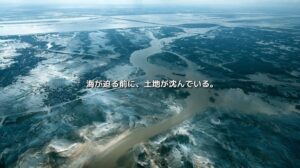
From above, a wetland may appear to have become productive farmland.
Below the surface, another process has begun.
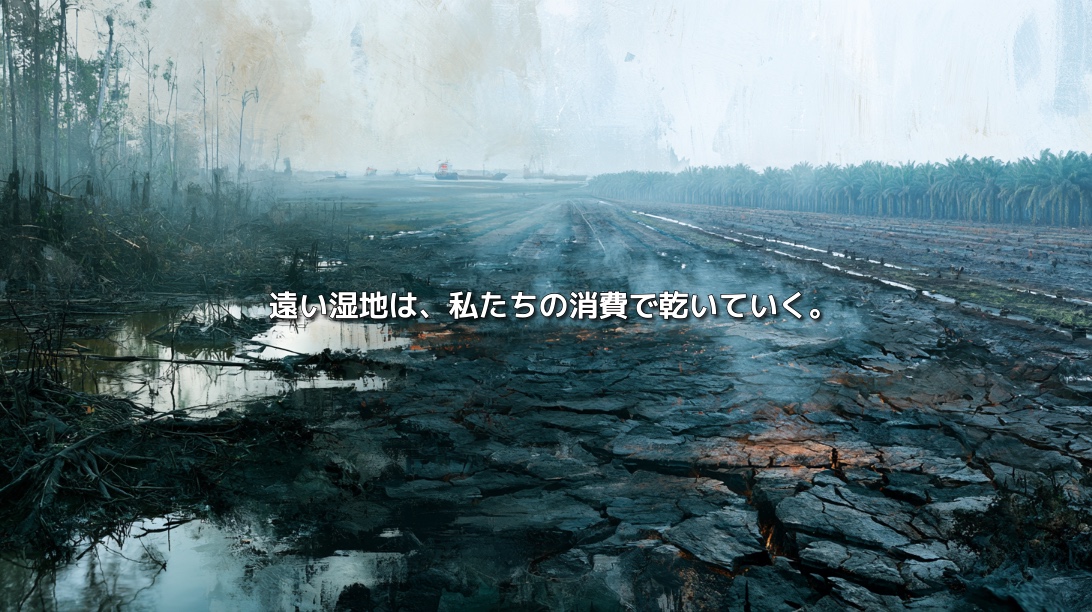
Exposure to oxygen allows microbes to break down the peat more rapidly. Stored carbon is released as carbon dioxide, and the peat loses volume.
The land gradually subsides. During dry periods, it becomes more vulnerable to fire.
The drainage that makes plantation development possible also creates the conditions for carbon emissions, subsidence and fire.
Fire Became a Cheap Way to Clear Land
Establishing a plantation requires removing existing vegetation.
Mechanical clearing and the removal of plant material cost money. Burning can clear large areas quickly and cheaply, which has encouraged its use in land preparation and the disposal of vegetation.
The causes of fires are nevertheless complex.
They can involve burning by smallholders, land disputes, deliberate ignition, accidents or flames spreading from neighboring areas. It would be misleading to attribute every fire to intentional clearance by a plantation company.
But once fire reaches drained peatland, the consequences can extend far beyond the original clearing operation.
Dry peat can smolder underground, releasing smoke and greenhouse gases while spreading through places that are difficult to see or reach.
Fire can cross property lines and administrative boundaries.
Smoke travels farther still, affecting neighboring countries such as Singapore and Malaysia.
The immediate savings from cheap land clearance may benefit a particular operation. The costs of fire and haze spread across society.
The 2015 Fires Revealed the Cost of “Cheap”
In 2015, Indonesia experienced devastating forest and peatland fires.
According to the figures cited in the Japanese article, approximately 2.6 million hectares burned between June and October. The World Bank estimated losses to Indonesia of at least US$16.1 billion, equivalent to around 1.9 percent of the country’s GDP at the time.
The damage extended beyond agriculture and forestry to transport, tourism, education, health and infrastructure.
Schools closed.
Flights were canceled.
Working outdoors became difficult or dangerous.
Smoke increased respiratory health risks and placed additional pressure on healthcare services.
These costs are not fully reflected in the prices of products made with palm oil.
Behind an inexpensive ingredient, society may be paying for illness, firefighting, carbon emissions and damaged ecosystems.
A low price can conceal costs that have been pushed outside the transaction.
At the Point of Consumption, the Peatland Disappears
When we choose a packet of biscuits, we rarely know which island produced the oil inside it.
Which plantation grew the fruit? Which mill processed it? From which port was the oil exported?
When oil from different sources is mixed, tracing an individual product back to a particular plantation becomes more difficult.
Palm oil moves through a long supply chain: growers, collectors, mills, refiners, traders, processors, manufacturers and retailers.
Along the way, the ingredient becomes detached from the landscape that produced it.
What reaches the shelf is a packaged snack, a pale cooking fat or a bottle of detergent.
The peatland’s water table is invisible.
So are its drainage canals and the communities living beside them.
The supply chain delivers raw materials efficiently across the world. Yet it can also strip away the information that connects those materials to particular places.
Consumers may care about environmental damage.
But the product often provides few clues that would allow them to recognize their connection to it.
Would Avoiding Palm Oil Solve the Problem?
Learning about peatland destruction can make avoiding palm oil seem like the obvious response.
A simple boycott, however, is not necessarily the best solution.
Oil palms produce relatively high quantities of oil per hectare. Replacing the same volume with soybean, rapeseed or sunflower oil could require more agricultural land.
Demand shifted to another oil may move pressure for agricultural expansion and deforestation elsewhere.
A sharp decline in demand could also affect smallholders whose livelihoods depend on oil palm cultivation.
The questions therefore extend beyond whether a product contains palm oil.
Can it be supplied without clearing more forests or draining more peatlands?
Can productivity improve on existing farmland while degraded landscapes are restored?
Can buyers trace production and address environmental and human rights risks?
Can companies help pay for the transition to more sustainable practices?
How much we consume and how that consumption is supplied are related questions. Both require attention.
Can Certification Make Distant Land Visible?
The Roundtable on Sustainable Palm Oil, or RSPO, provides one of the best-known frameworks for promoting more sustainable palm oil production.
It brings together growers, businesses, financial institutions and civil society organizations, with standards addressing issues such as forests, peatlands, fire, labor and human rights.
The Japanese article highlights the prohibition on new planting on peat established in RSPO’s 2018 Principles and Criteria.
Certification matters because it creates ways to record plantation information, assess production practices and connect those findings to purchasing decisions.
But certification does not remove every difficulty.
Supply chain models differ. Some keep certified material physically separate, while others allow certified and conventional material to be mixed under specified accounting rules.
Certification and auditing also require money, documentation and administrative capacity.
For a smallholder, these requirements can be substantial.
Unclear land rights create another obstacle. Farmers unable to demonstrate legal tenure may struggle to qualify for certification or access formal purchasing networks.
Setting demanding standards is only part of the work.
Producers also need the means to meet them.
Excluding Smallholders Can Make Problems Harder to See
Many Indonesian smallholders grow oil palms on plots of only a few hectares.
Their circumstances vary widely: planting material, yields, fertilizer access, finance, land registration and connections to mills all affect what they can achieve.
Corporate commitments to avoid deforestation and peatland development are important.
Yet asking farmers for location data, proof of land rights and detailed records without providing support can exclude them from formal supply chains.
A company may then appear to have reduced its exposure to risk.
The excluded farmers may simply sell into less transparent markets.
The underlying production has not necessarily improved. It has moved beyond the buyer’s field of vision.
Sustainable sourcing must therefore include practical support: better planting material, agricultural training, group certification, land documentation and access to finance.
Traceability can be more than a system for monitoring producers. It can also be a map for directing support to them.
Producing More on Existing Farmland
As demand for palm oil continues, limiting expansion into forests and peatlands requires attention to land already under cultivation.
Some smallholders continue farming aging palms or low-yielding planting material.
Replanting with better seedlings, improving fertilizer management, controlling pests and reducing losses during harvesting and transport can increase production from the same area.
But replanting creates a difficult transition.
After old palms are removed, newly planted palms take several years to produce a harvest. During that period, farmers can lose their main income.
Knowing that yields may eventually improve does not pay for food, housing or school expenses in the meantime.
Productivity improvements intended to protect forests therefore require more than agricultural advice.
They may also require loans, grants and support for household income during the transition.
Environmental damage is not always the result of insufficient knowledge.
Sometimes people understand the better option but cannot afford the years between choosing it and benefiting from it.
Making Peatlands Wet Again
Peatland restoration in Indonesia has involved three connected approaches: rewetting, revegetation and the revitalization of local livelihoods.
Canal barriers reduce water loss and help raise water tables, making peat less vulnerable to drying.
Vegetation suited to wetter conditions can then be restored.
At the same time, communities need ways to earn income without draining peat or relying on fire.
Blocking canals alone cannot make restoration last.
If households depend on oil palms or other crops that require drained conditions, a higher water table may undermine their existing livelihoods. Without viable alternatives, drainage canals may be reopened.
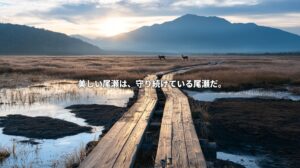
Protecting wetlands and sustaining local communities are inseparable.
A landscape cannot simply be returned to its former ecological condition while the economy built around its drainage remains unchanged.
Using Wet Land While Keeping It Wet
One approach being explored is paludiculture: productive land use that maintains wet peat conditions.
Depending on local conditions, suitable plants may include sago palms and jelutung trees, with products used for food, latex and other materials.
The principle is to select production systems that fit the land’s hydrology.
Conventional development drains the wetland to accommodate a chosen crop.
Paludiculture asks what can be produced while the land stays wet.
But planting an alternative crop does not automatically create a viable industry.
Processing facilities, transport, quality standards, reliable buyers and stable prices are also necessary.
Farmers cannot easily leave an established palm oil market for a product with uncertain demand.
Restoration and livelihoods become connected when the supply chain extends all the way to buyers willing to pay a viable price for products from wet landscapes.
Is Biofuel Automatically Better for the Environment?
Palm oil is also used to produce biodiesel.
Plant-based fuels can seem environmentally preferable because they offer a way to reduce fossil fuel use.
Their environmental performance, however, depends partly on how the feedstock is produced.
Clearing forests or developing peatlands can generate substantial emissions through land-use change.
Drained peat continues releasing carbon while the plantation operates. Fire adds further emissions.
Looking only at fuel use in a vehicle can miss these upstream consequences.
A fuller assessment considers plantation establishment, cultivation, processing, transport and combustion.
The outcome can vary greatly depending on the land from which the feedstock comes.
A fuel’s plant origin alone does not establish its sustainability.
The landscape changed to produce it also matters.
Corporate Responsibility Continues Beyond the Purchase
Food and personal care companies are connected to plantations through procurement, even when they own no agricultural land themselves.
Purchasing decisions based only on price, quality and delivery schedules can push environmental and labor costs back onto producers and surrounding communities.
Sustainable sourcing requires knowing suppliers, identifying higher-risk areas and establishing procedures for addressing problems.
Buying certified material can contribute to that work, but it does not replace it.
Ending a trading relationship is not always the most effective response.
Producers willing and able to improve may need support. Repeated violations may require clear deadlines and consequences.
Companies should explain more than how much palm oil they buy.
How far can they trace it?
How do they handle complaints?
What support do they provide to smallholders?
How do they assess whether their interventions lead to improvement?
Companies near the consumer end of the chain may be geographically distant from plantations.
Their purchasing power nevertheless reaches those places.
Responsibility follows that influence.
Consumer Responsibility Must Extend Beyond Individual Choice
Consumers can choose products using certified palm oil, examine companies’ sourcing commitments, avoid unnecessary purchases and reduce food waste.
But there are limits to how much research any individual can do.
Expecting everyone to investigate the origins and certification models of thousands of products makes responsible consumption dependent on available time and information.
A stronger system would ensure that products meet meaningful environmental and human rights standards without requiring every shopper to conduct an investigation.
That requires corporate disclosure, financial due diligence, land-use regulation, law enforcement, producer support and scrutiny of deforestation risks in importing markets.
Individual purchasing decisions can encourage these changes.
They cannot carry the entire responsibility for reshaping global land use.
What Lies Between a Cheap Product and a Distant Wetland?
A drainage canal is dug into an Indonesian peatland.
The ground dries.
Oil palms are planted.
Fruit is harvested and taken to a mill. Oil is extracted, refined and shipped overseas.
It becomes food or a household product and enters our everyday lives.
Through this sequence, a landscape becomes a commodity.
Yet the final price may not include the full cost of released carbon, subsidence, haze, biodiversity loss or damage to local health.
We see the product and judge it inexpensive.
The palm oil problem belongs to more than a particular company, farmer or country.
It concerns the conditions that markets seeking low prices and convenience impose on distant land.
More Than Forests Are Burning
Images of peatland fires show black smoke and red flames.
They rarely show the arrangements that helped create the conditions for those fires.
Purchase orders.
International commodity prices.
Farmers’ debts.
The years without income during replanting.
Certification paperwork.
Residents unable to prove their land rights.
Consumers who cannot see where an ingredient began.
The fires reveal a global system that delivers convenience while allowing the costs in producing landscapes to remain out of sight.
The response must reach beyond those landscapes too.
Keep peatlands wet.
Prevent further forest conversion.
Improve production on existing farmland.
Help smallholders make the transition to sustainable practices.
Trace ingredients back to the land that produced them.
And bring the costs of protecting ecosystems and livelihoods into product prices and supply chain decisions.
The change we need reaches beyond a single oil. It concerns a structure of consumption that makes losses in distant places disappear.