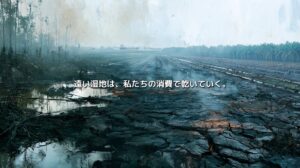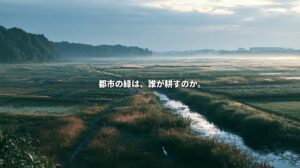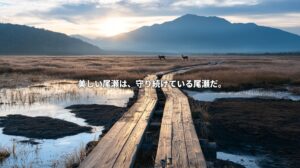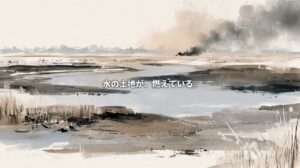
The forest is burning.
In satellite images, red dots mark detected heat sources while gray smoke spreads across the sky. Flames consume trees and leave blackened ground behind.
But even when the visible flames are gone, the fire may continue.
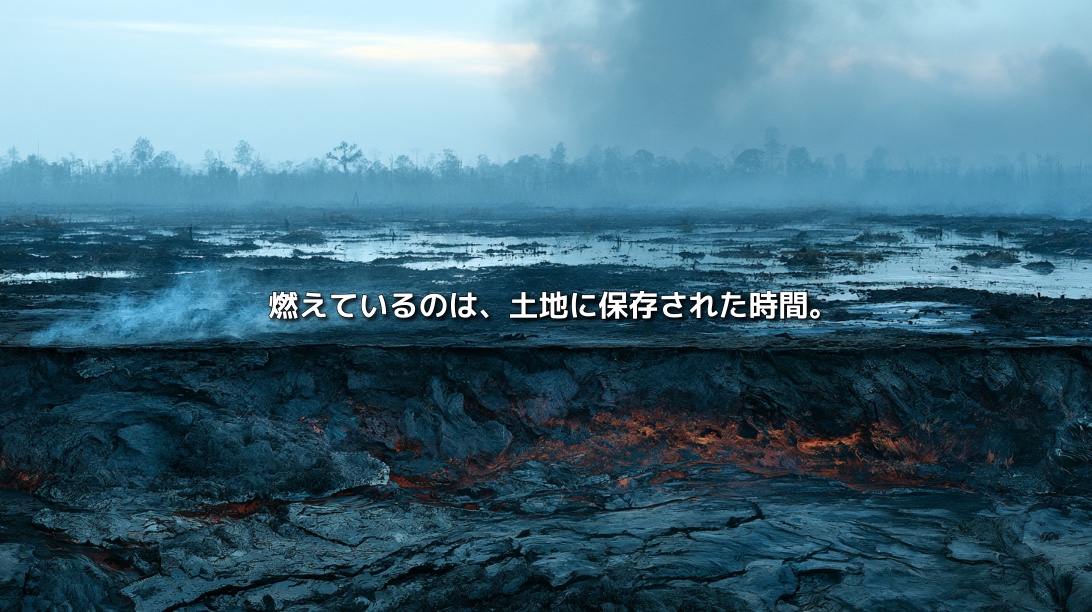
It can enter the soil and slowly burn the carbon-rich material beneath the surface. The heat is difficult to see. A little rain may not extinguish it. Smoke can rise again from a place that appeared to be safe.
What burns underground is not ordinary soil. It is the remains of plants that accumulated over hundreds or thousands of years.
In the second article in our wetlands series, we examine how peatlands—among the planet’s largest land-based carbon stores—can become major sources of greenhouse gases when they are drained and burned. neoterrainjournal.com
Peatlands Are Places Where Time Accumulates Underground
When plants die, microorganisms usually break them down, returning much of their carbon to the atmosphere.
In wetlands that remain waterlogged, little oxygen reaches the soil. Decomposition slows. Dead plant material does not break down completely and gradually accumulates as peat. Land with substantial deposits of this material is called peatland.
Peatlands occur far beyond cold northern bogs. They are found in Southeast Asian forests, the Amazon and Congo basins, North America, northern Europe and Russia.
Peat forms slowly. A layer several metres deep may preserve a record of plants and carbon accumulated over thousands of years. The grasses or trees visible today are only the surface of a much older landscape. neoterrainjournal.com
About 3% of Land Holds Roughly Twice the Carbon in the World’s Forests
Peatlands cover only about 3% of Earth’s land area, yet UNEP reports that they store approximately twice as much carbon as all the world’s forests.
The carbon in a forest is visible in trunks, branches and roots. Much of a peatland’s carbon lies hidden below ground. A wet field or low-lying forest may not look like an immense carbon reservoir.
Water is what helps keep that reservoir intact. By limiting oxygen in the soil, persistent wetness slows the decomposition of the plants that built the peat. unep.org
The First Step Toward Fire Is Often Drainage
Waterlogged peatland can be difficult to use for conventional farming, plantations or roads. Developers may dig canals and lower the water table to make the land accessible.
That changes more than the location of the water. Peat previously kept wet is exposed to air. Oxygen enters, decomposition speeds up, and stored carbon begins to return to the atmosphere as carbon dioxide.
A peatland can therefore become a source of greenhouse gases before any fire starts. UNEP estimates that degraded peatlands account for about 4% of annual human-caused greenhouse gas emissions; the estimate it cites for drained land excludes fire emissions.
Draining a peatland opens a carbon store that water had helped keep closed. neoterrainjournal.com
Dry Peat Becomes Fuel Beneath Our Feet
Peat contains a high proportion of plant-derived organic matter. While it holds enough water, it is difficult for fire to penetrate deeply. Once drained and dried by prolonged heat or lack of rain, the ground itself can become fuel.
A fire may begin in surface vegetation or from human activity and then reach the peat layer. At that point, its behaviour changes. Instead of burning quickly with visible flames, hot material can move slowly through the peat in a process called smouldering combustion.
The fire may travel downward and spread sideways through roots and spaces in the soil. Water sprayed on the surface may never reach the burning material below. Even when smoke subsides, a hidden fire can later reappear elsewhere. neoterrainjournal.com
Why Are Peat Fires So Difficult to Extinguish?
The source of the heat is often hidden. Smoke and warm ground may reveal that peat is burning, but they do not necessarily show its depth or direction of travel.
Satellites are invaluable for monitoring fires over large areas. Underground burning, however, can be harder to detect through the peat, vegetation, smoke or cloud. On the ground, soft terrain and limited roads can make access difficult. Supplying enough water over a large area is another challenge.
Putting out visible flames may not be enough. Firefighters may need to saturate the peat itself. In some cases, restoring water to the ground is crucial to preventing the fire from continuing or returning. neoterrainjournal.com
One Hectare Can Release Far More Carbon
A forest fire burns vegetation above the ground. A peat fire can also consume carbon accumulated beneath it.
According to UNEP, peatland fires can release up to ten times more carbon per hectare than typical forest fires. The amount varies by site and by how deeply the peat burns, but the reason for the difference is clear: the fuel extends into the soil.
Replanting trees after a fire does not quickly replace the peat that has been lost. Carbon stored over centuries or millennia can be released during weeks or months of burning.
A peat fire consumes more than the plants growing today. It releases carbon that earlier plants removed from the atmosphere and that the land held for generations. unep.org
Smoke Crosses Borders and Disrupts Lives
Greenhouse gases are only part of the damage. Smouldering peat produces heavy smoke containing fine particles and other pollutants.
Wildfire smoke can harm health, particularly through exposure to PM2.5, particles small enough to travel deep into the lungs. Smoke can irritate the eyes and throat and worsen respiratory and cardiovascular conditions.
Wind can carry it far from the fire. In Southeast Asia, smoke from forest and peatland fires in Indonesia has repeatedly affected neighbouring countries, including Singapore and Malaysia. Poor visibility can disrupt flights; schools, outdoor work and commerce can also be affected.
A drainage decision in one place can eventually become a public health and economic concern far beyond it. neoterrainjournal.com
Indonesia’s Fires in 2026
In September 2026, NASA documented fires and thick smoke over parts of Borneo during drought conditions in Indonesia. Its Aqua satellite captured widespread fire detections on September 1. NASA reported that peat was burning both at the surface and underground.
Heat and dry weather help fires spread, but weather is only part of the explanation. Peatland that has already been drained is more vulnerable when drought arrives. Climate conditions and past land-use decisions can reinforce one another, creating the conditions for severe fires. NASA Science
Is Palm Oil the Only Cause?
Palm oil plantations often feature in discussions of Southeast Asian peatland fires. Establishing plantations can involve clearing forest and digging drainage canals. If fire is then used to clear vegetation, flames may spread into dry peat.
But the issue reaches beyond a single crop or the people living near a fire. Palm oil is used in foods, detergents, cosmetics and other products sold worldwide. Global demand helps shape land-use decisions in producing regions.
Peatlands are also altered for other agriculture, pulpwood plantations, grazing, urban development and peat extraction. The longer the supply chain, the easier it is for consumers to lose sight of what happened to the land where a product began.
Smoke may make a fire visible across borders. The market pressures connected to that land can cross borders long before the smoke does. neoterrainjournal.com
When Peat Burns, the Ground Gets Lower
Drainage causes peat to decompose and the ground to subside. Fire removes more of the peat layer, reducing ground elevation further.
That loss can create a second set of problems. Lower land may be more vulnerable to flooding or prolonged inundation during the rainy season. In coastal areas, sea-level rise and saltwater intrusion can add to the pressure.
A landscape may then face fire in dry periods and flooding in wet ones. The material lost to the flames was both a carbon store and part of the land itself. Its depth cannot be quickly rebuilt. neoterrainjournal.com
Restoration Begins by Bringing Back Water
Early detection, satellite monitoring and firefighting remain essential. But preventing deep peat fires also requires changing the conditions that allow peat to dry.
Rewetting can involve blocking drainage canals, raising the water table and restoring plants suited to wet conditions. The goal is to keep the peat moist enough to slow decomposition and reduce the chance of deep burning.
Rewetting requires careful planning. Higher groundwater may affect crops or buildings on land already in use. Neighbouring landowners may have different water needs, and drainage in one area can affect another. Water must be managed across the connected peatland, rather than one parcel at a time. neoterrainjournal.com
Using Wet Land While Keeping It Wet
Conservation does not necessarily mean excluding people from peatlands. One approach, known as paludiculture, explores ways to grow useful plants while maintaining wet conditions.
Depending on the region, wetland plants may provide materials for fibres, construction, food or other uses. The central idea is to adapt production to the land’s water conditions instead of draining the land to suit conventional production.
Using wet land while keeping it wet is a way to reconsider livelihoods alongside fire prevention and carbon protection. neoterrainjournal.com
The Flames Do Not Tell the Whole Story
When peat fires make the news, we see flames, smoke-filled cities and people fighting the blaze.
The conditions behind that image may have begun years earlier: a drainage canal, a land-use permit, a decision about crops or raw materials, or pressure to produce at a lower cost.
Looking only at the moment of ignition cannot explain why the ground was ready to burn. A peat fire may have a long history written into the way water was removed from the land.
What Burns Is Time Stored in the Land
Peatlands have held the carbon of past plants beneath the ground for hundreds or thousands of years. Drainage begins to release it through decomposition. Fire can release much more in a short period.
A forest can be replanted. A peat layer built over millennia cannot be restored on a human timescale.
Protecting peatland means caring for carbon inherited from the past and keeping it in the ground for the future. Extinguishing a fire matters, but so does restoring the wet conditions that make another deep fire less likely.
When a peatland dries, it loses more than water. It begins to lose the time stored beneath its surface. neoterrainjournal.com