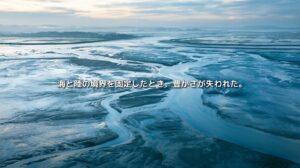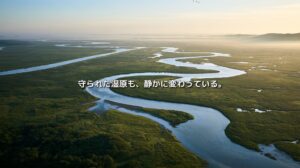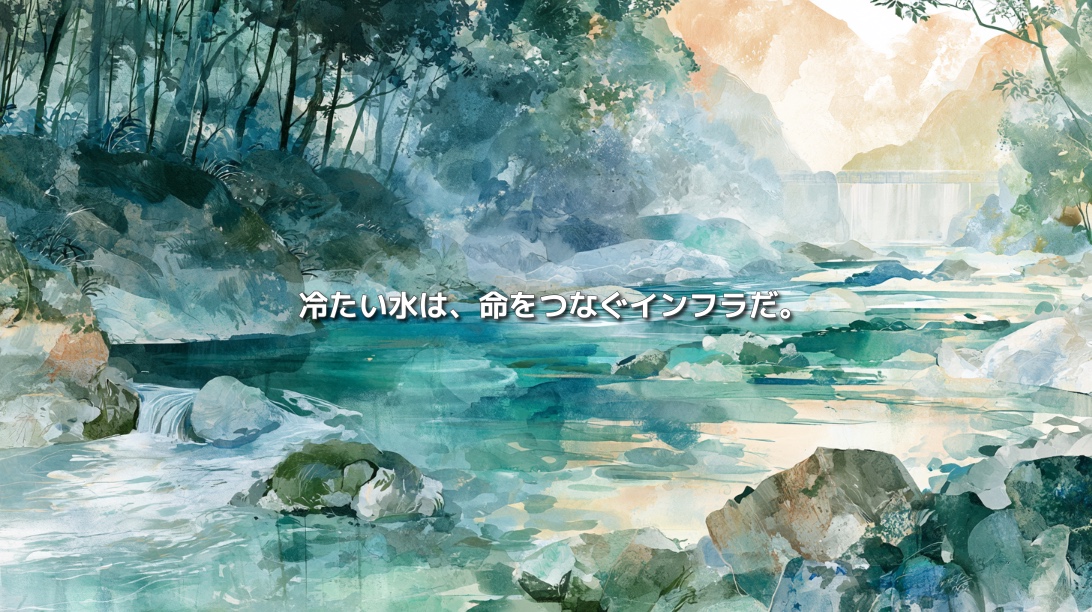
As river temperatures continue to rise, what should we protect?
Cooling an entire river artificially is not realistic. We cannot install enormous cooling systems along every waterway, nor can we lower summer air temperatures in one region alone.
Yet rivers already contain places that remain cooler than their surroundings.
Places where forest shade covers the water.
Places where springs flow into the river.
Confluences where cooler tributaries meet the main channel.
Sections where groundwater rises through the riverbed.
Deep pools that retain lower temperatures.
And downstream reaches where dams can release water at an appropriate temperature.
We can protect these places, reconnect them, and, where necessary, restore them.
The future of river management does not depend on keeping an entire river at a uniform temperature. It depends on preserving a network of cold-water habitats where aquatic life can escape extreme heat.
Roads, levees, water systems, and electricity are not the only forms of infrastructure.
In an era of climate change, cold water itself can become infrastructure that sustains life.
Average River Temperature Does Not Reveal Where Life Can Survive
River temperatures are often assessed using a single monitoring point or a daily average.
Average temperature is essential for understanding long-term change. But the temperatures that fish actually experience are not uniform throughout a river.
Even within the same river and at the same time of day, a sunlit shallow reach may be much warmer than a deep pool beneath tree cover.
The main channel may be warm, while a nearby tributary creates a localized pocket of cooler water at its confluence. Where groundwater emerges from the riverbed, bands of cold water may extend through an otherwise warm channel.
These places are known as cold-water refuges, or thermal refugia.
International research generally defines a cold-water refuge as an area that remains cooler than the surrounding river and can be temporarily used by cold-water species during periods of high temperature.
What matters is not simply whether a place remains cold throughout the year.
Does it stay within a tolerable temperature range when the rest of the river becomes dangerously warm?
Can fish reach it?
Is it large and deep enough?
Can aquatic organisms hide from predators, breathe, feed, and rest there?
Low temperature alone does not make a viable habitat.
Temperature, flow, depth, oxygen, food, shelter, and connectivity must overlap before a cool location can truly become a refuge for life.
Springs Are Underground Reserves That Stabilize River Temperatures
Springs play an important role in stabilizing river temperatures.
Rain and snow infiltrate the soil, travel slowly underground, and eventually return to the surface. Because spring water originates underground, it is relatively insulated from short-term changes in air temperature.
It may be cooler than surrounding river water in summer and comparatively warmer in winter.
This thermal stability supports fish, aquatic insects, amphibians, aquatic plants, and many other organisms.
Protecting a spring, however, requires more than conserving the immediate place where the water emerges.
The water may originate as rain that fell far away—in forests, farmland, uplands, or residential areas—before infiltrating the ground and moving through an aquifer.
When land surfaces are paved, rainwater is rapidly discharged into drainage systems. Excessive groundwater pumping can lower the water table, while land development can alter underground flow paths.
As a result, spring discharge may decline, or the point where the water emerges may shift.
Protecting a spring therefore means protecting the entire pathway of water: from the place where rain enters the ground, through its underground journey, to the point where it reaches the river.
A river’s coolness is not created only by the water visible at the surface.
It is also sustained by invisible water stored beneath the watershed.
Riparian Forests Do More Than Provide Shade
Trees growing along rivers cast shade across the water.
During summer, riparian forests reduce the amount of direct solar radiation entering the river and limit heat absorption.
A modelling study of an overseas river network suggested that restoring shade from riparian vegetation could reduce the average August stream temperature across the watershed by approximately 0.62°C.
This figure reflects the conditions of a particular region and cannot be applied directly to every river.
The cooling effect varies according to channel width, water depth, discharge, river orientation, tree height, and vegetation density. Smaller tributaries and headwater streams, where tree canopies can cover a larger portion of the water surface, may benefit more from shade than large rivers.
Shade, however, is only one function of a riparian forest.
Tree roots stabilize riverbanks.
Fallen trees and branches create variations in current and depth.
Leaves and terrestrial insects become food for aquatic organisms.
Vegetation provides movement corridors for birds and insects.
Forest soils also allow rainwater to infiltrate the ground more easily.
A riparian forest is both a natural cooling system and an ecosystem that connects land and water.
Planting trees does not produce sufficient shade within a single year. Trees need time to mature and extend their branches over the river.
Floods, drifting wood, levee maintenance, sunlight requirements for farmland, and proximity to roads and homes must also be considered.
This is why protecting existing riparian forests is so important.
The shade once created by a mature tree cannot immediately be replaced by a young seedling.
Riparian forests are long-term environmental infrastructure that may take decades to develop.
Pools and Tributaries Form Escape Routes Within Rivers
A straight, shallow, and uniform channel may be easier to manage for rapid water conveyance.
For aquatic organisms, however, it may offer few places to escape.
A more natural river contains diverse environments: shallow riffles, deep pools, slow-moving banks, sandbars, gravel beds, and vegetated margins.
In deep pools, water temperatures may differ between the surface and the bottom. Cooler zones can also form where tributaries or springs enter the main channel.
These temperature differences give fish options.
They can move when the water becomes too warm.
They can enter quieter margins when the current becomes strong.
They can travel toward suitable riverbeds during the spawning season.
Juvenile fish can remain in areas with slower flow.
River organisms do not necessarily spend their entire lives in one location.
Japan’s Ministry of the Environment has emphasized that freshwater fish need access to interconnected habitats—including rivers, lakes, rice paddies, channels, ponds, and springs—to complete their life cycles.
Protecting one isolated cold-water site is not enough.
The flow paths that allow animals to reach it must remain open.
Cold-water refuges must be connected to spawning grounds, feeding areas, and overwintering habitats.
Climate adaptation for rivers is not only about protecting individual cold spots.
It is about turning isolated points into a connected network.
Fish Passages Can Become Escape Routes from Warming
Dams, weirs, drop structures, and erosion-control facilities serve important purposes, including flood control, water supply, power generation, and disaster prevention.
At the same time, they can obstruct fish movement.
As river temperatures rise, cold-water fish may attempt to move upstream toward higher elevations and cooler water.
If an impassable structure blocks the route, they cannot reach suitable habitat—even if that habitat still exists farther upstream.
Fish passages have traditionally been designed to help species such as salmon and ayu move between spawning and feeding habitats.
In the future, their function as escape routes from extreme heat will become increasingly important.
Installing a fish passage, however, does not automatically guarantee connectivity.
Can the target species find its entrance?
Can the fish overcome its current speed and elevation difference?
Does water continue to flow through it during droughts?
Is suitable habitat actually available beyond the passage?
Has the structure been maintained, or is it blocked by sediment and driftwood?
The presence of a structure matters less than whether living organisms can genuinely use it.
As climate change shifts the distribution of aquatic species, river connectivity itself becomes a form of adaptive capacity.
Dam Water Can Be Managed by Temperature
Reservoirs can develop distinct temperature layers depending on the season.
Warm water may accumulate near the surface, while colder water remains in deeper layers.
If a dam’s normal outlet is located at depth, unusually cold water may be continuously released downstream. Conversely, drawing warmer surface water may raise downstream temperatures.
When release temperatures diverge from the river’s natural seasonal cycle, they can affect fish spawning, egg development, growth, and the emergence of aquatic insects.
Selective withdrawal systems offer one possible response.
These systems can draw water from multiple depths. By adjusting which layer is used, when it is released, and how much is discharged, dam operators may be able to bring downstream temperatures closer to those of incoming rivers or reduce episodes of extreme heat.
Japan’s National Institute for Environmental Studies has been examining changes in freshwater fish distribution under climate warming, as well as the potential of selective dam withdrawal to moderate downstream water temperatures.
The solution, however, is not as simple as releasing colder water.
Deep reservoir water may contain little oxygen. Nutrient levels, turbidity, water quality, hydropower generation, agricultural supply, drinking water, and flood control must all be considered simultaneously.
Cold water is also finite.
If too much is released early in the summer, there may not be enough left for the hottest and most ecologically critical period.
Temperature management at a dam is not merely the act of releasing cold water.
It is the strategic allocation of a limited thermal resource in response to seasonal conditions and ecological change.
Mapping the River’s Remaining Cold Water
Before adaptation measures can begin, we need to know where cold water still exists.
A single monitoring station cannot reveal the many thermal refuges scattered throughout a river system.
Small temperature sensors can be installed at multiple points from upstream to downstream.
Measurements can be taken where tributaries and springs enter the main channel.
Monitoring should record not only the daytime maximum but also how far temperatures fall at night.
Additional surveys can focus on drought periods and extreme heat events.
Thermal infrared imagery captured by drones or aircraft can also reveal variations in water-surface temperature across a wider area.
These data can then be combined with information about fish distribution, fish passages, weirs, dams, riparian forests, groundwater, and water-intake points.
Together, they create a thermal map of the river.
Where does the water become especially warm?
Where does cold water remain?
Are cold-water habitats connected?
Which structures are preventing fish movement?
This map can guide the order in which measures should be implemented.
Even when an entire river cannot be restored at once, the most important cold-water areas and their connecting routes can be protected first.
Who Is Responsible for a River’s Coolness?
No single organisation can protect river temperature on its own.
River authorities manage channels, levees, and flow.
Dam operators manage storage and water releases.
Municipal governments influence land use, parks, drainage systems, and local environmental policy.
Farmers and irrigation associations manage water abstraction and use.
Forest owners manage upstream forests and riparian vegetation.
Local residents, fishing cooperatives, researchers, and civic organisations often possess detailed knowledge about ecological change and the characteristics of the local environment.
Protecting cold water requires these different forms of knowledge and management to be connected.
Upstream forest management.
Groundwater recharge.
Riparian forest conservation.
Adjustments to water abstraction.
Maintenance of fish passages.
Dam-release strategies.
Monitoring of temperature and aquatic life.
If each measure is implemented as a separate project, the thermal environment of the river as a whole cannot be protected.
The watershed must be understood as a single temperature system.
Protecting Existing Nature Is a Form of Climate Adaptation
Climate adaptation often brings to mind new equipment or large-scale technologies.
For rising river temperatures, however, the most practical response may be to avoid losing the natural systems that already exist.
Preserve springs.
Maintain connections with tributaries.
Avoid excessive removal of riparian trees.
Do not fill deep pools unnecessarily.
Protect the connection between groundwater and the riverbed.
Keep migration routes open for aquatic organisms.
These actions do not represent an absence of intervention.
They maintain nature’s cooling and refuge functions as part of society’s essential infrastructure.
Of course, conservation alone cannot prevent every impact of climate change.
Riparian shade has limits. Spring discharge may decline when groundwater levels fall. The volume of cold water stored in reservoirs is finite.
No single measure is sufficient.
Forests, groundwater, tributaries, pools, fish passages, and dam operations must work together.
Cold-water habitats must be distributed throughout the river and connected by accessible migration routes.
River adaptation does not depend on one enormous piece of infrastructure.
It depends on many small refuges.
Cold Water Is a Public Asset for the Future
For generations, people have taken the coolness of rivers for granted.
Water in the mountains is cold.
The air beside a shaded stream feels cool.
Char and yamame trout inhabit mountain rivers.
As the climate changes, these familiar conditions can no longer be assumed.
Cold water is not an inexhaustible resource.
It is an environmental condition created over long periods by watershed forests, soil, groundwater, river topography, and human patterns of water use.
We must therefore stop thinking of cold water as a fortunate remnant of nature and begin treating it as a public asset to be passed on to the future.
Just as roads support human movement.
Just as water systems sustain everyday life.
Riparian forests, springs, tributaries, pools, fish passages, and cold reservoir water can form a network that enables living organisms to survive climate change.
Cold water is the last remaining margin within a warming river.
Finding that margin, protecting it, and reconnecting it—
this may be the new task of river management in an age of extreme heat.
References
- National Institute for Environmental Studies, Japan: Predicting Climate-Driven Changes in the Distribution of River Fish and Evaluating Mitigation Through Dam Operations
- Ministry of the Environment, Japan: Recommendations for the Conservation of Freshwater Fish Primarily Dependent on Secondary Natural Habitats
- Mejia et al.: Closing the Gap Between Science and Management of Cold-Water Refuges in Rivers and Streams
- Fuller et al.: Riparian Vegetation Shade Restoration and Loss Effects on Stream Temperatures
- Rheinheimer et al.: Optimizing Selective Withdrawal from Reservoirs to Manage Downstream Temperatures with Climate Warming
- Public Works Research Institute, Japan: Passing Healthy Rivers on to the Future