Reading a Port Town’s History Through Its Warehouses, Railway, and Waterfront
NEOTERRAIN Journal | Intellectual Travel | Otaru, Hokkaido
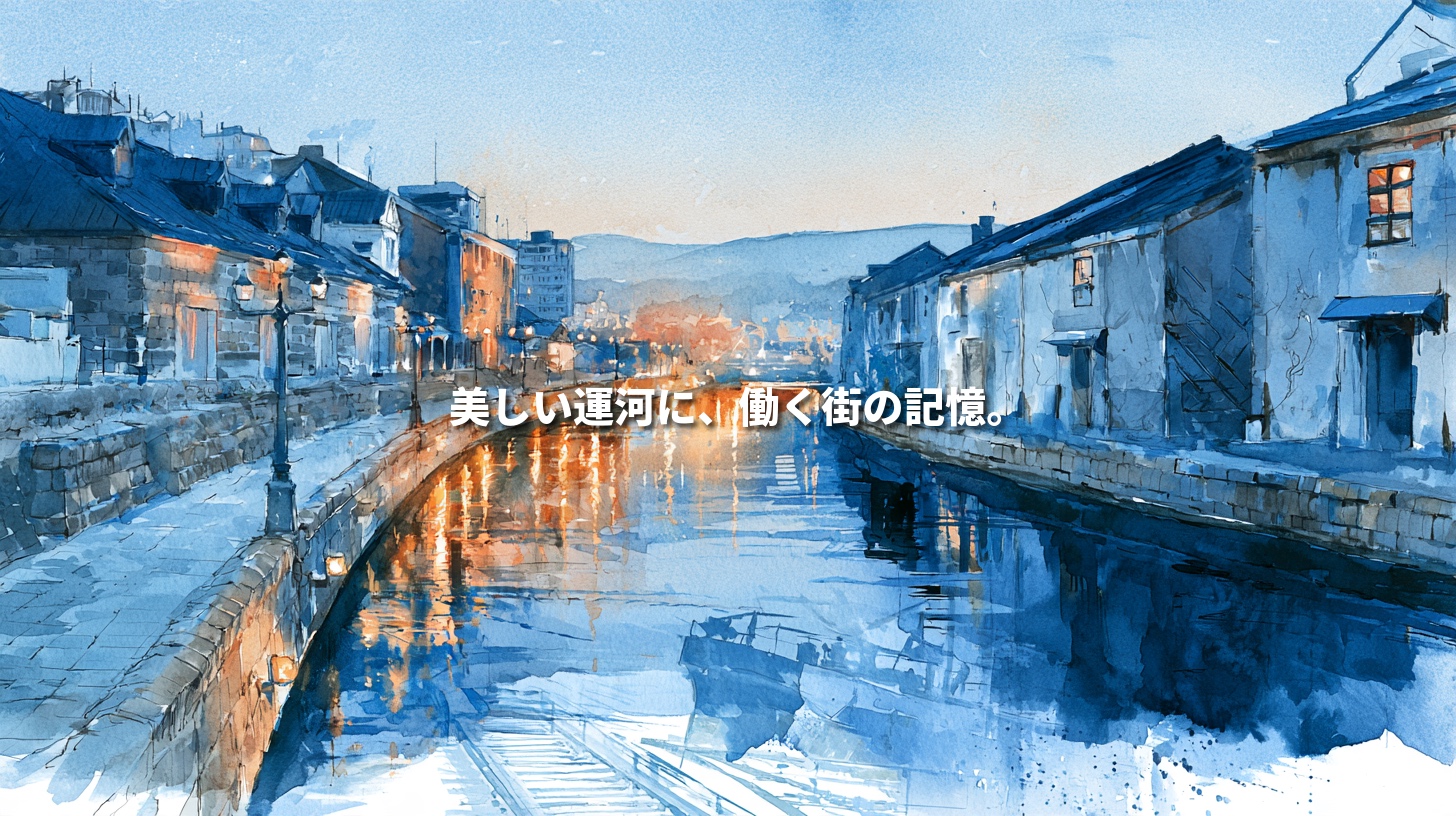
At dusk, another town appears on the surface of Otaru Canal.
Stone warehouse walls tremble in reflection. Lights stretch into thin ribbons across the water. Someone walking along the promenade stops and raises a camera.
Eyes that followed the outlines of buildings in daylight begin to follow the softening glow.
Here is the view you hoped to find on your journey.
Yet this canal began as a place of work.
Boats carried cargo along the water. Warehouses stored merchandise. A railway connected the port with the interior, while merchants and banks gathered in the town.
Much of what we now find beautiful once served the practical needs of someone’s working day.
Knowing that gives Otaru’s familiar landscape another depth. neoterrainjournal.com
Reclaiming the Sea, Leaving a Waterway
There is something unexpected about the origins of Otaru Canal.
Although it resembles a river, it was not dug into the land. It was created by reclaiming land offshore while leaving a channel of water between the reclaimed ground and the original shoreline.
Completed in 1923, the canal follows a gentle curve that reflects its coastal origins.
At the time, large vessels anchored offshore. Smaller cargo boats, known as lighters, transported goods between those ships and the shore.
As cargo volumes increased, the port needed more space for unloading. The canal extended the waterfront where these smaller boats could berth. 小樽市
Try looking at its curve as a route of movement.
From ship to boat.
From boat to shore.
From shore to warehouse.
Between the water and the stone walls lay a system that kept the town’s economy moving.
Receiving goods. Checking them. Carrying them inside.
The waterfront was arranged around these repeated tasks.
Warehouse doors and their proximity to the water begin to look different when considered through the work they supported.
Understanding a landscape also means imagining why its particular forms were needed.
Beyond the Rails Lay Inland Coal Mines
A short distance from the canal, the tracks of the former Temiya railway line remain within the town.
People walk beside rails where trains no longer run.
The route now accommodates a slower kind of journey.
Following its history takes us inland, beyond Otaru’s waterfront.
The line originated as part of the government-operated Horonai Railway, Hokkaido’s first railway. The section between Temiya and Sapporo opened in 1880, and the route reached Horonai in 1882.
A principal purpose was to transport coal from the Horonai mine, in present-day Mikasa, to the port of Otaru.
The town’s development cannot be understood by looking only toward the sea.
Resources lay inland. Railways carried them. The port sent them onward.
Otaru grew within those connections.
The Japan Heritage story known as Tantetsukō—“coal, iron, and ports”—brings together the coal mines of Sorachi, the steel industry of Muroran, Otaru’s port, and the railways linking them as parts of Hokkaido’s industrial development.
The rails beneath your feet belonged to that larger network.
Even this quiet stretch of track once had cargo to carry and a destination to reach.
Walking beside it becomes a way of tracing relationships between places.
Why Banks Gathered Near the Port
Walk farther into Otaru, and substantial historic buildings come into view.
Around Ironai Street and Nichigin Street, former bank buildings mark an area often called the “Wall Street of the North.”
Banks established a strong presence here from the Meiji period through the early Shōwa years.
The movement of cargo required financial support.
Merchants needed funds to purchase goods. Transactions required payment. Trade with distant partners depended on trust.
As commerce expanded, financial institutions developed alongside it.
Trading companies associated with major business groups and the coal industry also established themselves in the Ironai district.
Port, railway, warehouses, trading companies, banks.
Together, they formed the working structure of a commercial town.
Visit the waterfront warehouses and the former banks in succession, and their relationship becomes easier to see.
One held the goods.
The other helped support the transactions that moved them.
Behind the weight of the architecture, imagine the contracts signed here and the business conducted with places far away.
Otaru offers the pleasure of looking at historic buildings alongside the interest of understanding how an economy worked.
This Landscape Was Never Guaranteed to Survive
Looking at the canal today, it is easy to assume that its preservation was always assured.
It might instead have disappeared beneath reclaimed land.
After the Second World War, improvements to port wharves allowed cargo to be handled directly from large ships. The canal’s role in lighter transport diminished.
In 1966, an urban plan was approved to fill in the canal and build a road intended to ease traffic congestion.
The town had transport needs to address.
Other people feared losing the canal and its warehouses.
A preservation movement grew, and debate over reclamation and conservation continued for more than a decade.
In 1986, partial reclamation and the creation of a promenade and landscaped spaces gave the canal its present form.
The section beside the road is now twenty meters wide. Farther north, the area known as the North Canal retains its original width of forty meters. 小樽市
That difference in width makes the town’s long debate visible.
“Preserve the old” sounds straightforward.
In practice, preservation involves transport, livelihoods, public spending, and economic change.
What should remain?
What should change?
Who pays, and how will the place continue to be used?
Otaru Canal carries the results of decisions made around those difficult questions.
Even the opportunity to pause beside this water had to be created.
Opening Warehouse Doors to a Different Future
Some stone warehouses beside the canal now serve as restaurants and other businesses.
Spaces that once received cargo now welcome visitors.
Their changing uses offer a useful perspective on the future of historic places.
A building can accommodate new activities after its original purpose has ended.
Thick walls, high ceilings, and materials weathered by years of use were shaped by earlier work.
Meals and conversations now bring different rhythms into those spaces.
Adapting old buildings takes care and investment. Their age alone cannot ensure that people will come.
Yet the structures left by one kind of work can support another.
Otaru’s industrial buildings and waterways have acquired new roles within tourism.
People now travel to places once devoted to moving goods, hoping to encounter something of the time held there.
Connect the Water, Rails, and Stone Walls
When visiting Otaru, add a walk through the surrounding streets to your time beside the canal.
At the waterfront, notice how close the warehouses stand to the water.
Imagine cargo boats arriving and goods being carried through the doors.
Along the former Temiya line, follow the direction of the rails.
Remember the inland mines and the resources that needed to reach the sea.
Outside the former banks of Ironai, consider the credit and transactions that supported the movement of merchandise.
Continue to the North Canal, where the wider waterway invites reflection on the town’s choices about preservation and redevelopment.
Individually, these places may be familiar attractions.
Connect them, and the town becomes a story.
Waterway. Railway. Warehouse. Bank.
Within walking distance, Otaru holds traces of moving goods, working lives, and a town adapting to change.
Return to the canal at dusk.
The lights still tremble on the water.
Now, beyond their reflections, you may imagine the people carrying cargo and those who later worked to preserve the waterfront.
Learning allows us to meet a landscape again.
That is one of the pleasures of walking through Otaru.
EDITOR’S NOTE — NEOTERRAIN
What stayed with me while exploring Otaru’s history was the value these places held long before visitors began calling them beautiful.
Warehouses protected merchandise.
Railways transported resources.
The canal supported the people working at the port.
As those purposes faded, the town had to decide what to do with what remained.
The landscape we encounter today followed those decisions.
Lengthy debate and the search for new uses helped turn a working waterfront into a place travelers could walk through.
There may be similar places in our own towns.
An unused building.
A waterway so familiar that we barely notice it.
Traces of work that once sustained a neighborhood.
Learning their histories can reveal value we have not yet found words for.
Perhaps a journey to Otaru can change the way we see our own streets when we return.
References and Further Reading
The following sources are in Japanese.
- Otaru City — Otaru Canal
- Otaru City — The Canal’s Centenary
- Otaru Tourism Association — Former Temiya Railway Line
- Otaru City — The Tantetsukō Story and Its Heritage Sites
- Hokkaido Tourism Organization — Wall Street of the North
- Small and Medium Enterprise Agency — Commercial Revitalization Around Otaru Canal
This article draws on published sources. The descriptive scenes, including the opening passage, are illustrative rather than records of an on-site reporting visit.