Ocean Deoxygenation and the Changing Marine Ecosystem
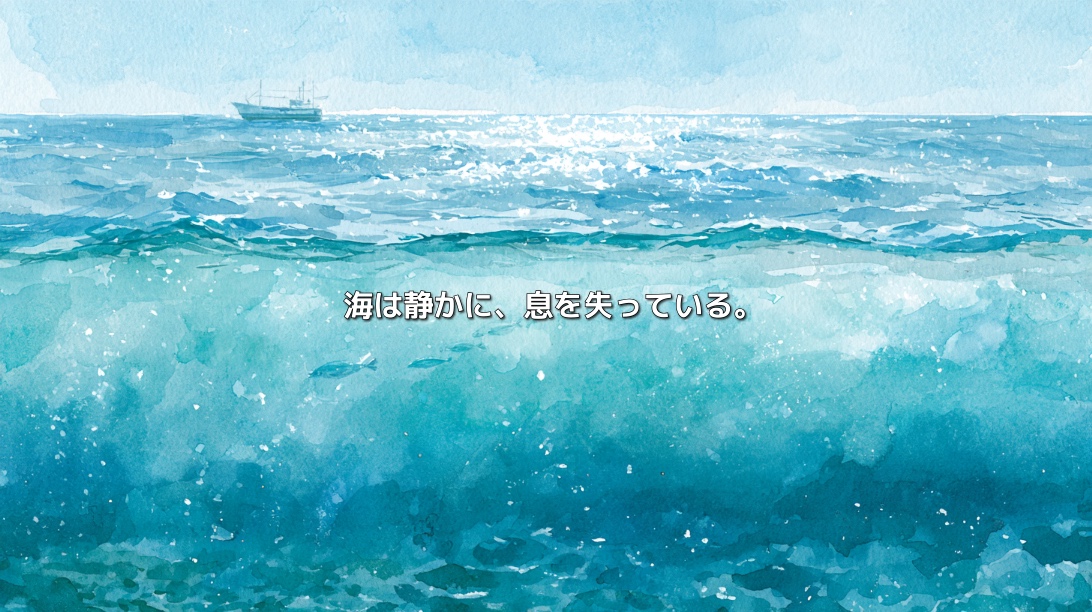
The fishing boats return to port, but their catches are different. The species being landed have changed. The sea looks the same as ever—so what is happening beneath its surface?
There is no single reason fish become less abundant. Water temperature, ocean currents, fishing pressure, and changes in habitat can all overlap. Among these factors, oxygen is an easily overlooked clue. Just as people breathe oxygen from the air, fish and shellfish depend on oxygen dissolved in water. neoterrainjournal.com
Even the Sea Has Places Where Breathing Becomes Difficult
When dissolved oxygen levels become low, the condition is known as hypoxia.
As oxygen becomes scarce, fish capable of swimming away may leave the area. Shellfish and other seabed organisms with limited mobility can be severely affected.
The effects, however, vary with the species, water temperature, and duration of exposure. The term “dead zone” can be misleading if it suggests that every organism immediately dies.
The difficulty is that oxygen shortages near the seabed cannot be detected simply by looking at the surface.
Even beneath clear, calm water, a layer can form where marine life struggles to survive.
Two Pathways to Oxygen Loss
One pathway involves long-term changes associated with ocean warming.
Warm water holds less dissolved oxygen than cold water. When warm surface water and colder deep water become less able to mix, the supply of oxygen to deeper layers can also decline.
Alongside rising seawater temperatures, climate-related oxygen loss is an important indicator of changing conditions for marine ecosystems.
A second pathway involves hypoxia in coastal waters.
When excessive nitrogen and phosphorus enter the sea through rivers and other sources, they can stimulate phytoplankton growth. As microorganisms decompose dead plankton and other organic matter, they consume oxygen.
If conditions also restrict mixing between water layers, oxygen depletion near the seabed can become more pronounced.
These are distinct processes, rather than two names for an identical phenomenon.
Long-term oxygen loss across the wider ocean differs from localized coastal changes shaped by nutrient inputs and the physical characteristics of a particular bay or sea.
In real marine environments, however, these processes can overlap.
When Fish Move, Relationships Within the Sea Change
As fish move away from oxygen-poor waters, fishing grounds may shift.
Organisms living on or within the seabed cannot always move so easily. Changes in the distribution of small marine organisms can, in turn, affect the fish that feed on them.
A change in oxygen conditions can therefore extend through food webs and into the livelihoods of people who depend on the sea.
Yet a decline in landings at a particular port does not, by itself, establish oxygen depletion as the cause.
Fish movements and population sizes also respond to water temperature, currents, fishing pressure, and habitat conditions.
Oxygen is one of the factors that needs to be examined when interpreting these changes.
Changes in the Sea Can Begin on Land
Understanding coastal oxygen conditions also means looking upstream.
Farmland, wastewater, and urban drainage are connected to the sea through the movement of water.
Nutrients are essential to marine ecosystems, but excessive inputs can contribute to hypoxia. At the same time, simply reducing nutrients does not necessarily make every coastal ecosystem healthier or more productive.
Decisions need to reflect the water quality, biological communities, and productivity of each marine area.
The sea is connected to the land.
At the end of a river’s journey, conditions invisible to the eye can change the places where marine organisms are able to live.
The Questions Beyond “There Are No Fish”
Different fish are being caught. Familiar seasonal patterns seem to have shifted.
Could we read these changes at fishing ports by looking beyond sea-surface temperatures—to oxygen levels at different depths and the organisms living on the seabed?
Ocean oxygen loss has no dramatic shape or color.
That is precisely why it invites us to look more deeply into a familiar seascape.
In waters where fish seem to have disappeared, their numbers may be only part of what is changing.
The places where marine life can breathe may themselves be shifting.
References
- IPCC — Special Report on the Ocean and Cryosphere in a Changing Climate
- NOAA — Hypoxia
- U.S. Environmental Protection Agency — Hypoxia 101