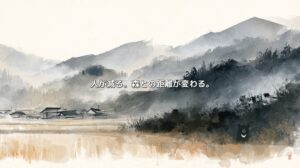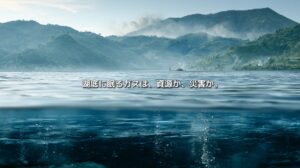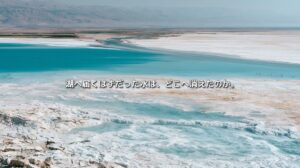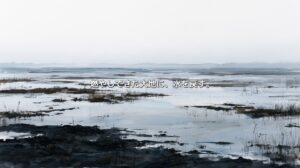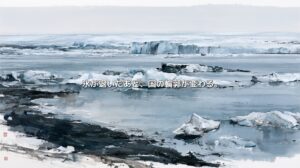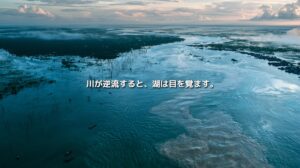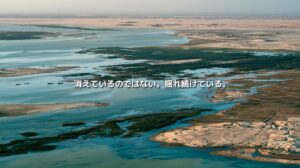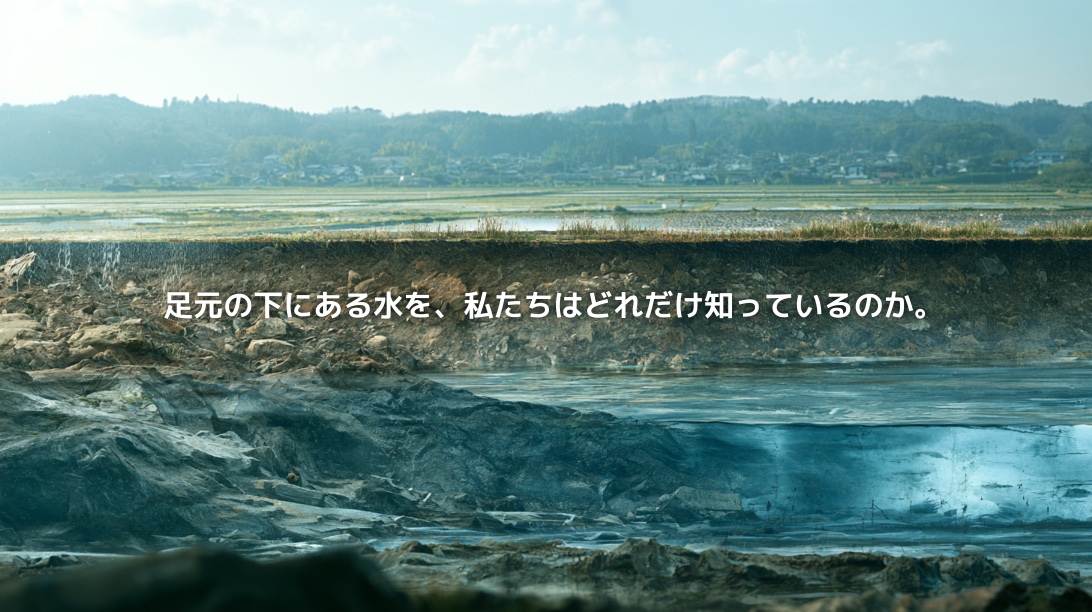
Water falls from the sky.
It becomes rain or snow and reaches the mountains. It penetrates forest soil, flows through valleys, forms rivers, and eventually travels toward the sea.
Some of it slowly seeps deeper into the earth.
This is groundwater.
Groundwater is invisible.
We cannot watch it flow as we watch a river.
It has no visible surface like a lake.
We cannot sense its vastness as we can with the ocean.
Yet groundwater quietly supports our everyday lives.
Well water.
Natural springs.
Agricultural irrigation.
Industrial water.
Drinking water.
Hot springs.
Sake brewing.
Tofu making.
Wasabi fields.
Locally celebrated waters.
The water sustaining rivers and wetlands.
Groundwater helps shape the character of a place.
But is this water truly limitless?
Because it lies beneath the ground, we may assume there will always be more.
Because we cannot see it, we may fail to notice when it is declining.
When someone extracts groundwater, the effects may not be immediately visible.
The groundwater problem begins with invisibility.
Japan’s Ministry of the Environment explains that, under the principles of the Basic Act on the Water Cycle, water is a valuable shared asset with a strong public character. Groundwater must therefore be understood as part of the wider water cycle and managed across entire groundwater basins rather than within individual property boundaries. Ministry of the Environment, Japan
Groundwater does not belong to one person alone.
It crosses property lines beneath the surface and connects communities over long periods of time.
Groundwater is water that we use.
It is also water that we must protect.
What Is Groundwater?
Groundwater is water that exists beneath the Earth’s surface.
Rain and snow fall onto the land.
Some water flows into rivers.
Some is absorbed by plants.
Some evaporates.
And some seeps into spaces between soil particles and rocks.
This water accumulates underground and moves slowly through the landscape.
Groundwater does not usually flow as quickly as a river.
Depending on local geology and other conditions, it may take years, decades, or even longer to travel through the ground.
Groundwater is therefore not always replenished quickly.
The rain falling today does not necessarily become tomorrow’s well water.
Forests, rice fields, farmland, rivers, geology, topography, and land use all contribute to groundwater recharge over long periods.
Groundwater carries the accumulated time of a region.
If we use it unsustainably, recovery may also take a very long time.
Invisible Water Can Decline Without Being Noticed
The greatest difficulty in understanding groundwater is that we cannot see it.
When the volume of a river declines, we can observe changes in its width or water level.
When a reservoir dries up, the change is immediately visible.
When waste washes onto a beach, it can be photographed.
But when groundwater declines, the change is not immediately apparent.
The water level in a well falls.
A spring produces less water.
A wetland begins to dry.
The ground subsides.
Saltwater enters an aquifer.
Pollution spreads underground.
Only when these effects appear do we realize that something has been changing below the surface.
Japan’s Ministry of Land, Infrastructure, Transport and Tourism defines groundwater management as the sustainable conservation and use of regional groundwater while preventing problems such as land subsidence, saltwater intrusion, and contamination, and while protecting ecosystems. Ministry of Land, Infrastructure, Transport and Tourism
Groundwater is convenient at the moment it is used.
Turn on a tap, and water appears.
Pump it from a well, and it becomes available.
Factories, farms, and households all depend on it.
But behind that convenience, groundwater levels may be falling.
The ground itself may be changing.
The volume of water reaching nearby rivers and wetlands may also be declining.
Invisible water is easily used without being fully understood.
Does Groundwater Belong to the Landowner?
Any serious discussion of groundwater eventually leads to one unavoidable question:
Who owns it?
If someone owns the land, should they be free to use all the water beneath it?
Or should groundwater be protected collectively as a regional water source?
How should large-scale corporate extraction be balanced against household wells?
Which uses should take priority—agriculture, industry, tourism, ecosystems, or drinking water?
Groundwater lies beneath privately and publicly owned land.
But its movement does not stop at property boundaries.
Large-scale pumping in one place can affect groundwater levels elsewhere.
It may reduce the flow of nearby wells and springs.
It may also affect rivers, wetlands, and ecosystems.
Groundwater may appear to exist beneath an individual property, but in reality, it belongs to a much larger regional water cycle.
That gives it a public character.
Based on the principles of Japan’s Basic Act on the Water Cycle, the Ministry of the Environment calls for groundwater to be managed as part of the entire water cycle and conserved across groundwater basins.
Groundwater cannot be understood through the logic of property ownership alone.
Land Subsidence: A Warning from Below
One consequence of excessive groundwater extraction is land subsidence.
Large quantities of groundwater are pumped to the surface.
Underground water pressure declines.
Layers of soil and sediment become compressed.
The ground gradually sinks.
Once land subsidence occurs, it can be extremely difficult to reverse.
Sinking ground can affect buildings, roads, water and sewer systems, farmland, rivers, and coastal defenses.
In low-lying areas, it may also increase the risk of flooding.
During periods of urbanization and industrial growth, Japan extracted enormous quantities of groundwater.
As a result, land subsidence once became a serious problem in several cities and lowland regions.
Legal restrictions and improved management have reduced the problem in some areas. But if groundwater use increases again, the risk may return.
Groundwater exists beneath the surface.
Yet changes to it eventually appear above ground.
In the height of a road.
In the tilt of a building.
In flood risk.
In agricultural drainage.
In the safety of a city.
The way we use groundwater affects the very ground on which society is built.
Saltwater Intrusion: The Sea Moving Underground
In coastal regions, groundwater extraction can lead to saltwater intrusion.
Groundwater often moves from inland areas toward the sea.
This outward flow helps maintain a balance that prevents seawater from moving too far underground.
But when large volumes of groundwater are extracted near the coast, groundwater levels fall.
Seawater can then move inland through underground layers.
Well water becomes salty.
It becomes unsuitable for irrigation.
Drinking water and industrial supplies may be affected.
This is groundwater salinization, or saltwater intrusion.
Near the coast, freshwater aquifers exist in a delicate balance with seawater.
The boundary between them is invisible.
But when the underground balance is disrupted, the sea quietly advances beneath the land.
For coastal communities, groundwater is also part of the boundary between land and sea.
Groundwater Pollution Can Remain for Generations
Pollution is another major threat to groundwater.
Contaminants at the surface seep into the ground.
Chemicals leak from industrial sites.
Nitrate and other substances enter the soil from farmland.
Waste, oil, and fuel penetrate underground layers.
Once groundwater is contaminated, recovery can take a very long time.
In a river, flowing water may dilute and carry some pollutants downstream.
Groundwater, however, moves slowly.
Contaminants may remain within geological layers and migrate gradually over many years.
Groundwater pollution spreads where we cannot see it.
Where is the source?
In which direction is the contamination moving?
Which wells will be affected?
How long will it take to reach them?
Even investigating these questions can require considerable time.
Groundwater is often associated with purity.
Springs and well water can evoke the image of a clean and unspoiled region.
But groundwater can also become polluted.
Its invisibility makes early detection difficult.
And once it is contaminated, it is not easily restored.
Urbanization Is Changing Groundwater
Groundwater is also affected by urban development.
Land is paved.
Roads expand.
Parking lots multiply.
Residential areas spread.
Rainwater can no longer enter the soil as easily.
When asphalt and concrete replace open ground, less rainwater penetrates the earth.
Instead, it flows into gutters and drainage channels before rapidly entering rivers.
The amount stored underground may decrease.
Modern cities were designed to move water away quickly.
To prevent flooding.
To protect roads.
To protect buildings.
To make urban life safer and more convenient.
But when water is removed too quickly, less remains to recharge groundwater.
Groundwater needs places where rain can return to the earth.
Forests.
Rice fields.
Farmland.
Parks.
Green spaces.
Rain gardens.
Permeable pavements.
Wetlands.
Spring environments.
Even cities need spaces that allow water to enter the ground.
Groundwater is not only a concern for mountains and rural communities.
It is deeply connected to the way cities are designed.
Rice Fields and Groundwater
Rice fields are places where rice is grown.
But that is not their only function.
Flooded rice paddies also play a role in regional water cycles.
Rain and irrigation water enter a field.
Some evaporates.
Some flows into irrigation channels.
Some penetrates the soil.
This infiltration can help recharge groundwater.
The scale of that effect differs according to local geology, soil, and water-management practices. Not every rice field functions in the same way.
However, when farmland and rice paddies disappear and are replaced by paved surfaces, the regional movement of water inevitably changes.
Rice fields are places of food production.
They are also places that temporarily hold water.
Irrigation channels, ponds, rice fields, wetlands, rivers, and groundwater are not separate systems.
Water connects them across the landscape.
When a rice field disappears, more than the scenery changes.
One of the pathways through which water enters the ground may also be lost.
Springs Are the Visible Outlets of Groundwater
Natural springs are beautiful.
Clear water at the foot of a mountain.
A spring flowing through a shrine.
A small spring-fed pond within a town.
Cold water running through a wasabi field.
Water used by a local sake brewery.
A spring where residents come to fill their containers.
A spring is a place where groundwater emerges at the surface.
To observe a spring is therefore to observe groundwater itself.
Regions rich in springs have systems that allow water to be stored and replenished underground.
Forests in the mountains.
Geological layers through which rain can penetrate.
Protected recharge areas.
Aquifers that are not being overexploited.
Water that has not been contaminated.
A spring is the visible expression of a regional water cycle.
When groundwater levels fall, however, spring flows may decline.
When recharge areas are developed, the way water emerges may change.
When groundwater becomes polluted, springs may also be affected.
A disappearing spring signals a change taking place underground.
Changes in visible water can warn us about changes in water we cannot see.
Climate Change and Groundwater
Climate change also affects groundwater.
Rainfall patterns change.
Heavy rain falls within shorter periods.
Dry periods become longer.
Snowfall and snowmelt timing change.
Evapotranspiration increases.
Demand for agricultural water shifts.
More rainfall does not automatically mean more groundwater.
Intense rain can flow rapidly into rivers before it has time to enter the soil.
Conversely, extended drought and low rainfall can reduce groundwater recharge.
In snow-covered regions, slowly melting snow has traditionally supported groundwater and river flows.
When snowfall patterns and the timing of snowmelt change, the seasonal distribution of water also changes.
Groundwater receives the effects of climate change with a delay.
The changes we observe today may reflect rainfall and land-use decisions from years or decades ago.
And the effects of today’s changing climate may not appear in groundwater until the future.
Groundwater is an environmental issue with a time lag.
What Is Groundwater Management?
Protecting groundwater requires us to look beyond individual wells.
We must understand how groundwater moves across an entire region.
Where does water enter the ground?
Where is it being extracted?
How much is being used?
How are groundwater levels changing?
How are springs and rivers being affected?
Where are the risks of contamination?
Could land subsidence or saltwater intrusion occur?
Groundwater management means sharing this information and using water while protecting it across an entire region.
Japan’s Headquarters for Water Cycle Policy explains that groundwater management is part of the country’s Basic Plan on Water Cycle Policy and is intended to promote the sustainable conservation and use of groundwater. Headquarters for Water Cycle Policy, Cabinet Secretariat
Groundwater management is not simply about regulation.
It means helping communities understand their own water.
It means bringing water users and those responsible for conservation to the same table.
It means connecting scientific data with local experience.
It means governments, businesses, farmers, residents, and researchers treating invisible water as a shared regional asset.
Groundwater cannot be seen.
That is precisely why we need systems that make its condition visible.
Water-Intensive Industries and Local Communities
There is growing interest in how businesses use groundwater.
Semiconductor factories.
Beverage plants.
Food-processing facilities.
Sake breweries.
Hot-spring resorts.
Agricultural facilities.
Data centers.
Tourism businesses.
Many industries depend on water.
Water is a local resource, but it is also an economic asset.
When businesses enter a region, they may create jobs and support industrial development.
But water is also a resource shared by the community.
When a company uses large quantities of groundwater, it must consider the effects on aquifer levels, natural springs, agricultural water, household wells, and ecosystems.
Corporate water use should be built on trust with the local community.
How much water will be used?
Where will it be extracted?
How much will be returned?
Will water quality be affected?
What happens during a drought?
Is information being shared with residents?
Because groundwater is invisible, it can easily create anxiety.
That is why transparency is essential.
A company that uses groundwater becomes part of the region’s water cycle.
It must recognize the responsibility that comes with that role.
Groundwater Is Also Culture
Groundwater is more than a natural resource.
It is part of regional culture.
Festivals that protect springs.
Sake brewed with celebrated local water.
Memories of gathering around a community well.
Lives shaped along irrigation channels.
Landscapes of wasabi fields.
The distinctive taste of tofu and soba.
The history of hot-spring towns.
Water flowing through old castle towns.
Sacred springs at shrines.
Groundwater helps create the taste of a place.
When the water changes, everyday life changes.
Food culture changes.
Industries change.
Landscapes change.
Water is part of regional identity.
The decline of groundwater is therefore not simply a decline in water volume.
It can also mean the fading of local memory.
Invisible water supports visible culture.
We must not forget this.
How Can Groundwater Be Protected?
Protecting groundwater requires several forms of action.
First, we must understand its condition.
Measure groundwater levels.
Test water quality.
Record wells and springs.
Monitor extraction volumes.
Identify recharge areas.
Watch for signs of land subsidence and saltwater intrusion.
Next, we must protect the places where groundwater is replenished.
Protect forests.
Protect rice fields.
Protect wetlands.
Preserve surfaces through which rainwater can infiltrate.
Create water-permeable spaces within cities.
Avoid unnecessary paving.
Communities must also develop rules for using groundwater.
Drinking water.
Agricultural water.
Industrial water.
Tourism.
Ecosystems.
Future generations.
Who can use how much?
How will that water be replenished?
Which uses should take priority?
Groundwater cannot be protected through technology alone.
Regional agreement is also necessary.
Making Invisible Water Visible Through Language
Groundwater flows beneath our feet.
That is why it is so easily forgotten.
Rain falls.
Water penetrates the soil.
The ground stores it.
Wells connect us to underground systems.
Springs are outlets of the water cycle.
Overuse can disrupt the balance beneath the land.
Invisible water is easily consumed without being understood.
But groundwater is part of a region’s foundation.
It exists beyond the tap.
Beneath the water filling a rice field.
Within the taste of sake and tofu.
In the coldness of a spring.
In the lives of organisms inhabiting wetlands.
Groundwater is there.
Who owns it?
This is not simply a question of ownership.
It is a question of how we share a region’s water—and how we preserve it for the future.
Groundwater is an invisible water resource.
Yet its effects are clearly expressed in our lives above ground.
Precisely because the water lies beyond our sight, we must find the words to make its existence visible.
References
- Ministry of the Environment, Japan — Guidelines for Groundwater Conservation and Sustainable Use
- Ministry of the Environment, Japan — Groundwater and Land Subsidence Measures
- Ministry of Land, Infrastructure, Transport and Tourism — Groundwater Management
- Headquarters for Water Cycle Policy, Cabinet Secretariat — Introduction to Groundwater Management
- Headquarters for Water Cycle Policy, Cabinet Secretariat — White Paper on the Water Cycle
Groundwater is an invisible water resource.
It supports drinking water, agriculture, industry, natural springs, wetlands, food culture, and local communities. Yet excessive extraction, contamination, urban development, and climate change can quietly disrupt the balance beneath the ground.
NEOTERRAIN Journal will continue examining the environmental changes hidden beneath familiar landscapes.
If this article gave you a new perspective, please bookmark it and return as we continue exploring the relationship between water, land, culture, and the future of our communities.