Reading a Merchant Town Through Its Storehouse Architecture and River Trade
NEOTERRAIN Journal | Intellectual Travel | Kawagoe, Saitama
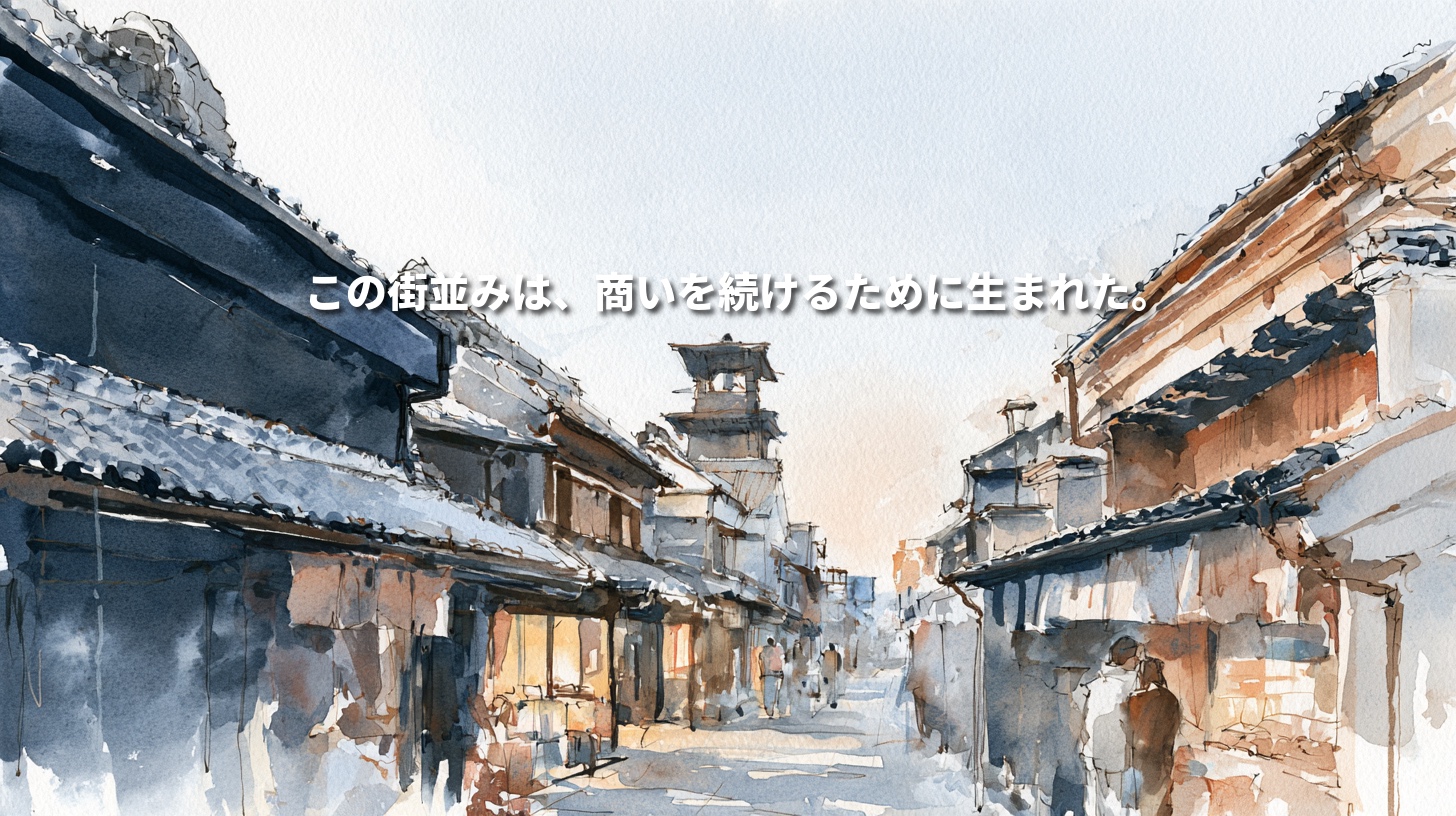
Someone walks past a dark plaster wall, a freshly baked sweet in hand.
Fabric curtains sway outside a shop. Farther down the street, the Toki no Kane bell tower rises above overlapping roofs and substantial tiles.
Beneath those roofs, business continues today.
Part of the pleasure of walking through Kawagoe is encountering present-day life within its historic streets.
You stop to admire a building, step into a shop, and turn down a lane. With every short walk, the sights and scents change.
Koedo—“Little Edo”—seems an appropriate name.
But why does a town some distance from Edo, the city now called Tokyo, retain such a strong connection with it?
To explore that question, we need to look beyond the storehouse-lined streets.
Toward the river that connected Kawagoe with Edo.
And toward the merchants who chose how to rebuild after a devastating fire. neoterrainjournal.com
01 | The River Brought Edo Closer
River transport on the Shingashi River helped sustain Kawagoe’s development.
During the Edo period, Kawagoe grew as both a castle town and a commercial center receiving goods from the surrounding region.
The river connected that center with Edo, an enormous market for those goods. city.kawagoe.saitama.jp
Today, we often measure the distance between cities in train minutes or road kilometers.
For merchants at the time, the destination of a waterway helped determine the possibilities of trade.
How much cargo could they move?
Who could they reach?
What could the boats bring back?
Along the riverbanks, shipping agents gathered goods, arranged loading, and sent boats onward.
The surviving buildings of the Saitō family, former shipping agents in Shimo-Shingashi, and documents relating to river transport preserve traces of that work. city.kawagoe.saitama.jp
Seen only from its historic shopping streets, Kawagoe might appear to have developed entirely within its own boundaries.
Its prosperity grew through connections.
Goods supporting Edo passed through Kawagoe. Trade with Edo helped its merchants prosper.
Imagine that movement, and “Little Edo” begins to suggest an economic relationship as well as a familiar architectural atmosphere.
02 | An Edo Atmosphere Shaped by Meiji-Era Rebuilding
Along Ichibangai Street, thick walls and imposing roofs draw the eye.
They seem to carry a distant age into the present.
Yet a decisive moment in the formation of today’s streetscape came in 1893, during the Meiji period.
The Great Kawagoe Fire destroyed roughly one-third of the town.
Some buildings constructed in the kurazukuri style survived. Recognizing their resistance to fire, merchants adopted this form when rebuilding their shops. city.kawagoe.saitama.jp
Within the landscape we associate with Edo lies the determination of Meiji-era merchants to begin again.
Losing a shop meant losing the place where a livelihood could continue.
If they rebuilt, what should they choose?
How could a building protect their goods and help the family business survive another generation?
Look at the thick walls as responses to those questions.
Their weight begins to convey the practical decisions behind a new start.
The former Koyama family building, which became the Kurazukuri Museum, was reportedly designed with reference to storehouse-style buildings that survived the fire and merchant houses around Tokyo’s Nihonbashi district. city.kawagoe.saitama.jp
People studied what had endured.
What they learned helped shape the streets that followed.
03 | These Storehouse Buildings Were Also Shops
One word offers a helpful way to understand Kawagoe’s architecture.
Misegura.
It refers to a shop built using storehouse-style construction.
A kura, or storehouse, usually brings to mind a place for keeping goods and valuables.
In Kawagoe, this form also accommodated spaces where merchants sold their products. Many of the buildings constructed after the great fire served as shops. city.kawagoe.saitama.jp
Knowing this draws your attention from the roofs toward the entrances.
Where did customers enter?
What merchandise stood near the street?
How did the owner arrange the space to show the goods?
A misegura brought together the openness required for commerce and the protection merchants wanted for their property.
The building expressed the work within it.
Merchants purchased and sold goods while also investing in the structures that allowed that work to continue.
Today, when you enter an old building and choose something from its shelves, your visit connects with a role the building has held for generations.
Kawagoe offers the experience of opening a historic shop door and participating, briefly, in the commercial life inside.
04 | People Worked to Keep the Streetscape Alive
Surviving a fire did not guarantee a building’s future.
Buildings deteriorate.
Businesses change how they use their premises.
As commercial activity shifts elsewhere, an older shopping district can lose customers.
From the 1960s onward, the old town around Ichibangai experienced decline. Some kurazukuri buildings were altered, while others were demolished.
Against that background, study groups involving younger shopkeepers and specialists in architecture and community planning helped lead to the founding of Kawagoe Kura no Kai in 1983. NPO法人 川越蔵の会
Their approach connected the preservation of the streetscape with the renewal of the shopping district.
Buildings needed people to use and maintain them.
Shops needed customers and enough business to keep operating.
The landscape people wanted to preserve and the livelihoods they wanted to sustain occupied the same streets.
In 1999, the area around Ichibangai received national designation as an Important Preservation District for Groups of Traditional Buildings. neoterrainjournal.com
What visitors encounter today carries both the rebuilding after the Meiji-era fire and the preservation efforts of later generations.
Behind the buildings that remain are people who worked to keep them.
05 | Between Snacks and Shopfronts, Look Up
A visit to Kawagoe can begin with something simple.
A sweet you have wanted to try.
A photograph of the bell tower.
An afternoon spent finding shops that catch your attention.
Along the way, occasionally raise your eyes.
Above a shopfront sits a heavy roof.
Thick walls frame the windows.
Neighboring buildings differ in their proportions and details.
What did their owners sell?
What mattered to the people who built them?
Looking at architecture becomes a way of imagining merchants at work.
Then listen for the Toki no Kane.
The bell tower has marked time in Kawagoe since the Edo period. Its bell continues to sound four times a day. city.kawagoe.saitama.jp
Before people routinely carried their own clocks and watches, a shared signal of the hour would have helped organize the day.
Opening a shop.
Meeting someone.
Bringing a task to a close.
Its sound has passed over generations of work and daily life.
Some of Kawagoe’s history reaches us through the ear.
06 | A Walk Through Kawagoe Reveals How a Town Acquires Value
River transport connected Kawagoe with Edo.
After the great fire, merchants chose storehouse-style shops for their resistance to fire.
Later, local people considered how those buildings and their commercial district could continue into another era.
The town’s present character emerged through successive decisions about what people needed.
Architecture built for business became a streetscape that drew visitors.
Maintaining that streetscape, in turn, required new work and new ideas.
Seen this way, “Little Edo” also describes an ongoing activity.
A town welcomes people into old buildings and gives them reasons to return.
A bell sounds from farther down the street.
Someone enters a shop. Someone wraps a purchase. Another customer steps outside beneath a fabric curtain.
A special day for a traveler unfolds alongside an ordinary working day for a shopkeeper.
Kawagoe’s richness lives within that shared time.
EDITOR’S NOTE — NEOTERRAIN
What stayed with me while researching Kawagoe was how widely its storehouse-style architecture spread through the decisions merchants made after the great fire.
Today, we admire the weight and presence of those buildings.
For the people commissioning them, urgent questions must have accompanied those choices.
What would happen if another fire came?
How could they protect their work and keep trading?
People in an earlier century also worried about the future of their businesses. They studied examples, committed money and effort, and decided how to proceed.
Recognizing that makes an old street feel closer to our own lives.
Later generations faced another task.
How could they keep aging buildings while sustaining a viable shopping district?
The streetscape holds the work of people who had to respond again as circumstances changed.
A place acquires character through such repeated attention.
Opening the shop each morning.
Repairing a building.
Welcoming the next person through the door.
When I walk through Kawagoe, I want to notice those open doors alongside the roofs and walls.
References and Further Reading
The following sources are in Japanese.
- Kawagoe City — Early Modern History of Kawagoe
- Kawagoe City — Historic Storehouses of the Saitō Family Residence
- Kawagoe City — How the Kurazukuri Streetscape Developed
- Kawagoe City — The Kurazukuri Streetscape
- Kawagoe City — Kurazukuri Museum
- Kawagoe Kura no Kai — About the Organization
- Ministry of Land, Infrastructure, Transport and Tourism — Local Community Initiatives
- Kawagoe City — Exploring Kawagoe
This article draws on published sources. The opening and other descriptive scenes are illustrative rather than records of an on-site reporting visit.