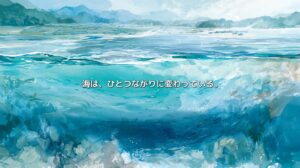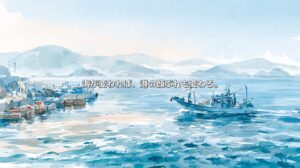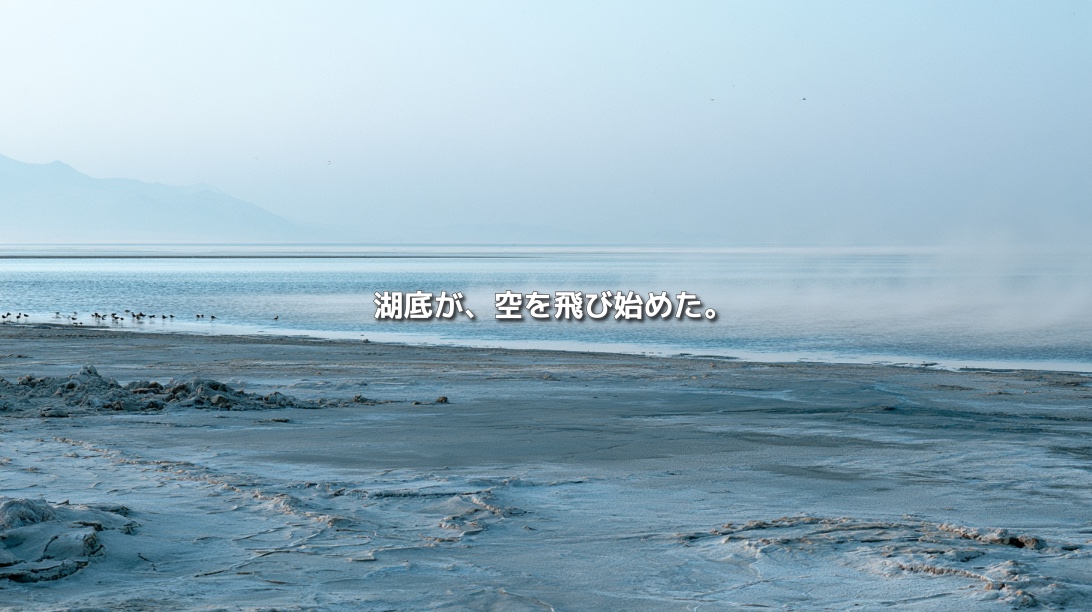
Before dawn, mountains rise beyond the lake. Beneath a thin veil of mist, the water turns pale blue and silver, while white salt crystals spread along the shore.
From a distance, Utah’s Great Salt Lake looks calm. Walk across what was once underwater, however, and you find dry mud and salt beneath your feet. The shoreline has retreated. Shallow bays have vanished. The lakebed lies exposed to sun and wind.
When the wind picks up, fine particles from that lakebed can rise into the air.
The lake is losing more than water. As its bed dries, materials that accumulated in its sediments can potentially travel toward nearby communities. What begins at the shoreline becomes a question of ecosystems, air quality, agriculture, and life across the watershed. (neoterrainjournal.com)
A Lake With No Outlet to the Sea
The Great Salt Lake is a terminal lake: rivers flow in, but none flow out to the ocean.
Snow and rain from the surrounding mountains reach it through rivers including the Bear, Weber, and Jordan. Water leaves mainly through evaporation, while salts and minerals remain behind. Over time, this has made the lake saltier than seawater.
The lake’s size depends on the balance between incoming water and evaporation. Because it is so shallow, even a modest drop in water level can expose a vast area of lakebed.
Water used upstream, diverted from rivers, or consumed by farms and cities does not reach the lake. Higher temperatures can increase evaporation. Together, these changes become visible in the lake’s water level.
In that sense, the Great Salt Lake is a vast gauge of how its watershed uses water.
Drought Is Only Part of the Story
Low snowfall, shifting precipitation, and heat all affect the lake. Yet its long decline cannot be explained without human water use.
For generations, water that would have flowed into the lake has been diverted for agriculture, cities, and industry. A 2017 study estimated that consumptive water use had lowered the lake by about 3.4 metres and reduced its volume by about 48 percent since 1847.
The lake did not shrink solely because of a sudden spell of unusual weather. It also shrank as people gradually used water before it could arrive.
Climate change adds heat and drought to that existing pressure. In 2022, the lake reached its lowest level in the observational record dating back to 1847. Snow and rain subsequently brought some recovery, but a wetter year does not resolve a long-term shortage of water reaching the lake.
Less Water, More Salt
When water disappears, much of the salt remains. Salinity rises.
Few organisms can live in the Great Salt Lake’s demanding conditions. That makes the organisms that can survive especially important to its food web.
On the lakebed, communities of microorganisms form structures known as microbialites. Algae and cyanobacteria growing on their surfaces help feed brine fly larvae. Tiny algae suspended in the water feed brine shrimp. Brine flies and brine shrimp, in turn, provide food for migratory birds.
It is a food web supported by a relatively small number of links. Changes in salinity can affect microbial productivity and the survival and reproduction of brine shrimp. As water levels fall, exposed microbialites and the living films on their surfaces can dry out.
A smaller lake therefore means more than less habitat. It changes the salt concentration, the food available, and the places where life can persist.
A Stopover for Millions of Birds
As many as 12 million migratory birds are estimated to visit the Great Salt Lake each year. For birds travelling between breeding and wintering grounds, it is a place to rest and build the energy needed for the next stage of the journey.
Birds cross state and national borders. They depend on a network of lakes and wetlands along their routes. Losing one stopover might seem manageable if another remains, but saline lakes in dry regions are shrinking in many parts of the world. Their food supplies, seasonal timing, salinity, and shallow-water habitats are not interchangeable.
When the Great Salt Lake’s ecosystem weakens, the consequences extend beyond Utah. A major refuelling point in a continent-spanning migration route is put at risk.
What the Dry Lakebed Holds
Rivers carry many substances into a lake. Along with naturally occurring minerals, runoff from farms and cities and residues associated with mining, industry, and wastewater can reach the Great Salt Lake over time.
Some of these materials become part of lakebed sediments. When water retreats, the sediments dry, and some may become mobile in the wind.
Researchers have examined exposed areas, particularly around Farmington Bay and Bear River Bay, as potential dust sources. A 2025 study detected metals of health concern—including arsenic, lead, thallium, cobalt, and chromium—in dust collected in northern Utah. The lakebed is not the source of all that dust: vehicles, mining, industry, and other urban activities also contribute. Chemical and isotope analyses nevertheless suggest that some arsenic and lead may originate from the exposed lakebed.
This does not mean every stretch of dry lakebed will send hazardous dust into a city. The essential questions are which surfaces release dust, what that dust contains, where it travels, and how much people breathe in.
Not Every Exposed Surface Becomes Dust
Salt and clay can form a hard crust over dry lakebed sediments. While that crust remains intact, it can keep finer particles from blowing away.
One investigation estimated that roughly nine percent of the lakebed exposed at the time was in a condition likely to produce dust. That figure does not make the remaining area permanently stable. Vehicles, construction, extraction, strong winds, and changing water levels can disturb the surface. Prolonged drying may change it as well.
The area of exposed lakebed alone cannot tell us the level of risk. Surface crusts, soil moisture, salinity, vegetation, human disturbance, and wind conditions all matter.
When a Water Problem Becomes an Air Problem
As the shoreline retreats, water between the lake and nearby communities gives way to dry ground. Wind can cross that ground and carry dust beyond the lake.
Dust may settle not only in places where people live but also on snow, soil, and other bodies of water. When dust darkens mountain snow, the surface can absorb more sunlight and melt earlier. That could change when rivers carry water downstream and, in turn, when water reaches the lake.
These processes may reinforce one another: a shrinking lake exposes sediment; exposed sediment produces dust; dust can alter snowmelt and the movement of water through the watershed.
A lake does not simply vanish from the environment when its water recedes. Its dry bed remains, and wind can carry part of it elsewhere.
Controlling Dust Will Not Restore the Lake
Water can be applied to exposed ground. Surfaces can be stabilised, vegetation introduced, and vehicle access restricted. Such measures may help control dust at particular sites.
Managing an immense exposed lakebed indefinitely, however, would demand substantial water and money. Dust control alone would not address rising salinity, lost wetlands, or declining food supplies for birds.
The more fundamental task is to get water to the lake. That involves upstream conservation, agricultural water use, urban demand, water rights, and water reserved for the lake itself.
Every one of those decisions touches people’s livelihoods and economic activity. Sending more water to the lake can mean using less somewhere else. The difficulty is real, but so is the lake’s need for water. It cannot depend only on whatever is left over.
What the Water Surface Was Doing All Along
We often think of lake water as a resource: something to drink, irrigate crops with, use in industry, or enjoy for recreation.
It performs another function that is easy to overlook. By covering the lakebed, water keeps accumulated sediments apart from the wind.
The Great Salt Lake’s decline reveals how closely that protective surface is tied to the wider ecosystem. Water falls. Salinity rises. Microbial communities change. Brine shrimp and brine flies face pressure. Birds lose feeding grounds. Lakebed is exposed, and dust can enter the air.
These are connected changes in one watershed.
Before the Lake Is Gone
The Great Salt Lake has not disappeared. In years with abundant rain and snow, its water level can rise and parts of its ecosystem can recover. That visible return of water matters, but a single wet year cannot settle the long-term question.
The lake’s future depends on how much water reaches it in ordinary years.
It needs that water to support its food web, sustain migratory birds, cover its sediments, and help protect the air around it. As the quiet shoreline retreats, more than a landscape is lost. Materials once held beneath the water can be released into the wind.
Protecting the lake’s water also means protecting the air people breathe.