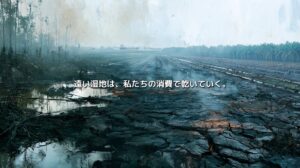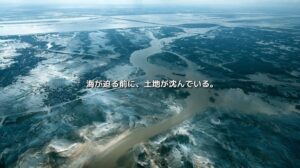
When people think of places where nature is protected, many may picture national parks or UNESCO World Natural Heritage sites.
The forests of Yakushima.
The seas of Shiretoko.
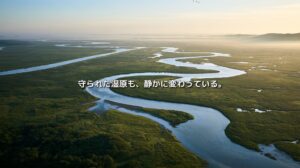
The wetlands of Oze.
The beech forests of the Shirakami Mountains.
These are extraordinary, often remote landscapes where human intervention remains limited.
Protecting such places is, of course, essential.
But the future of nature conservation cannot depend on them alone.
A woodland near a residential neighborhood.
A forest managed by a private company.
A wooded hill behind a school.
A sacred grove surrounding a shrine.
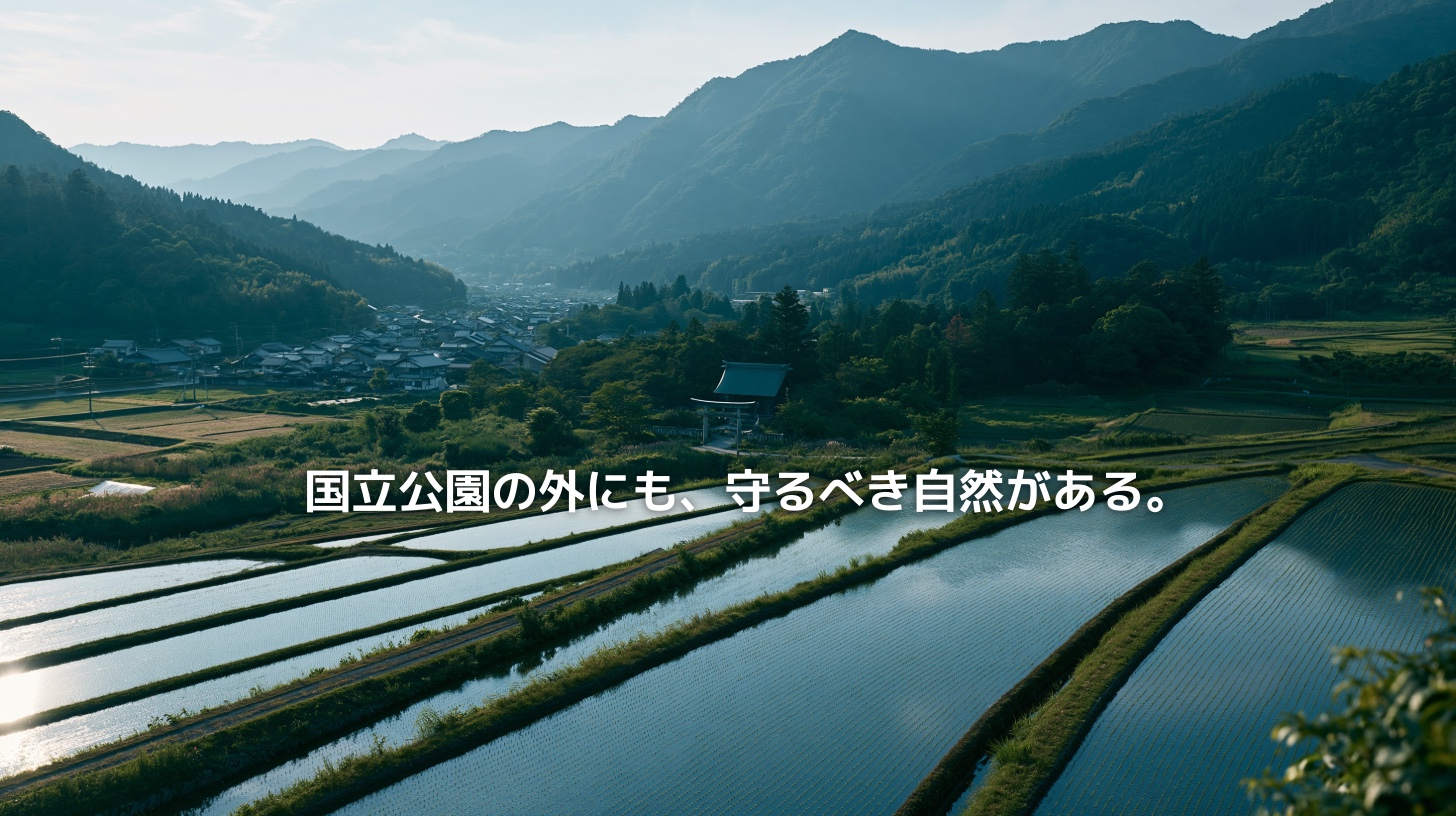
Rice paddies and waterways in a rural community.
A seagrass bed protected by local fishers.
A patch of green space preserved within a factory site.
These places also provide vital habitats for wildlife.
For people, they support water, clean air, food, landscapes, disaster prevention, and local culture.
This is where the idea of “30by30” comes in.
Pronounced “thirty by thirty,” it is an international target to effectively conserve at least 30 percent of the world’s land and sea as healthy ecosystems by 2030.
Japan’s Ministry of the Environment describes 30by30 as part of the effort to halt and reverse biodiversity loss by 2030—a goal known as “nature positive.”
At first glance, this may sound like the language of international conferences and environmental policy.
But the true meaning of 30by30 is much closer to home.
Places that protect nature are not limited to national parks.
The people who protect nature are not limited to specialists.
Residents, landowners, companies, local governments, schools, religious institutions, farmers, fishers, and each of us must reconsider how we build our relationship with the natural world.
That is the question 30by30 asks.
Why 30 Percent—and Why Now?
Biodiversity is being lost at an alarming rate.
Deforestation, wetland loss, deteriorating marine environments, invasive species, climate change, and excessive development are combining to fragment and reduce natural habitats.
The loss of biodiversity is not simply about the disappearance of rare plants and animals.
It also means weakening the natural systems that sustain our lives:
Wetlands that purify water.
Forests that reduce the risk of landslides.
Seagrass beds that nurture fish.
Insects that pollinate crops.
Urban green spaces that moderate local temperatures.
In December 2022, the Kunming–Montreal Global Biodiversity Framework was adopted as a new global framework for biodiversity.
One of its central targets is to effectively conserve at least 30 percent of terrestrial, inland water, coastal, and marine areas by 2030.
The figure of 30 percent is more than a slogan.
It represents an attempt to protect ecosystems not merely as isolated points, but as connected landscapes and seascapes.
Protecting a single forest is not enough. Wildlife does not spend its entire life within one bounded area.
Rivers, wetlands, farmland, satoyama landscapes, oceans, grasslands, and urban green spaces must remain connected so that species can move, reproduce, and continue their life cycles.
Instead of leaving nature isolated within protected areas, we need to reconnect it across entire regions.
In this sense, 30by30 is not only about preserving what remains. It is also about restoring the connections between ecosystems.
The Idea of “Sites Coexisting with Nature”
An important concept within Japan’s approach to 30by30 is the certification of “Sites Coexisting with Nature,” known in Japanese as Shizen Kyosei Sites.
Japan’s Ministry of the Environment established this system to officially recognize areas where biodiversity is being conserved through private-sector initiatives and other forms of local stewardship.
Certified areas that do not overlap with existing protected areas may also be registered in international databases as OECMs.
OECM stands for “Other Effective Area-Based Conservation Measure.”
It refers to an area outside a legally designated protected area—such as a national park—that nevertheless makes an effective and sustained contribution to biodiversity conservation.
This is where the idea becomes especially interesting.
Nature conservation is often imagined as something designated by the national government, managed by specialists, and observed by the public from a distance.
The concept of Sites Coexisting with Nature broadens that stage.
Company-owned forests, shrine and temple groves, satoyama landscapes, urban green spaces, school forests, fishing grounds, and constructed biotopes may all qualify.
In other words, conservation is no longer limited to distant wilderness.
It can also take place in the natural environments located beside our homes and woven into everyday life.
This overlaps with many of the themes explored by NEOTERRAIN Journal.
Every region contains values that have not yet been fully recognized or articulated.
Old roads.
Woodlands.
Rice paddies.
Waterways.
Coastlines.
Sacred groves.
These are not merely landscapes.
They are repositories of local memory, habitats for living organisms, and ecological infrastructure that supports everyday life.
30by30 is also an effort to rediscover and revalue such places.
Some Forms of Nature Cannot Be Protected by National Parks Alone
National parks and other protected areas remain essential pillars of conservation.
However, much of Japan’s natural environment has developed alongside human activity.
Satoyama woodlands.
Terraced rice fields.
Irrigation ponds.
Agricultural waterways.
Coppice forests.
Seagrass and seaweed beds.
Riverbanks.
Shrine and temple forests.
These environments have often been maintained through continuous human involvement.
People cut grass.
They clear waterways.
They flood rice paddies.
They gather firewood and fallen leaves.
They manage fishing grounds.
They enter and maintain forests.
Such activities have historically created and sustained habitats for a wide variety of species.
Today, however, population decline, aging communities, and a shortage of workers in agriculture, forestry, and fisheries are making these landscapes increasingly difficult to manage.
Nature does not necessarily become richer when people withdraw.
Grasslands may turn into dense scrub.
Rice paddies may be abandoned.
Irrigation ponds may fill with sediment.
Waterways may become blocked.
Species that depend on open environments may disappear, while invasive species may spread.
Protecting nature does not always mean removing people from it.
In some places, continued human involvement is precisely what allows nature to survive.
This is one of the most important aspects of 30by30.
Instead of strictly separating “protected nature” from “land used by people,” we must ask how biodiversity can be conserved within daily life and economic activity.
What 30by30 Means for Businesses
30by30 is also highly relevant to the private sector.
Natural capital and biodiversity will become increasingly important issues for businesses in the years ahead.
Companies own land.
They operate factories.
They move goods through logistics networks.
They consume raw materials.
They use water and energy.
They affect surrounding ecosystems.
Every business is therefore connected to nature.
Japan’s Ministry of the Environment has emphasized the need to bring together communities, businesses, and individuals through the 30by30 Alliance.
It also identifies links between OECM recognition and wider fields such as decarbonization, the circular economy, rural development, food, and human health.
For companies, this is not simply a matter of philanthropy.
They can manage green spaces on corporate land with biodiversity in mind.
They can restore waterways around factories.
They can involve employees in forest and satoyama conservation.
They can collaborate with locally certified Sites Coexisting with Nature.
They can reconsider the natural capital embedded in their products and services.
Such efforts can strengthen brand value, community trust, recruitment, ESG performance, and long-term sustainability strategies.
But caution is also necessary.
Simply using terms such as “30by30” or “nature positive” does not protect nature.
A logo or public declaration alone cannot conserve an ecosystem.
What matters is what is actually being protected at a particular site.
What species live there?
Who manages the land?
What does the landscape mean to local communities?
Can the initiative continue over the long term?
Nature conservation is not a short-term campaign.
It is the design of a lasting relationship.
What 30by30 Means for Local Governments
For municipalities, 30by30 can provide a new framework for regional development.
Natural environments are tourism assets, disaster-prevention infrastructure, educational resources, and sources of local identity.
A river.
A coastline.
A mountain.
A forest.
A wetland.
A rice field.
These cannot be adequately described by simply saying that a region is “rich in nature.”
Which environments should be protected?
Who will protect them?
How can they be used while remaining conserved?
How can they be connected to tourism, education, and local industry?
30by30 gives municipalities an opportunity to take stock of their natural assets.
A remaining satoyama landscape could be certified as a Site Coexisting with Nature.
It could become part of local education.
It could be supported through corporate CSR or ESG activities.
It could be presented not as nature to be consumed by tourists, but as a place where visitors can participate in conservation.
It could be reinterpreted as a place in which residents take pride.
Protecting nature also means protecting regional value.
We often speak of regional revitalization.
But regional revitalization cannot be sustained if a community loses its natural capital.
A town that has lost its beautiful river.
A fishing village that has lost its seagrass beds.
A farming community that has lost its satoyama.
A settlement that has lost its sacred grove.
It becomes difficult to tell a compelling story about a region after the natural foundations of that story have disappeared.
30by30 offers a way to reconsider local nature as an asset for the future.
Reconsidering the Nature Closest to Us
Perhaps we have placed nature too far away from our daily lives.
Nature is somewhere we travel to.
Nature exists in national parks.
Nature is protected by experts.
Nature is managed by governments.
When we think this way, the nature within everyday life becomes invisible.
A waterway along a school route.
A small forest in a residential area.
Trees surrounding a shrine.
An abandoned rice field.
Coastal grassland.
Green space inside a factory site.
The soil beneath a street tree.
Living organisms inhabit all of these places.
When such environments disappear, the quality of our lives also changes—quietly but steadily.
Summers become hotter.
Rainwater runs off more rapidly.
The sounds of birds and insects diminish.
Children have fewer opportunities to encounter nature.
Seasonal changes fade from the local landscape.
Nature is not limited to distant, spectacular scenery.
The small pockets of nature embedded in everyday life support our senses, memories, and well-being.
30by30 offers a lens through which we can see them again.
Protecting Nature Means Protecting Relationships
What does it really mean to protect nature?
To protect trees.
To protect birds.
To protect fish.
To protect water.
To protect soil.
All of these are important.
But at a deeper level, protecting nature means protecting relationships.
The relationship between mountains and rivers.
Between rivers and the sea.
Between forests and farmland.
Between different species.
Between people and the land.
Between communities and memory.
Nature does not exist as a collection of isolated objects.
Everything is connected, and those connections together form an environment.
The question raised by 30by30 is not merely whether we can protect 30 percent of the planet.
It asks how much of our relationship with nature we have already lost—and how we can rebuild it.
Looking Beyond National Parks
National parks must continue to be carefully protected.
But nature also exists beyond their boundaries.
Beside the places where people live.
Within company-owned land.
On the wooded hill behind a school.
Inside a shrine forest.
Along a rice-field waterway.
In the coastal waters of a fishing village.
Within a small patch of urban greenery.
These places contain values that have not yet been fully named.
30by30 is also an effort to rediscover those values.
Places that protect nature are not limited to remote and extraordinary landscapes.
The people who protect nature are not limited to specialists.
Nature conservation is not limited to large-scale government policy.
Cutting grass.
Maintaining a waterway.
Entering and caring for a forest.
Identifying invasive species.
Recording local wildlife.
Reconsidering how a company uses its land.
Recognizing nature as a regional asset.
Each of these actions can help reconnect people with the natural world.
30by30 is the language of environmental policy, but it is also a way of thinking about the future of local communities.
Protecting nature does not begin by looking toward a distant forest.
It begins by looking again at the nature within the places where we live.
Not only national parks.
Not only World Heritage sites.
Not only tourist destinations.
There is nature beneath our feet that deserves protection.
Perhaps discovering that small, nearby nature is the first step toward achieving 30by30.
References
Ministry of the Environment, Japan, “30by30”
https://policies.env.go.jp/nature/biodiversity/30by30alliance/
Ministry of the Environment, Japan, “Sites Coexisting with Nature”
https://policies.env.go.jp/nature/biodiversity/30by30alliance/kyousei/
Ministry of the Environment, Japan, “List of Certified Sites Coexisting with Nature”
https://policies.env.go.jp/nature/biodiversity/30by30alliance/kyousei/nintei/index.html
Ministry of the Environment, Japan, “Kunming–Montreal Global Biodiversity Framework”
https://www.env.go.jp/nature/biodiversity/kmgbf.html
The Nature Conservation Society of Japan, “OECMs: Areas Where People and Nature Coexist”
https://www.nacsj.or.jp/magazine/27851/
30by30 invites us to reconsider not only distant wilderness, but also the nature that exists close to our everyday lives.
NEOTERRAIN Journal will continue exploring the connections between natural environments, local landscapes, and society.
If this article gave you a new perspective, please bookmark it and return whenever you want to think again about the future of nature and local communities.