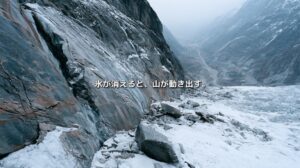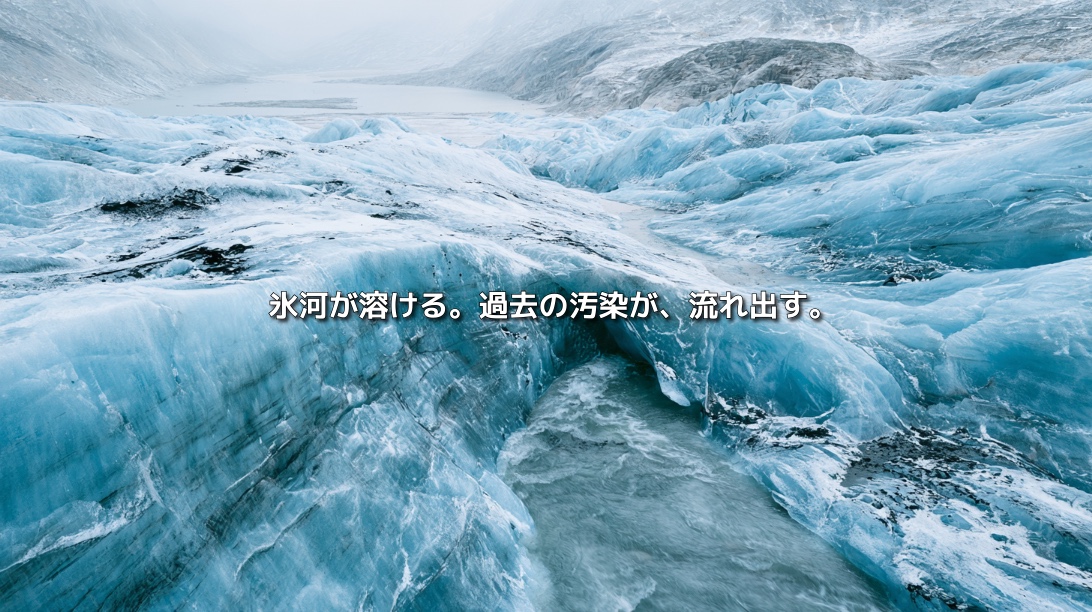
Glaciers are melting.
When we hear those words, we often think of rising seas, water shortages, or the danger of glacial lake floods. But water is not the only thing held within a glacier.
Heavy metals, pesticides, PFAS, and radioactive substances released into the atmosphere in the past can travel from distant cities and industrial areas, fall with the snow, and remain preserved in ice.
A glacier is a vast archive of Earth’s climate. It can also be an archive of the pollution people have left behind. As glaciers retreat around the world, we need to ask more than how much ice will disappear. We also need to ask what the ice may release. neoterrainjournal.com
Glaciers preserve what falls from the sky
Glaciers form as successive years of snowfall are compressed over long periods. Beneath fresh snow lie older layers deposited decades or even centuries earlier. Ice cores taken from glaciers can therefore preserve traces of past temperatures and precipitation, along with volcanic ash, dust, sea salt, and particles from the atmosphere.
Those layers can contain substances produced by human activity: lead and copper from mining and smelting; soot from vehicles and coal combustion; pesticides used on farmland; PFAS released from industrial products; and radioactive materials associated with past nuclear testing or accidents.
Some of these substances travel through the atmosphere to mountains and polar regions far from their sources. They settle with snow and become part of the ice.
The absence of nearby settlements does not mean a glacier is untouched by pollution. Glaciers have long acted as places where materials transported across great distances can accumulate.
Cryoconite: the dark particles on a glacier’s surface
On some glaciers, dark, sand-like grains gather on the surface. Known as cryoconite, they contain a mixture of finely ground rock, windblown dust, soot, organic matter, algae, and bacteria.
Their dark color absorbs sunlight, warming the surrounding ice and sometimes helping small holes form in the glacier’s surface.
Cryoconite can also collect and concentrate substances deposited from the atmosphere. Studies of glaciers in regions including the Arctic and Europe have detected materials such as cesium-137, lead, copper, and zinc in these dark deposits. Sticky substances produced by microorganisms may help trap metals and other particles.
Cryoconite can therefore both contribute to local melting and act as a small store of contaminants. As melting intensifies and water flows across the glacier, the sediment can be carried downstream. Scientific Reports
Are all metals in meltwater caused by human pollution?
No. Metals leaving a glacier can come from human activity, but they can also come from natural rock.
As glaciers move under their own weight, they grind the bedrock beneath them. The finely crushed rock reacts readily with water, allowing elements such as iron, manganese, copper, and zinc to enter meltwater.
Detecting a metal in glacial runoff is therefore not, by itself, proof of human-caused contamination. Researchers need to determine where the substance came from, its chemical form, and whether it is available for organisms to absorb.
A study published in 2026 examined trace metals in meltwater from 14 mountain glaciers and the Greenland and Antarctic ice sheets. It found that the movement of metals differs with glacier type, local geology, erosion, and chemical reactions.
The relationship between melting ice and metal release is not a simple rule in which more melting always means more pollution. Conditions must be monitored within each watershed. Communications Earth & Environment
PFAS have reached remote mountain regions
PFAS are a large group of chemicals used for properties such as resistance to water, oil, and heat. They have been used in products and processes including nonstick cookware, water-resistant clothing, food packaging, firefighting foams, and semiconductor manufacturing.
Many PFAS persist in the environment, earning them the nickname “forever chemicals.” Their presence is not limited to factories and cities. Some can travel long distances through the atmosphere and precipitation, reaching mountains far from major sources of human activity.
Research in glacial watersheds on the Tibetan Plateau found that PFAS transported by meltwater and precipitation can accumulate in river sediments in front of glaciers and in lakebed sediments.
These substances do not necessarily wash away all at once. Some remain attached to sediment, where they may later be released again as heavy rain, floods, sediment movement, or changing lakebed conditions disturb it.
The problem may therefore persist after a glacier has disappeared. Materials once held in ice can become part of the sediments of rivers and lakes downstream. Communications Earth & Environment
Pollution does not stay in the mountains
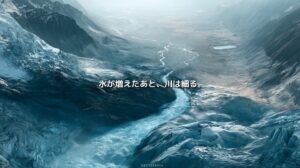
Glacial meltwater moves from small mountain streams into rivers, lakes, farmland, cities, and eventually the sea. Along the way, it connects with drinking water supplies, irrigation, hydropower, fisheries, and daily life.
Communities downstream of glaciers in the Himalayas, Andes, Central Asia, Alps, and Arctic depend on water that begins in these landscapes.
This does not mean all glacial meltwater poses an immediate health threat. In many places, researchers still lack enough data on concentrations, transport routes, and ecological effects. But a lack of measurements is not proof of safety. Without water-quality monitoring, changes may go unnoticed.
High altitude, difficult weather, limited roads, and political borders all make mountain research harder. Meanwhile, water and the substances it carries can cross borders even when monitoring systems and data remain divided by country.
Glacier pollution is therefore a question of watershed management and international cooperation as well as scientific research. UNESCO
The world’s glaciers are rapidly losing mass
According to research by the World Glacier Monitoring Service network, glaciers outside the Greenland and Antarctic continental ice sheets lost an estimated 408 ± 132 gigatonnes of mass during the 2025 hydrological year. Average annual losses rose from less than 100 gigatonnes in 1976–1995 to around 390 gigatonnes in 2016–2025. Nature Reviews Earth & Environment
What is changing is more than the quantity of ice. Water stored over long periods, distinctive ecosystems, records of past climates, and materials preserved within the ice are all being affected.
Faster melting can alter the amount of water and sediment carried downstream. Meltwater may initially increase, then decline as the glacier becomes smaller. Contaminant concentrations will not necessarily rise steadily either: high flows may dilute them, drought may concentrate them, sediments may trap them, and floods may move them suddenly.
Glacier retreat links changes in water quantity, water quality, sediment, and ecosystems.
Monitor the journey from ice to downstream waters
Glacier research has traditionally focused on area, thickness, movement, and mass balance. Those measurements remain essential. They now need to be accompanied by monitoring of meltwater quality, sediments, microorganisms, and the uptake of substances by living organisms.
That means examining:
- Chemicals stored on glacier surfaces and within the ice
- Metals, PFAS, and pesticides in meltwater
- Substances accumulating in cryoconite and river sediments
- Seasonal changes and the effects of floods on concentrations
- Possible accumulation in fish and aquatic insects
- Long-term changes in downstream drinking water sources
- Data shared across borders at the watershed scale
Measurements taken immediately below a glacier are only the beginning. We need to follow how substances move from ice to rivers, from rivers to lakes, and from those waters into ecosystems and human life.
Glaciers are carrying traces of our past downstream
Glaciers are more than distant scenery. They have received particles from city air, industrial emissions, agricultural chemicals, and past nuclear activity, holding some of them in ice for years or generations.
As temperatures rise, those stored materials may begin to move again.
Not everything released by a glacier reaches a dangerous concentration. Some elements supplied by natural rock can even serve as nutrients in ecosystems. The task is to establish what is moving, where it came from, how much is present, and where it goes.
The glacier crisis concerns more than disappearing ice. Materials once held in place can enter new waterways, changing the connections among mountains, rivers, lakes, oceans, and communities.
A melted glacier cannot return to where it was. The substances it releases may also travel to new places. We must watch both the speed at which glaciers are lost and what they leave behind.
References
- World Glacier Monitoring Service network, “Global glacier mass change in 2025”
- UNESCO, The United Nations World Water Development Report 2025: Mountains and Glaciers — Water Towers
- Sundriyal et al., “Glacier-specific controls on enhanced trace metal mobility across global mountain and polar meltwaters,” Communications Earth & Environment (2026)
- Zhou et al., “Proglacial river sediments are a substantial sink of perfluoroalkyl substances released by glacial meltwater,” Communications Earth & Environment (2024)
- Łokas et al., “The sources of high airborne radioactivity in cryoconite holes from the Caucasus (Georgia),” Scientific Reports (2018)