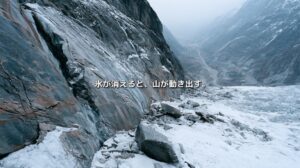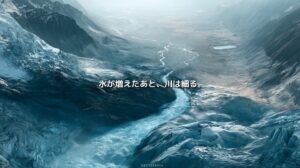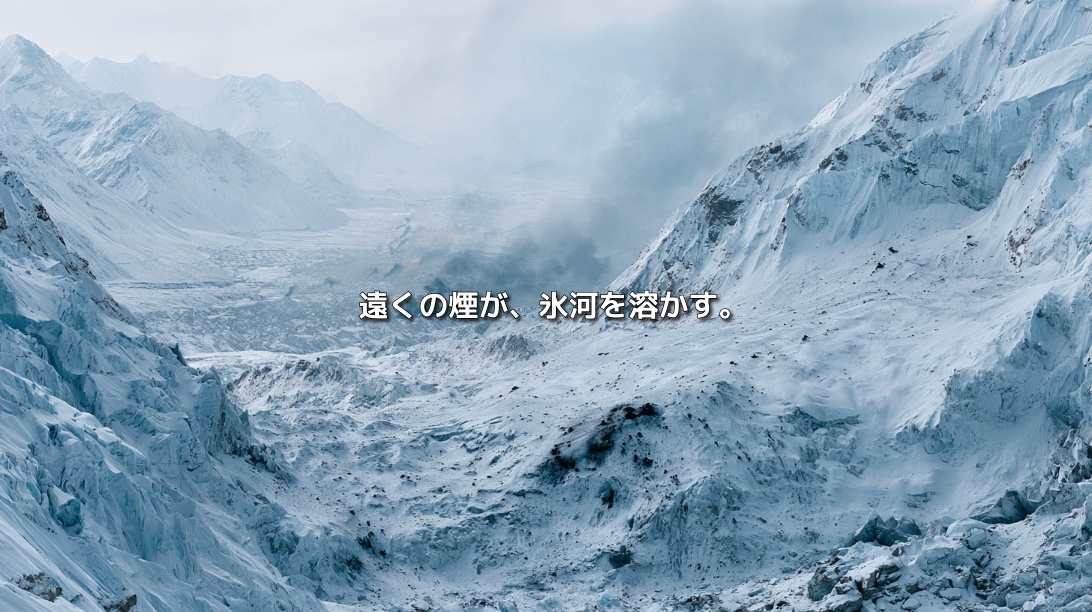
A glacier high in the mountains can seem far removed from urban air pollution. There are no factories or highways beside it, only snow and ice stretching above 5,000 meters.
Look closely at its surface, though, and the ice is not always pure white.
Exhaust from vehicles, smoke from burning coal and firewood, emissions from brick kilns, agricultural fires, and wildfires can release tiny dark particles into the air. Some travel hundreds of kilometers before settling on mountain snow. One of these substances is black carbon.
Black carbon darkens snow and ice, allowing them to absorb more sunlight. It can accelerate melting through a pathway distinct from the long-term warming caused by greenhouse gases. Smoke rising from a distant town can cross borders and mountains before reaching one of Asia’s great sources of water. neoterrainjournal.com
What is black carbon?
Black carbon consists of fine particles produced when fuels such as coal, oil, wood, animal dung, and crop residues do not burn completely. It is a component of soot and can form part of PM2.5 air pollution. Unlike carbon dioxide, it is a particle rather than a gas.
Its sources include:
- Diesel vehicles and older engines
- Coal-burning factories and small businesses
- Traditional brick kilns
- Cooking and heating with wood or charcoal
- Burning crop residues
- Forest and peat fires
- Open burning of waste
Breathing polluted air containing these fine particles can harm respiratory and cardiovascular health. Their effects also extend beyond the places where people inhale them.
Black carbon absorbs sunlight while suspended in the atmosphere, contributing to atmospheric warming. Once it settles on snow or ice, it can reduce the surface’s ability to reflect sunlight and increase melting. A particle produced by burning fuel can thus connect air quality, human health, climate, and glaciers.
Why does darker ice melt more easily?
Fresh snow reflects much of the sunlight that reaches it. This reflectivity is called albedo.
Just as dark clothing tends to become warmer than white clothing in the sun, darker snow and ice absorb more solar energy. When black carbon settles on a glacier, it can lower the surface albedo. More energy is absorbed, and melting can increase.
Melting may then leave behind dust and soot that had been held in or on the ice, making the surface darker still. When snow disappears, older, darker ice or underlying rock may be exposed.
A reinforcing cycle can develop:
Darker surface → more sunlight absorbed → more melting → dark material becomes more concentrated → further melting.
Cryoconite, the dark granular material found on some glacier surfaces, is part of this picture. It is formed from mineral dust, soot, organic matter, and microorganisms. Besides absorbing sunlight, cryoconite can accumulate substances such as metals and radioactive materials. As ice melts, both the dark particles and materials they have trapped may move downstream with meltwater.
Smoke does not follow national borders
The Himalayas, Karakoram, and Tibetan Plateau are often called the Third Pole because together they contain an immense store of snow and ice outside the polar regions.
Water from this region feeds major Asian rivers, including the Indus, Ganges, Brahmaputra, Mekong, Yangtze, and Yellow River. Snow and glaciers support mountain communities as well as downstream farms, cities, hydropower systems, and ecosystems.
The surrounding regions are also home to many sources of black carbon. Transport, industry, household fuel use, and open burning release particles in parts of northern India, Pakistan, Nepal, western China, and beyond. Winds and rising air can carry those particles through valleys and into high-altitude snow and ice.
A 2016 study using carbon isotopes found that the relative contributions of fossil fuels and biomass burning to black carbon reaching Himalayan and Tibetan glaciers vary by location. There is no single source behind the darkening: it may involve diesel exhaust, household stoves, brick kilns, factories, agricultural fires, or wildfires. Nature Communications
Because emissions and deposition span multiple countries, glacier protection requires cooperation across borders. The atmosphere has no administrative boundary.
Black carbon may also affect precipitation
Black carbon can influence glaciers without first landing on the ice.
While suspended in the air, it absorbs sunlight and warms the atmosphere. It may also change how much sunlight reaches the ground, affect atmospheric stability, and alter cloud formation and precipitation.
Research published in 2022 suggested that black carbon transported from South Asia could reduce summer precipitation over the southern Tibetan Plateau. A 2025 study examined both the extra melting caused when black carbon lowers glacier albedo and the possibility that changes in precipitation reduce the amount of water stored as snow and ice. These effects depend on atmospheric conditions and location; they should not be assumed to occur equally everywhere. Nature Communications
This gives black carbon two potential routes of influence: it can increase the solar energy absorbed by snow and ice, and it can affect the snowfall that replenishes them. If more ice melts while less snow accumulates, the glacier’s balance worsens from both directions.
If glaciers melt faster, doesn’t that mean more water?
For a time, it can.
As melting increases, more water may flow downstream. But that extra water can represent the depletion of a long-term reserve. Taking money from a savings account increases the cash available today; it does not mean the account can keep paying out at the same rate forever.
A glacier may initially add more meltwater to a river. As it shrinks, the amount of ice available to melt falls. The point after which annual glacier meltwater contribution begins to decline is often called peak water.
During a period of increasing meltwater, some areas may face greater risks associated with floods, landslides, or glacial lake outbursts. Later, reduced glacier contributions can place pressure on dry-season river flows, irrigation, drinking water, and hydropower. The timing and scale differ among glaciers and river basins.
Black carbon can help bring forward the release of water that would otherwise have remained stored in ice for longer.
This extends beyond the Himalayas
The darkening of snow and ice by airborne particles is not confined to Asia.
In the tropical Andes, particles from cities, mining, and transport can reach glaciers, as can smoke from fires in the Amazon region. A 2019 study found that aerosols from Amazonian biomass burning, including black carbon, could reach tropical Andean glaciers and enhance melting. Scientific Reports
In the Arctic, soot can arrive from industry, wildfires, oil and gas activity, and shipping. Alpine glaciers can also receive particles from traffic, domestic heating, and fires. Researchers are studying the effects of other light-absorbing substances too, including brown carbon in wildfire smoke.
The place where fuel burns may be hundreds or thousands of kilometers from the ice it affects. Glacier melt is connected to decisions about energy, transport, agriculture, industry, and forest management far beyond the mountains.
A different timescale from carbon dioxide
Black carbon generally remains in the atmosphere for days to weeks, much less time than carbon dioxide. Its short atmospheric lifetime does not make its effects unimportant. Particles can affect regional air quality and, when deposited on snow and ice, contribute to melting.
It does, however, mean that reducing emissions could lower atmospheric concentrations and deposition relatively quickly. Possible measures include cleaner diesel engines, more efficient brick kilns, less smoky cooking and heating, reduced open burning of crops and waste, and wildfire prevention.
The World Bank has identified black carbon reduction as an important way to help slow Himalayan glacier melt and strengthen regional water security. worldbank.org
Reducing black carbon cannot replace cutting carbon dioxide and other greenhouse gas emissions. Long-term warming still has to be addressed. Black carbon controls offer an additional way to reduce pressure on glaciers while improving air quality in the nearer term.
Protecting glaciers can protect people’s health
Cleaner household cooking can reduce smoke inside homes. Limiting emissions from diesel vehicles and older industrial equipment can improve urban air quality. Reducing open burning can lessen smoke exposure and fire risks.
These changes matter to the people living near emission sources. They may also reduce the number of dark particles reaching distant snow and ice.
For the Himalayan region, many potential emission reductions can begin within the wider region itself: in transport, household energy, industrial equipment, and farming practices. Glacier protection and improvements in daily life can be pursued through the same policies.
Distant smoke and mountain ice are connected
One speck of soot cannot melt an immense glacier on its own. But particles deposited over time can darken its surface, while airborne black carbon may also influence the conditions under which snow falls and ice melts.
Greenhouse gases warm the air around a glacier over the long term. Black carbon can change how its bright surface absorbs sunlight and can affect regional atmospheric processes. Their mechanisms and timescales differ, but both connect human activity to the fate of mountain ice.
What we burn, how we travel, how we make things, and how we manage fields and forests can all reach the mountains through the air.
Distant smoke can help melt a glacier. That connection shows how closely the air above our communities is tied to the water stored high above them.
References
- International Centre for Integrated Mountain Development, Black Carbon: Impacts and Mitigation in the Hindu Kush Himalayas
- World Bank, Glaciers of the Himalayas: Climate Change, Black Carbon, and Regional Resilience
- World Meteorological Organization, State of the Global Climate 2024
- Li et al., “Sources of black carbon to the Himalayan–Tibetan Plateau glaciers,” Nature Communications (2016)
- Yang et al., “South Asian black carbon is threatening the water sustainability of the Asian Water Tower,” Nature Communications (2022)
- Yang et al., “Reduced solid water storage over the Tibetan Plateau caused by black carbon,” Communications Earth & Environment (2025)
- Magalhães et al., “Amazonian Biomass Burning Enhances Tropical Andean Glaciers Melting,” Scientific Reports (2019)