Rethinking Japan’s Prosperity Through the Erosion of the Shizuoka Coast
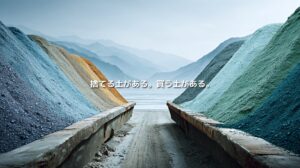
There is a familiar phrase in Japan: “scrap and build.”
Old buildings and infrastructure are demolished and replaced with new ones. During Japan’s transition from postwar reconstruction to rapid economic growth, this process became a symbol of urban renewal and economic momentum.
But when we reconsider that era from nature’s perspective, a different phrase emerges:
Build and scrap.
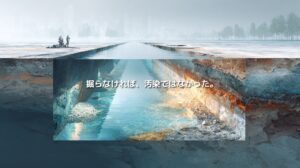
While cities, roads, ports, and homes were being built, were the rivers, coastlines, and ecosystems that supplied their materials being unknowingly scrapped?
Japan’s period of rapid economic growth cannot simply be condemned using today’s values.
The country needed housing after the war. It needed roads, bridges, ports, levees, schools, and hospitals to support people’s lives and safety. The construction and civil-engineering industries created jobs, connected regions, and made daily life more convenient.
The question is not whether economic growth was simply right or wrong.
The question is this:
Which landscapes absorbed the environmental burden of creating that prosperity—and how much did they bear?
The sand along the Shizuoka coast continues to ask us that question.
River Gravel Supported the Growth of Japan’s Cities
During Japan’s high-growth era, housing developments, factories, roads, railways, and ports were constructed across the country.
Concrete required enormous quantities of sand and gravel as aggregate.
Rivers became one of the major sources of those materials.
Large volumes of gravel were extracted from the Abe River, which flows through Shizuoka City, as postwar reconstruction and construction demand accelerated.
According to materials published by Japan’s Ministry of Land, Infrastructure, Transport and Tourism, an average of approximately 700,000 cubic meters of gravel was extracted from the Abe River each year during the period from 1955 to 1964.
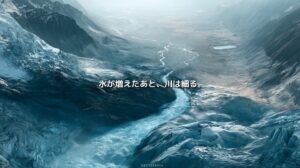
As a result, the riverbed in the nationally managed section fell by as much as approximately 2.9 meters, with an average decline of around 1.3 meters. Bridges, revetments, and other structures were also damaged.
But the effects did not remain within the river.
The volume of sediment carried from the Abe River into Suruga Bay declined. This reduced the sand moving eastward along the coast.
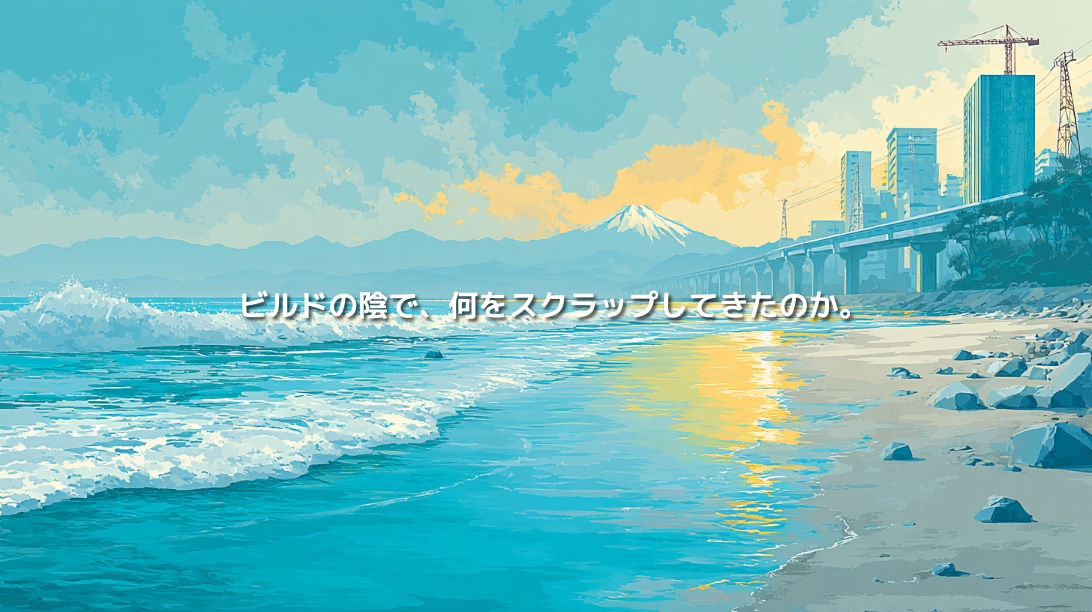
Erosion spread from the Shizuoka coast to the Shimizu coast and eventually reached Miho no Matsubara, a celebrated coastal landscape associated with views of Mount Fuji.
While new buildings rose in the city, beaches farther away were retreating.
Urban growth and coastal erosion were not separate events.
Sand Is Not Merely a Material—It Is Nature in Motion
We are accustomed to seeing sand as a construction material packed into bags or mixed into concrete.
In nature, however, sand does not remain still.
The headwaters of the Abe River contain the Ōya Collapse, one of Japan’s three major historic mountain-collapse areas.
Sediment generated in the mountains travels downstream through rainfall and flooding. It reaches Suruga Bay at the river mouth and is then carried by waves and coastal currents toward the Shizuoka coast, the Shimizu coast, and Miho no Matsubara.
Beaches were not placed fully formed along the shoreline.
Mountains broke apart.
Rivers transported the sediment.
The sea received it.
Waves redistributed it.
The coastline was created through this long movement of land.
Human activity removed enormous quantities of gravel in the middle of that natural flow.
Viewed only at the extraction site, the gravel may have appeared to be an abundant resource.
Viewed as part of a connected system stretching from the mountains to the sea, it was also sediment moving toward the coast to maintain the beach.
This was one of the perspectives easily overlooked during the rapid-growth era.
Nature is not divided according to administrative boundaries or industrial sectors.
What happens in a river may later appear on a coastline. Materials consumed in a city may alter an ecosystem in another place.
A decision that appears reasonable at one location can create an imbalance across the wider landscape.
Development That Protected One Community Threatened Another
The loss of beach sand is not merely a change in scenery.
Beaches absorb wave energy and help protect inland areas from storm surges and high waves.
They provide habitats for coastal plants and animals and support fisheries, tourism, recreation, and local culture.
When beaches retreat, these functions weaken.
Gravel extracted to improve people’s lives in one location may reduce disaster resilience, biodiversity, and the quality of local landscapes somewhere else.
What makes this issue difficult is that development itself was also intended to protect people’s lives.
Without roads, logistics would suffer.
Without housing, communities would remain unstable.
Without levees and ports, people could face greater disaster risks and economic disadvantages.
Environmental problems should therefore not be reduced to a simple conflict between development and conservation.
The deeper question is whether the costs created by development are being displaced to places—and periods of time—that remain invisible to those receiving the benefits.
Natural Losses Were Difficult to Record in Economic Statistics
When a building or road is completed, its investment value and production are recorded as economic growth.
It may create employment, improve transport, and raise surrounding land values.
A lost beach, damaged habitat, weakened natural flood defense, or disappearing local memory is more difficult to measure using the same scale.
Japan gained enormous material prosperity during its rapid-growth period.
At the same time, the country experienced industrial pollution, serious damage to human health, and large-scale changes to natural environments, as Japan’s environmental white papers have documented.
The environmental consequences were not necessarily invisible.
Society lacked adequate systems for making them visible, and even when they were recognized, they were often given lower priority than the speed of economic expansion.
The erosion of the Shizuoka coast symbolizes this structure.
In the city’s economic accounts, sand was counted as construction material.
In nature’s accounts, the flow maintaining the coastline was being depleted.
What appeared in economic records as the movement of a resource may have represented a decline in natural capital across the wider landscape.
Source: Ministry of the Environment, Japan—Environmental White Paper
Does Stopping Gravel Extraction Restore Everything?
Gravel extraction in the nationally managed section of the Abe River was restricted in 1968.
According to the Abe River Integrated Sediment Management Plan, the downstream riverbed later began to rise. Sediment supply to the coast also increased, and parts of the beach gradually showed signs of recovery.
But the story does not end there.
If too much sediment accumulates in a river, it may obstruct floodwaters and increase risks to levees and other river structures.
Sand must reach the coast, but the river must also retain enough capacity to carry floods safely.
Too little sediment is not desirable.
Too much sediment is not desirable either.
What matters is where sediment exists, how much is present, and how it moves.
Japan’s Ministry of Land, Infrastructure, Transport and Tourism now treats the entire zone through which sediment moves—from mountains to coastlines—as a single sediment system.
Its integrated sediment-management approach coordinates erosion-control works, dams, rivers, and coastal management rather than treating each field independently.
Along the Abe River, river-channel excavation, beach nourishment, and sediment monitoring are being combined in an attempt to balance flood safety with the natural movement of sediment.
This is less about returning the landscape to a past condition than reconnecting a system that was previously divided by administrative management.
Source: Abe River Integrated Sediment Management Plan
Source: Ministry of Land, Infrastructure, Transport and Tourism—Integrated Sediment Management
From an Era of Building to an Era of Maintaining and Reconnecting
Much of Japan’s infrastructure was constructed intensively during the rapid-growth era. Roads, bridges, tunnels, ports, water systems, and public facilities are now reaching old age at roughly the same time.
During an era of population growth and urban expansion, building something new was closely associated with social progress.
Today, Japan faces population decline and a shortage of workers. Repeating construction and replacement at the same speed and according to the same assumptions is becoming increasingly difficult.
The answer is not to stop building altogether.
Before construction begins, society must determine what is truly necessary.
Existing buildings and infrastructure should be used for longer.
When structures are demolished, their materials should be recovered and reused.
Planning should consider not only convenience at completion but also maintenance, repair, and eventual dismantling decades later.
The origin of construction materials should be traceable, along with the environmental burdens left in the landscapes from which they came.
The capabilities society needs are changing:
From the ability to build in large quantities to the ability to make structures last.
From developing each sector separately to reconnecting mountains, rivers, seas, and cities.
From treating nature as an obstacle to development to recognizing it as the foundation supporting both livelihoods and economic activity.
Japan’s Sixth Basic Environment Plan describes natural capital as the foundation of all economic and social activity. It also calls for a broader form of growth that includes health, well-being, and environmental value—dimensions that cannot be measured by GDP alone.
This does not mean reducing prosperity.
It means expanding what we define as prosperity.
Source: Ministry of Land, Infrastructure, Transport and Tourism—Aging Infrastructure in Japan
Source: Ministry of the Environment, Japan—Sixth Basic Environment Plan
The Shizuoka Coast Is a Microcosm of a Global Problem
Gravel extraction from the Abe River and erosion along the Shizuoka coast constitute a regional environmental problem within one sediment system.
But the structure behind it is repeated around the world.
Cities consume resources while natural environments change at the places where those resources are extracted.
The locations receiving the economic benefits and those bearing the environmental costs are separated, making the consequences difficult to see.
After the damage becomes visible, society spends enormous sums of money and many years attempting to repair it.
Climate change, biodiversity loss, resource depletion, and marine pollution occur at different scales, but they are not unrelated to this structure.
Small environmental changes accumulate across regions. When they connect with distant places, they become global environmental problems.
The erosion of the Shizuoka coast is therefore not merely an episode from Shizuoka’s past.
It is an early case through which cities around the world can consider what form of growth they should choose next.
How Should We Confront Global Environmental Problems?
Confronting environmental problems does not mean stopping all human activity or condemning past economic growth.
It begins with understanding where our prosperity came from.
It means making decisions that consider not only immediate convenience but also resource-extraction sites, downstream rivers, distant coastlines, and future generations.
It means refusing to treat the economy, human life, nature, and ecosystems as separate issues.
They must be understood as parts of the same circulation.
Japan became prosperous during its rapid-growth era through its ability to build.
Precisely because Japan has experienced that material prosperity—and the environmental costs that accompanied it—it may now be able to show how prosperity can be created without destroying its foundations.
When we look at the concrete beneath our feet, we see the completed city.
Only when we imagine the rivers, mountains, and coastlines beyond it do we begin to see the full landscape of prosperity.
What did we scrap in the shadow of everything we built?
Facing that question does not mean rejecting the past.
It means learning from it and carrying those lessons into the next society.