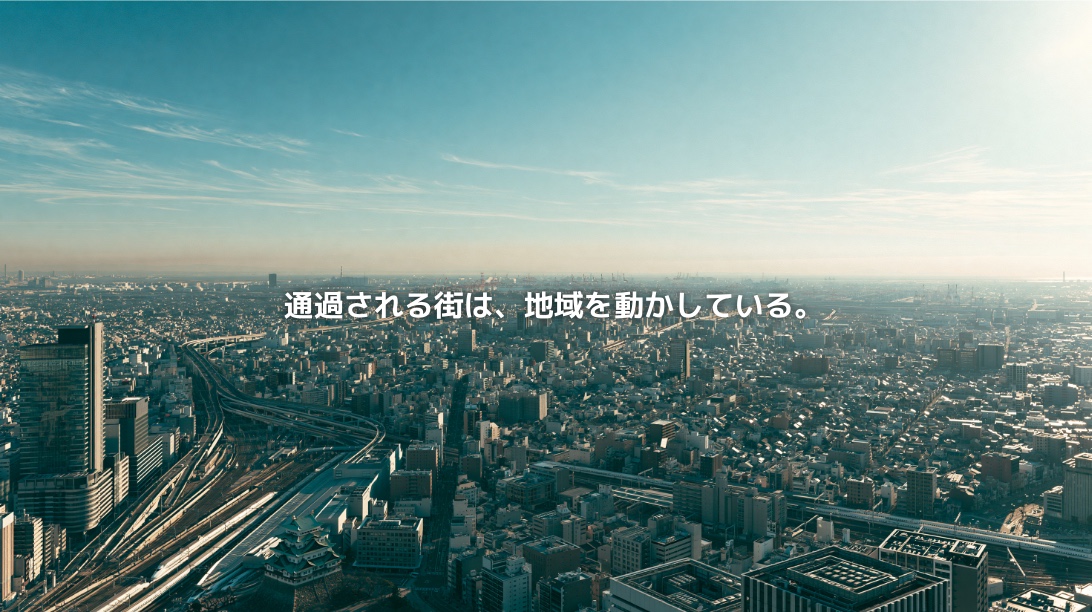
Nagoya is one of Japan’s major cities.
With a population of more than 2.3 million, it serves as the political, economic, and cultural center of the Chubu region. The Tokaido Shinkansen stops at Nagoya Station, railways and expressways extend in every direction, and the Port of Nagoya—one of Japan’s largest logistics hubs—lies to the south. (NEOTERRAIN Journal)
Despite this, Nagoya is often described as “a city between Tokyo and Osaka” or “a city people simply pass through on the Shinkansen.”
Tokyo possesses the overwhelming visibility of a national capital.
Kyoto has a clear international identity as a historic city.
Osaka has a strong urban brand built around food, comedy, and merchant culture.
What, then, defines Nagoya?
Nagoya Castle, miso katsu, chicken wings, and hitsumabushi are widely known. Yet compared with Tokyo, Kyoto, or Osaka, the city as a whole is harder to summarize in a single image.
But if Nagoya were truly nothing more than a place people pass through, how could it sustain such a large economy and metropolitan region?
The answer is that Nagoya did not develop primarily as a tourist destination.
It was built as a city that gathers people, goods, capital, and information—and distributes them throughout the surrounding region.
Nagoya has prospered not by standing out as a destination, but by connecting eastern and western Japan and supporting the industries around it.
Being passed through may be one of Nagoya’s weaknesses.
At the same time, it is evidence that Nagoya stands at the intersection of Japan’s transportation and industrial systems.
Through its castle town, historic highways, railways, port, manufacturing economy, and urban identity, this article explores the geopolitics of Nagoya as Japan’s great intermediate city.
Nagoya Lies at the Meeting Point of Eastern and Western Japan
Nagoya is located roughly halfway between Tokyo and Osaka.
The Tokaido Shinkansen provides rapid access to both cities.
By road, the Tomei and Shin-Tomei expressways connect Nagoya with the Kanto region, while the Meishin and Shin-Meishin routes link it to Kansai.
To the north lie Gifu, Nagano, and the Hokuriku region.
To the west are Shiga, Kyoto, and Osaka.
To the east are Shizuoka, Kanagawa, and Tokyo.
To the south, Ise Bay and the Port of Nagoya connect the city with international maritime transport.
Nagoya is therefore not a city that opens in only one direction.
It is a transportation junction from which people and goods can move north, south, east, and west.
For businesses, this location is a major advantage.
Nagoya offers easy access to both Tokyo and Osaka and is close to the factories and logistics facilities of the wider Chubu region. Products can be sent to both domestic and international markets.
For travelers, however, the same geography produces a different result.
Nagoya lies on the way from Tokyo to Kyoto and Osaka.
It also lies on the way from Kyoto and Osaka to Tokyo.
The more convenient transportation becomes, the easier it is to continue onward without stopping.
Nagoya’s geography therefore contains an inherent contradiction:
It is easy for people to gather in Nagoya—and equally easy for them to pass through it.
Nagoya Was Not a City That Grew Naturally
The center of present-day Nagoya did not gradually expand from an ancient settlement into a major city.
Before the early modern period, Kiyosu Castle in present-day Kiyosu City served as the political center of Owari.
Kiyosu, however, stood on low-lying land near the Gojo River. It faced flood risks and offered limited space for the expansion of a large castle town.
In 1609, Tokugawa Ieyasu decided to move the political center to Nagoya. Construction of Nagoya Castle began the following year on the northwestern edge of the Nagoya Plateau.
At the same time, samurai, merchants, craftspeople, temples, and shrines were moved from Kiyosu to Nagoya in a large-scale relocation known as the Kiyosu-goshi. (NEOTERRAIN Journal)
This was not simply the relocation of a castle.
It was an enormous urban-planning project that transferred political authority, administration, commerce, technology, religion, and culture from one place to another.
A grid-patterned castle town was developed south of Nagoya Castle.
Samurai districts, merchant quarters, and temple areas were arranged according to their functions, forming the foundations of Nagoya’s modern urban structure.
Nagoya was therefore not a city that became large because people naturally gathered there.
It was a city deliberately created by gathering people and urban functions in one strategic location.
This origin continues to shape Nagoya today.
The city was not designed primarily to display itself.
It was built to govern Owari, control the Tokaido corridor, protect the western side of the Tokugawa shogunate, and manage regional flows of people and goods.
From the beginning, Nagoya was designed less as a destination than as a strategic base.
Nagoya Castle Was Built to Guard Against Western Japan
Nagoya Castle was not only a center for governing Owari.
It was also a strategic defense base for the wider Tokugawa regime.
Even after the Tokugawa victory at the Battle of Sekigahara, the Toyotomi family remained in Osaka Castle, while powerful outside lords continued to control much of western Japan.
Owari lay along the Tokaido, the vital route connecting Edo with Kyoto and Osaka.
If a hostile force controlled this region, transportation between Edo and western Japan could be threatened.
Tokugawa Ieyasu therefore placed the Owari Tokugawa family, founded by his ninth son Yoshinao, in Nagoya as one of the shogunate’s most powerful collateral houses.
Lords associated with western and northern Japan, including Kato Kiyomasa and Fukushima Masanori, were mobilized for the construction of Nagoya Castle.
The project consumed the resources and labor of regional lords while also demonstrating Tokugawa authority. (NEOTERRAIN Journal)
Nagoya did not simply happen to exist between present-day Tokyo and Osaka.
It was deliberately strengthened in order to control the space between Edo and western Japan.
Nagoya’s intermediate position was not originally a weakness.
It was a source of military and political value.
The Horikawa Canal Connected the Castle Town to the Sea
Nagoya Castle and its surrounding town were constructed on the Nagoya Plateau, some distance from the sea.
The elevated location offered advantages in defense and flood protection.
However, it also created a logistical problem.
Transporting large quantities of rice, salt, timber, stone, and other materials overland was inefficient.
The Horikawa Canal was therefore developed to connect the castle town with the coastal area around Atsuta.
Goods were transported by boat along the canal, and warehouses, ship facilities, and timber yards were established beside it.
Official Nagoya City materials describe how rice, salt, timber, and many other goods were carried into the castle town through the Horikawa. (NEOTERRAIN Journal)
This system is essential to understanding Nagoya.
The city did not function through the castle alone.
The castle town, river transport, Atsuta, and Ise Bay formed a single logistics network.
Political authority was located inland, while a waterway connected it to the sea.
Nagoya was designed not as a self-contained city, but as a base that received goods from outside and redistributed them throughout the region.
Modern Nagoya similarly combines railways, roads, and port facilities.
This is not an entirely new characteristic.
Since the age of the Horikawa Canal, Nagoya has been a city built for movement.
The Tokaido Integrated Nagoya into an East–West Economy
During the Edo period, the Tokaido was Japan’s principal highway between Edo and Kyoto.
However, the official post-station route did not pass directly through the area around present-day Nagoya Station.
To the south of the Nagoya castle town stood Miya-juku in Atsuta.
Miya-juku and Kuwana-juku were connected by a maritime route across Ise Bay known as the Shichiri no Watashi, or Seven-Ri Crossing.
Other roads, including the Minoji, extended from the Nagoya castle town toward Gifu and the Nakasendo.
Nagoya therefore developed not simply as a post town along one road, but as a castle town that brought several transportation routes together.
This distinction shaped its urban character.
Nagoya did more than provide accommodation for travelers.
It gathered goods and information from surrounding areas, organized them through administrative and commercial institutions, and sent them onward.
Although Nagoya stood along Japan’s east–west corridor, it was not merely a point of passage.
It functioned as a regional command center integrating highways, river routes, and ports.
Railways Made Nagoya’s Intermediate Position Even Stronger
During the modern era, railways replaced roads and waterways as the principal means of moving people and goods.
The Tokaido Main Line connected Nagoya with Tokyo, Yokohama, Kyoto, Osaka, and Kobe.
The Chuo Main Line, Kansai Main Line, and other routes strengthened connections with inland Chubu, the Hida region, and Hokuriku.
Nagoya became one of central Japan’s most important railway junctions.
The opening of the Tokaido Shinkansen in 1964 made the city’s intermediate position even more visible.
Nagoya became a major stop on the high-speed route between Tokyo and Osaka, making both cities highly accessible.
For businesses, this created a major advantage.
A person could travel to Tokyo in the morning and continue to Osaka in the afternoon.
Companies in Chubu gained better access to clients across Japan, while businesses from Tokyo and Osaka could reach factories throughout Aichi more easily.
From the perspective of tourism, however, the Shinkansen also turned Nagoya into an intermediate station.
Travelers can reach Nagoya from Tokyo in roughly an hour and a half.
From Nagoya, Kyoto is only about another hour away.
Visitors interested in historic tourism may simply continue to Kyoto.
Those seeking food and entertainment may continue farther to Osaka.
Improved transportation made Nagoya easier to visit.
It also made Nagoya easier to pass.
Nagoya Developed More as a Base Than as a Destination
One reason Nagoya’s urban identity may appear less distinct than those of Tokyo, Kyoto, or Osaka is that these cities developed for different purposes.
Kyoto was Japan’s political and cultural center for centuries.
Edo grew as the political capital of the shogunate and later became Tokyo, the modern national capital.
Osaka became a center of commerce and distribution, historically known as “the nation’s kitchen.”
Nagoya also possessed political, commercial, and cultural functions as a castle town.
Yet its modern growth was supported not only by culture or tourism, but by manufacturing and logistics in the surrounding region.
Around Nagoya are industrial cities and logistics centers such as Toyota, Kariya, Anjo, Okazaki, Kasugai, Komaki, Tokai, and Tobishima.
Nagoya acts as the center that gathers people, capital, and information from these cities.
Corporate headquarters and branch offices, financial institutions, trading companies, universities, broadcasters, department stores, and government organizations support economic activity throughout the Chubu region.
Nagoya’s scale is not sustained by tourists alone.
It is supported by the daily activity of a large metropolitan area.
Nagoya developed less as a city people travel to see and more as a city in which people:
work, conduct business, change trains, and gather information.
Nagoya Is Surrounded by Strong Regional Cities
To understand Nagoya, it is necessary to look beyond the city itself.
Aichi Prefecture is not structured around Nagoya alone.
Western Mikawa includes Toyota, Okazaki, Kariya, and Anjo, which form an automobile-centered production network.
Northern Owari includes Komaki, Kasugai, and Ichinomiya, each serving roles in industry, logistics, textiles, housing, and regional commerce.
The Chita Peninsula contains Chubu Centrair International Airport, coastal industrial zones, Tokoname pottery, and a long tradition of fermentation and brewing.
Eastern Mikawa includes Toyohashi, Toyokawa, and Tahara, where agriculture, ports, and manufacturing have developed together.
Southern Gifu and northern Mie are also connected to Nagoya through railway and road networks.
In this regional structure, Nagoya does not need to contain every industry within its city boundaries.
Surrounding cities produce goods.
Nagoya brings together information, finance, commerce, administration, and culture.
Nagoya’s true strength cannot be seen by examining only the municipality itself.
Its scale and function become visible only when understood as the center of the wider Nagoya metropolitan region.
The Port of Nagoya Connected the City to the Global Economy
Nagoya began as an inland castle town, but its modern development cannot be separated from its port.
Located at the inner edge of Ise Bay, the Port of Nagoya expanded alongside the industrialization of central Japan.
Automobiles, machinery, and components produced in Aichi and surrounding regions are transported to the port and exported to global markets.
In the opposite direction, iron ore, crude oil, liquefied natural gas, coal, and other raw materials and energy resources enter through the port.
A port is more than a facility for maritime transportation.
It is the entrance and exit of an industrial system connecting factories, warehouses, roads, railways, trading companies, financial institutions, and government organizations.
From central Nagoya, however, the full scale of the port is difficult to see.
Visitors who walk only around Nagoya Station or Sakae may not sense the enormous logistics system supporting the city.
This is one reason Nagoya’s urban strength can appear invisible.
Much of its power exists not in highly visible tourist destinations, but in ports, factories, warehouses, roads, and business-to-business transactions.
Nagoya is less a consumer city displayed on the surface than a production and logistics city operating behind society.
Nagoya Does Not Lack Attractions—Its Attractions Are Dispersed
Does Nagoya truly have few tourism resources?
The city contains Nagoya Castle, Atsuta Jingu, the Tokugawa Art Museum, the Cultural Path, Shikemichi, Arimatsu, Endoji, Osu, Noritake Garden, and the Toyota Commemorative Museum of Industry and Technology.
It has substantial resources related to history, industry, architecture, food, and subculture.
The difficulty is that these attractions do not easily fit into one story.
In Kyoto, temples, shrines, traditional streets, gardens, and craftsmanship are organized within the powerful narrative of an ancient capital.
In Osaka, Dotonbori, food, comedy, and merchant culture form an image of an energetic city of ordinary people.
In Nagoya, the castle town, modern industry, café culture, samurai history, manufacturing, local cuisine, and subculture often appear to point in different directions.
Nagoya Castle and the automobile industry.
Atsuta Jingu and neighborhood coffee shops.
Arimatsu tie-dyeing and cosplay culture.
Each is attractive in its own right, but there is no single widely understood idea that connects them all.
As a result, people outside the region may see Nagoya as a city whose attractions are difficult to understand.
Nagoya does not have nothing.
Its attractions are dispersed throughout the city and have not yet been fully edited into a coherent narrative.
War and Reconstruction Made Historical Continuity Harder to See
The impact of the Second World War must also be considered when examining Nagoya’s urban identity.
Nagoya was a major center of military industry and suffered severe air raids.
Large areas of the city were destroyed, including the main keep and Honmaru Palace of Nagoya Castle.
After the war, extensive land readjustment created a modern city with wide roads and public parks.
This reconstruction improved disaster resilience and transportation.
At the same time, it made the continuity of Edo-period streets and neighborhoods less visible.
In Kyoto, the continuity between historic architecture and urban space is itself a tourism resource.
In Nagoya, historical sites are often scattered within a modern city.
Visitors walking without prior knowledge may find it difficult to recognize the structure of the former castle town.
Nagoya’s history has not disappeared.
Layers including Atsuta, the Kiyosu relocation, the castle town, the Horikawa Canal, modern industry, wartime destruction, and postwar reconstruction remain beneath the present city.
But making these layers visible requires interpretation and editorial work.
Nagoya Is a Self-Sufficient City
Another reason Nagoya may not have felt a strong need to market itself aggressively to tourists is the size of its internal regional economy.
Nagoya and its surrounding area contain a large population and many companies.
Commerce, restaurants, culture, entertainment, and housing can be sustained by local residents and businesses.
People can access employment, shopping, education, healthcare, and entertainment without regularly traveling to Tokyo or Osaka.
This is a major advantage for residents.
However, it also reduces the need to explain the city clearly to outside visitors.
Local café culture, cuisine, and neighborhood identities may feel ordinary to residents and remain insufficiently translated for people outside the region.
Nagoya was able to grow without depending heavily on outside tourism spending.
The result is a city with powerful functions but a comparatively weak external brand.
Nagoya’s problem of being passed through does not necessarily reflect a lack of urban strength.
It may instead reflect the fact that the city’s regional economy was so self-sufficient that the development of an outward-facing narrative was delayed.
Nagoya Cuisine Became an Entry Point to the City
Food culture has played a major role in communicating Nagoya’s identity to outsiders.
Miso katsu, tebasaki chicken wings, hitsumabushi, kishimen noodles, miso nikomi udon, and ogura toast have been grouped under the term Nagoya-meshi.
This has turned local food into one of the city’s strongest tourism assets.
Nagoya cuisine is effective because it is easy to understand and experience.
It can be enjoyed during a short stay.
Travelers can eat it while changing trains or between business appointments.
Even without detailed knowledge of the city’s history, visitors can encounter something distinctly Nagoyan through taste.
This works especially well for a city people often pass through.
Rather than immediately asking visitors to stay for several days, the city can first invite them to stop for one meal.
Food can turn a traveler in transit into a short-term visitor.
However, if the entire urban image depends on food, the depth of Nagoya’s history, industry, and culture can remain hidden.
Nagoya cuisine is a strong entrance.
The next challenge is connecting that entrance to the castle town, manufacturing culture, highways, port, and café traditions.
Nagoya’s Real Story Is One of Movement and Editing
Nagoya does not need to imitate Tokyo, Kyoto, or Osaka in building its urban brand.
Its defining characteristic is not one culture or one tourist destination.
It is the city’s long history of connecting different people, goods, technologies, and regions.
It moved samurai, merchants, craftspeople, temples, and shrines from Kiyosu and created a castle town.
It connected the castle town to Atsuta and the sea through the Horikawa Canal.
It connected eastern and western Japan, as well as the Hokuriku region, through historic roads.
Railways later connected Tokyo, Osaka, and the wider Chubu region.
The port connected factories with global markets.
Today, Nagoya is attempting to connect manufacturing, universities, startups, and digital industries.
Nagoya’s story is not about displaying one attraction.
It is about:
gathering different elements, connecting them, and making the wider region function.
This character has remained consistent from the Kiyosu relocation of the Edo period to the industrial city of the present.
Will the Maglev Make Nagoya a Destination—or Make It Even Easier to Pass?
The Linear Chuo Shinkansen will have major implications for Nagoya’s future.
If travel time between Tokyo and Nagoya is significantly reduced, the city will become more closely connected to the capital region.
This may create opportunities for business, research, development, and talent exchange.
Companies headquartered in Tokyo will gain easier access to factories and research facilities in Aichi.
Nagoya may also strengthen its position as a base connecting Tokyo and Osaka within a new high-speed economic region.
At the same time, shorter travel times may reduce overnight stays.
If Nagoya becomes easier to visit from Tokyo as a day trip, more people may return home without staying in the city.
If the maglev is eventually extended to Osaka, Nagoya could become a city that people pass through at even greater speed.
Faster transportation does not automatically enrich a region.
A city needs mechanisms that draw arriving passengers into its streets.
How can visitors be guided from Nagoya Station to Sakae, Nagoya Castle, Shikemichi, Endoji, Osu, Atsuta, and the waterfront?
How can Nagoya connect them with Inuyama, Tokoname, Arimatsu, Toyota, Okazaki, Gifu, and Ise?
In the maglev era, Nagoya must evolve from a city that can be reached quickly into a city that offers reasons to stay.
Nagoya Is Not Weak Because It Is an Intermediate City
Nagoya’s position between Tokyo and Osaka is often described as a weakness.
Historically, however, this intermediate position was the source of its value.
A castle was built to control the Tokaido.
A powerful Tokugawa branch was placed between western Japan and Edo.
Goods from central Japan were gathered and redistributed through roads and ports.
Products could be delivered to both the Tokyo and Osaka markets.
Manufacturing cities in the surrounding region were connected with global trade.
Nagoya developed not by competing solely as an independent tourist city, but by linking multiple regions and economic systems.
This makes its true scale difficult to see when viewed in isolation.
Compared independently with Tokyo or Osaka, Nagoya may appear smaller.
But when seen together with Aichi, Gifu, Mie, the surrounding manufacturing network, and port infrastructure, its scale becomes enormous.
Nagoya is not weak because it lies in the middle.
It has simply not fully articulated the value of being in the middle.
Can Nagoya Turn People in Transit into Long-Term Participants?
Nagoya does not need to become another Tokyo or Osaka.
It needs to communicate its unique role in a form visitors can understand.
Nagoya Castle should not be presented only as an isolated attraction, but connected to the Kiyosu relocation, the castle town, the Horikawa Canal, and Atsuta.
The Toyota Commemorative Museum of Industry and Technology should not be viewed merely as a corporate museum, but as part of the wider industrial history through which central Japan moved from textiles to machinery and automobiles.
The Port of Nagoya should not be seen only as a logistics facility, but as the gateway through which Aichi’s factories reach global markets.
Coffee shops and Nagoya cuisine should not end as food experiences, but lead into the city’s everyday culture and commercial history.
People passing through Nagoya are already physically close to the city.
The challenge is not always to attract them from zero.
It is to make those already moving through the region think:
I would like to get off here and look around.
Beyond turning travelers into tourists, Nagoya can turn visitors into people who buy regional products, conduct business, study, work, invest, or share the city’s stories.
The goal is not merely to convert travelers into short-term visitors.
It is to turn them into people with an ongoing relationship with the region.
That may be the greatest possibility for Nagoya as an intermediate city.
Conclusion: The City People Pass Through Is the City That Moves the Region
Nagoya lies between Tokyo and Osaka.
The Shinkansen, expressways, railways, and port bring constant flows of people and goods through the city.
For that reason, it is sometimes described as a city people pass through.
Yet Nagoya is not merely an intermediate station.
Tokugawa Ieyasu built Nagoya Castle to control the Tokaido and protect Edo from western threats.
The Kiyosu relocation brought samurai, merchants, craftspeople, temples, and shrines together to create a planned city.
The Horikawa Canal connected the castle town with the sea.
Railways connected Nagoya with Tokyo, Osaka, and the wider Chubu region.
The Port of Nagoya connected regional factories with global markets.
Nagoya developed less by standing out as a destination than by functioning as the base that keeps an entire region moving.
Being passed through is certainly a challenge.
But the fact that so many people pass through Nagoya also means that so many flows converge there.
The city does not need to stop those flows.
It needs to create reasons to stay—and gateways into deeper relationships with the region.
Nagoya is neither Tokyo, Osaka, nor Kyoto.
It is a city that gathers people, goods, technology, history, and industry, then sends them onward across Japan and the world.
Nagoya is not weak because people pass through it.
Perhaps people simply do not yet see the role it plays.
The city people pass through is the city that moves the region.
That invisible power is the geopolitics of Nagoya.
References
- Nagoya Castle Official Website, “Construction of Nagoya Castle and the Formation of the Castle Town”
- Nagoya Castle Official Website, “Nagoya Castle in the Early Modern Period”
- Nagoya Castle Official Website, “Overview of Nagoya Castle”
- City of Nagoya, “The History of the Horikawa Canal”
- City of Nagoya, “Excavation of the Horikawa Canal”
- City of Nagoya, “Nagoya Historical Community Development Strategy”
- City of Nagoya, “Historic Landscape Maintenance and Improvement Plan”
- City of Nagoya, “Promotion of Innovation”
- City of Nagoya, “Urban Development for a Globally Competitive Nagoya”
Those interested in Nagoya’s urban history, the geography of central Japan, or the relationship between industry and transportation are invited to bookmark this article.
NEOTERRAIN Journal explores how geography shaped the present form of each region—and what kinds of futures those regions may choose.