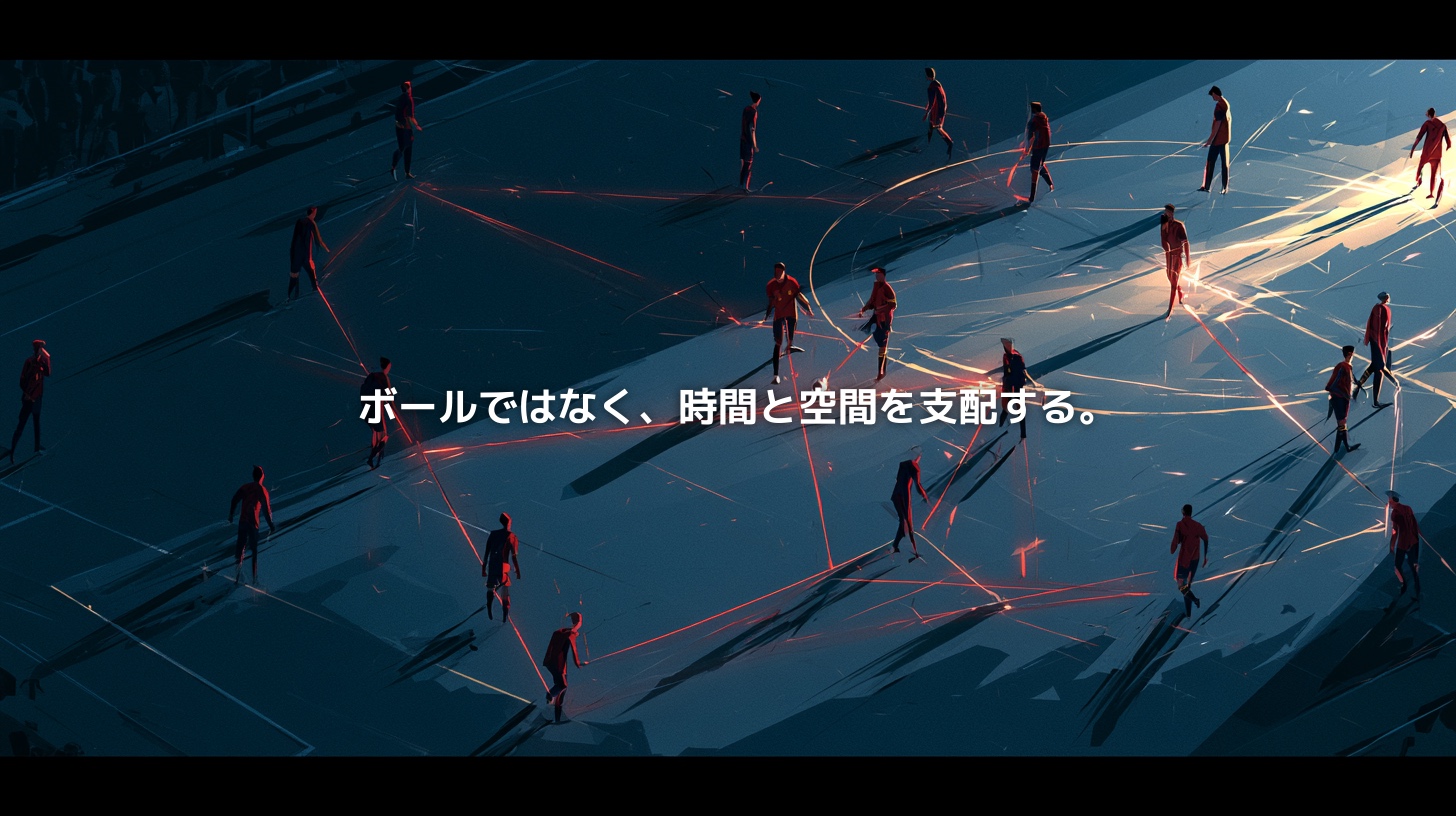
The System That Turned Talent into Collective Intelligence—and Delivered the 2026 World Cup
The 2026 FIFA World Cup, hosted across the United States, Mexico, and Canada, was unlike any tournament before it.
For the first time, 48 national teams competed across 104 matches. Players faced not only their opponents but also vast travel distances, intense heat, high humidity, and significant changes in altitude.
At the summit stood Spain.
In the final, Spain defeated Argentina 1–0 after extra time, claiming their second world title—their first since South Africa 2010.
Spain were undeniably strong.
Their passing was precise. Individual skill could transform a match in an instant. Their defensive organization was disciplined, while substitutions repeatedly changed the momentum of games. The coaching staff operated at the highest level, and a clear footballing philosophy ran through the entire squad.
But explaining Spain’s triumph simply by saying they had outstanding players and an excellent coach would miss the deeper reason behind their success.
Spain’s strength came from something more fundamental:
A system capable of transforming individual talent into collective intelligence.
The Players Spoke the Same Footballing Language
One of the greatest challenges facing any national team is time.
Unlike club teams, national squads have only limited opportunities to train together. Players arrive from different clubs, tactical systems, and footballing cultures, yet must quickly function as one coherent unit.
Even a squad filled with world-class players can struggle if its members do not share the same principles for reading and responding to the game.
Spain’s players, however, already possessed a broadly shared footballing language before joining the national team.
Scan the field before receiving the ball.
Draw an opponent toward you to create space elsewhere.
Immediately press together after losing possession.
Protect central areas and maintain compact distances between players when defending.
These were not merely tactical instructions prepared for one particular match. They were fundamental principles that the players had absorbed over many years.
Spain did not begin building a team from scratch when the squad assembled.
Players developed by different clubs arrived already speaking a common footballing grammar.
Spain Develops More Than Technical Ability
Spanish youth development is often associated with elegant passing and sophisticated ball control.
Yet its true value lies in more than technical training.
What should a player observe?
Where should they position themselves?
When should they move?
Which decision will create the best conditions for the next phase of play?
For years, Spanish academies have emphasized the ability to interpret the game and make decisions independently.
Twenty-five of the 26 players in Spain’s 2026 squad reportedly spent time in the academies of Spanish clubs. Real Madrid, Barcelona, Athletic Bilbao, Real Sociedad, and other institutions each possess their own identity and playing culture.
Despite these differences, they share an important objective: developing players capable of recognizing situations and making decisions for themselves.
Spain does not simply produce footballers who reproduce a coach’s instructions.
It produces players who can identify problems on the pitch and solve them together.
Possession Was Spain’s Most Rational Form of Defence
Spanish football is frequently described as a style built around passing and possession.
But possession itself was never the ultimate objective.
By controlling the ball in the right areas, Spain could move their opponents, create small disruptions in defensive structures, and exploit the spaces between full-backs and centre-backs or between midfield and defence.
At the same time, the longer Spain possessed the ball, the less time their opponents had to attack.
Because Spanish players remained close to one another during attacking phases, they could also surround the ball immediately after losing it.
According to FIFA’s tournament analysis, Spain conceded only one goal in their seven matches leading up to the final. They also allowed just 11 shots on target—the lowest total in the tournament.
Spain’s attacking beauty attracted attention.
Yet the foundation of their title was a structure designed to prevent opponents from attacking at all.
Spain Did Not Simply Copy the Success of 2010
The Spanish team that won the 2010 World Cup dominated matches through the passing intelligence of players such as Xavi, Andrés Iniesta, and Sergio Busquets.
But the rest of the world studied that success.
Opponents learned to concede possession while protecting central areas. They defended in compact, low blocks, restricted passing routes, and attacked the space behind Spain immediately after recovering the ball.
Repeating the old formula would not have been enough to return Spain to the top of the world.
The 2026 team retained its positional foundations but added new dimensions: direct wing play, faster vertical attacks, aggressive counter-pressing, and pragmatic decisions shaped by the changing circumstances of each match.
Spain no longer insisted on possession for its own sake. When the opportunity emerged, the team attacked the goal quickly.
It understood the difference between the philosophy that should be preserved and the methods that needed to evolve.
Spain did not abandon its tradition.
But neither did it allow tradition to become a fixed and inflexible system.
Spain Competed with 26 Players, Not Just Eleven
The depth of Spain’s squad was another essential part of its success.
This was not simply a strong starting eleven. Players coming from the bench understood their responsibilities and repeatedly changed the course of matches.
Mikel Merino became one of the clearest examples.
He scored in second-half stoppage time against Portugal in the knockout stage. In the quarter-final against Belgium, he entered the pitch and scored the winning goal just one minute and 56 seconds later.
This was about more than having talented substitutes.
Every player on the bench had a defined role. Even when entering midway through a match, they understood the team’s shared criteria for decision-making. Regardless of who played, Spain’s football continued to function.
The strength of a national team is not determined solely by the quality of its best eleven players.
It also depends on whether all 26 members can accept different roles in pursuit of the same objective.
The Coach Understood the People Before Designing the Tactics
Luis de la Fuente was not a celebrity coach suddenly appointed to lead Spain’s senior team.
He spent years working within Spain’s youth national-team structure and had watched many of his players develop from an early age.
He understood more than their technical qualities. He knew their personalities, strengths, weaknesses, and responses to pressure. The players, in turn, understood what he valued and expected from them.
That mutual understanding created a level of trust that could not have been built through a few short meetings before the tournament.
A coach’s role is not limited to selecting a formation.
It also involves helping every player—including those who do not start—understand why they matter. It means designing relationships within the team rather than giving special treatment to its most famous individuals.
De la Fuente did not simply select the biggest names.
He created the group most capable of functioning together.
An Entire Country Became a Long-Term Football Project
Spain’s success was not an isolated event limited to the senior men’s national team.
Club academies, youth national teams, the Olympic squad, the senior team, the women’s national team, futsal, and coaching education may appear to operate independently. Beneath the surface, however, they are connected by a long-term footballing culture.
Spain won the European Championship in 2024 and followed it with the men’s World Cup title in 2026. During this period, the national team also established a world record of 38 consecutive matches without defeat.
Spain also became the first country to hold both the men’s and women’s World Cup titles simultaneously.
This cannot be explained by the emergence of a single golden generation.
Exceptional players did not merely happen to be born at the same time. Spain had created an environment capable of continuously producing both outstanding players and highly skilled coaches.
In Spain, football no longer depends entirely on individual talent.
It has become a form of knowledge passed from one generation to the next.
Controlling the Demands of North America Through the Ball
The conditions of the 2026 World Cup affected the outcome as much as technical and tactical quality.
Teams faced long journeys across three countries, changing temperatures, humidity, and altitude, as well as the added demands of an expanded 48-team tournament.
The physical and psychological burden on players was greater than ever.
Under these conditions, Spain’s possession game also became a rational form of energy management.
When Spain controlled the ball, their opponents had to run. Spain could slow the tempo when necessary and accelerate it without warning. Through well-timed substitutions, the team could also maintain its intensity across the tournament.
Spain’s football may have appeared beautiful, but it was also deeply pragmatic.
The team controlled not only the matches, but also time and physical energy.
Turning Talent into Collective Intelligence
Spain possessed exceptional individuals.
Its coaches had outstanding ability and a clearly defined philosophy.
But the country’s true strength was that these qualities did not exist in isolation.
Decision-making developed through youth football.
Shared principles that crossed club boundaries.
Trust built through the youth national teams.
Roles designed so substitutes could contribute immediately.
A culture that preserved its traditions while continuing to evolve.
Together, these elements transformed individual talent into collective intelligence.
Gathering exceptional people does not automatically create an exceptional organization.
Individual ability becomes organizational strength only when people understand one another’s decisions, share a common purpose, and are empowered to respond independently to changing circumstances.
What Spain demonstrated in 2026 was more than a way to win football matches.
It offered a broader lesson about how people are developed, how ideas are passed between generations, and how individual ability can become a collective force.
Spain’s World Cup triumph showed us the value of taking the time to build a culture.
FAQ
Why was Spain so strong at the 2026 World Cup?
Spain combined individual quality with shared principles developed through its youth system. Its possession game, counter-pressing, squad depth, and the trust between the players and coaching staff allowed the team to turn individual talent into collective strength.
What distinguishes Spain’s youth-development system?
Spanish academies develop more than technical skill. They emphasize awareness, positioning, timing, and decision-making. This allows players from different clubs to quickly understand one another when they join the national team.
How was the 2026 team different from Spain’s 2010 World Cup side?
The 2026 team retained Spain’s possession-based foundations but added direct wing play, faster vertical attacks, aggressive counter-pressing, and more flexible substitutions. It evolved beyond the 2010 model rather than simply attempting to reproduce it.
What was Luis de la Fuente’s greatest strength?
De la Fuente had worked extensively within Spain’s youth national-team system and understood many of the players’ personalities and development histories. His strength lay not only in tactical planning but also in building trust and giving every squad member a clearly defined role.
Why was Spain’s possession effective defensively?
Possession reduced the amount of time opponents could attack. Spain’s compact attacking structure also placed players close enough to press immediately after losing the ball. Its attacking positions therefore became part of its defensive preparation.